

 1 hour ago
5
1 hour ago
5
ARTICLE AD BOX
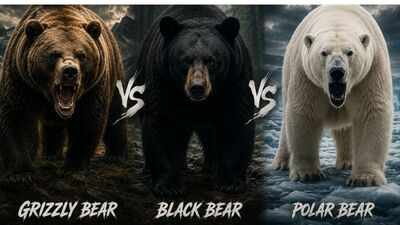
Grizzly bears, black bears and polar bears are among the most recognisable bear species in the world, yet they differ greatly in size, habitat, diet and behaviour. While all three belong to the bear family, each has evolved to thrive in a unique environment.
Black bears are highly adaptable omnivores found across much of North America, grizzly bears are powerful brown bear relatives known for their muscular build and digging ability, and polar bears are specialised Arctic hunters that rely heavily on sea ice and seals for survival. Comparing these species highlights how evolution has shaped them to meet different ecological challenges. From physical features and feeding habits to conservation status and potential fighting ability, each bear possesses strengths that make it remarkable in its own right.
Grizzly Bear vs Black Bear vs Polar Bear: Strength, speed and survival compared
| Parameter | Black Bear | Grizzly Bear | Polar Bear |
| Scientific Name | Ursus americanus | Ursus arctos horribilis | Ursus maritimus |
| Average Weight | Males up to 600+ pounds | Males commonly weigh 400–700 pounds | Males can exceed 1,700 pounds |
| Length | About 75 inches | Up to 8 feet | 7–8 feet |
| Color | Black, brown, cinnamon, blue-grey, or white variants | Light tan to dark brown | White-looking fur over black skin |
| Distinctive Features | Straight facial profile, long ears, short claws | Shoulder hump, concave face, long claws | Huge paws, thick fat layer, webbed feet |
| Habitat | Forests, mountains, wooded regions | Forests, meadows, river valleys, and alpine habitats | Arctic sea ice and coastal regions |
| Diet | Omnivorous | Omnivorous | Primarily carnivorous |
| Main Food Sources | Berries, roots, insects, fish, small animals | Plants, berries, fish, mammals, carrion | Seals, seal pups, walruses, whale carcasses |
| Tree Climbing | Excellent climber | Cubs can climb; adults rarely do | Poor climber |
| Conservation Status | Not listed | Threatened | Threatened |
| Lifespan in the Wild | Up to 30 years | Up to 30 years | Up to 30 years |
How these bears differ in appearance, behaviour, and adaptations
Size and weightAmong the three species, the polar bear is by far the largest. Adult males can weigh more than 1,700 pounds, making them the largest land carnivore on Earth. Grizzly bears generally weigh between 400 and 700 pounds, while large black bears may exceed 600 pounds but are usually much smaller. This enormous size advantage gives polar bears unmatched physical power.Physical featuresBlack bears have a straight facial profile, longer ears and relatively short claws that help them climb trees.
Grizzly bears are recognized by their prominent shoulder hump and long front claws used for digging. Polar bears possess massive paws, thick insulating fat and partially webbed feet, adaptations that help them swim long distances and survive Arctic conditions.HabitatBlack bears occupy a wide variety of habitats, from coniferous forests to mountainous regions. Grizzlies prefer forests, alpine meadows and river systems where food is abundant.
Polar bears are closely tied to Arctic sea ice, using it as a platform for hunting seals. Their dependence on ice makes them far more specialised than the other two species.DietBlack bears are opportunistic omnivores that eat fruits, vegetation, insects and animal matter. Grizzlies are also omnivores but consume larger mammals more frequently and are powerful scavengers. Polar bears differ dramatically, relying almost entirely on meat, especially seals.
Their diet places them at the top of the Arctic food chain.BehaviourAll three species are generally solitary outside breeding periods and family groups. Black bears often avoid confrontation and may escape by climbing trees. Grizzlies tend to be more territorial and aggressive when defending food or cubs. Polar bears roam vast Arctic landscapes and are highly adapted hunters, capable of travelling and swimming over great distances in search of prey.Conservation StatusBlack bear populations are generally stable or increasing across much of North America. Grizzly bears remain listed as threatened due to habitat loss and human conflicts. Polar bears face the most serious long-term threat because climate change is reducing the sea ice they depend on for hunting, breeding and survival.
Clash of giants: Determining the strongest bear
In a hypothetical one-on-one confrontation, the polar bear would likely defeat both the grizzly bear and the black bear. Its overwhelming size, greater reach, heavier weight and carnivorous hunting lifestyle provide significant advantages. A grizzly bear would probably rank second because of its muscular shoulder hump, long claws and powerful build. The black bear, although agile and capable, is generally smaller and less physically imposing than the other two.








 English (US) ·