

 1 hour ago
3
1 hour ago
3
ARTICLE AD BOX
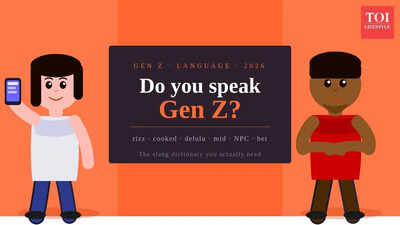
Line up here – the boomers, the millennials, and the Gen Zs who swear they “don’t relate to their own generation.”Scroll anywhere – Instagram, X, or the comments under a viral reel – and you’ll see it instantly.Read the first five lines.You’ll understand every word. And still, somehow, miss the meaning.Someone types, “He thought he ate.”Another replies, “No, he’s cooked.”A third adds, “This is so NPC behaviour,” and just like that, the conversation wraps itself up – neatly, confidently – without ever explaining a thing.You pause. Not long enough to admit confusion. Just long enough to realize this isn’t your usual “new slang” problem.Because this isn’t about vocabulary anymore. It’s about fluency in a culture that moves faster than definitions.If that sounds dramatic, it’s because it is. And also because it’s true.We’ve seen a softer version of this story before. In Younger, Liza Miller survives entire meetings by decoding conversations on the go – smiling at references she only half understands, picking up cues mid-sentence. That was fiction.
This is your daily scroll. Only here, the meeting never ends, the room keeps expanding, and no one is slowing down for context.Welcome to Gen Z slang in 2026 – a language that doesn’t wait to be understood.
This is not slang. It’s social currency
Let’s get one thing clear: calling this “slang” is underselling it.This is how people signal identity online. It’s how humour lands, how opinions are delivered, and how belonging is quietly established. You’re not just using a word; you’re showing that you get the moment.Take “he ate.” On paper, it sounds like a food update. Online, it means someone did something exceptionally well. Add “and left no crumbs,” and you’ve just elevated it to peak performance.Now flip it – “he thought he ate.” Same structure, entirely different meaning. Suddenly, it’s a mockery.The 2026 glossary: what’s actually dominating your feedLet’s break down the phrases you’re seeing right now – properly, with context, not just dictionary meanings.
He ate / She ate
Delivered something flawlessly – fashion, performance, opinion. It’s approval, but dramatic.
Left no crumbs
An extension of “ate.” Nothing more could be added. It was complete.
He thought he ate
A polite way of saying… he absolutely did not.
Delulu is the solulu
Optimism, but self-aware. It’s about choosing belief, even unrealistic belief, because sometimes logic is overrated.
Rizz
Charisma, but with stakes. It’s not just about having charm; it’s about it being noticed, acknowledged, validated.
Mid
The internet’s most subtle insult. Not terrible, not impressive – just forgettable. And somehow, that stings more.
Chopped
Brutal honesty. Usually about appearance or vibe. No cushioning, no context.
Cooked
Done for. Overwhelmed. Caught. There’s no recovery arc here.
NPC behaviour
Predictable. Repetitive. Like someone is following a script instead of thinking independently.
Main character energy
Confidence, visibility, presence. The sense that everything revolves around you, and you’re okay with that.
Aura farming
Trying (often successfully) to build a certain image – cool, mysterious, effortless – while pretending it’s all natural.
It’s giving…
A shortcut to describe a vibe without fully explaining it. The rest is implied.
Bet
Agreement, instantly. No elaboration required.
Touch grass
A reality check. Step away from the screen, reconnect with real life.
Chronically online
Too immersed in internet culture. Knows too much. Probably uses all of the above fluently.
I fear…
A dramatic opener. Usually used before stating an obvious or slightly embarrassing truth.
We listen, we don’t judge
A phrase that promises safety, but often precedes complete chaos in confessions.
Girl dinner / Boy math
Humour built around exaggerated, relatable habits – what people eat, how they justify things, how logic is bent for convenience.
The real trick: meaning lives in tone, not words
Here’s where most people go wrong. They treat this like vocabulary.It’s not.You can memorize every phrase here and still sound out of place. Because the real meaning sits in how it’s said.“Mid” can be dismissive or playful.“He ate” can be genuine or sarcastic.“Aura farming” can be admiration or a quiet call-out.The difference? Tone. Timing. Context.And none of those come with instructions.
Why this language moves so fast
Because it’s built for the internet.Short attention spans. Fast content cycles. Endless scrolling. Words have to be quick, expressive, and adaptable. Long explanations don’t survive here – shorthand does.That’s why phrases compress entire reactions into two or three words.But there’s a catch.The faster something spreads, the faster it dies.A term that dominates this week can feel outdated the next. Which means the real skill isn’t just understanding – it’s keeping up without looking like you’re trying too hard.
When brands and professionals get it wrong
This is where things get unintentionally funny.A brand uses “rizz” in a campaign, but slightly off.A caption says “it’s giving…” but finishes the sentence incorrectly.The reaction? Immediate.Because Gen Z audiences can spot forced language instantly. You can’t just use these words – you have to understand the culture behind them.And if you don’t, it shows.
So where does that leave everyone else?
Somewhere between curiosity and caution.You don’t want to sound out of touch.You also don’t want to sound like you’re trying too hard.Which is why most people settle into a middle ground – understanding the language, but not necessarily speaking it.And honestly, that’s enough.
The bigger shift here
This isn’t just about slang. It’s about how communication is evolving in real time.Gen Z didn’t just create new words. They changed the rules, made language faster, sharper, and a lot less forgiving.You don’t need to start saying, “he ate and left no crumbs.”But the next time you see it, you’ll know exactly what it means and, more importantly, what it’s trying to say.Thumb image: Claude AI






 English (US) ·