

 1 hour ago
5
1 hour ago
5
ARTICLE AD BOX
Last Updated:March 09, 2026, 19:07 IST
A ballistic missile from Iran was intercepted by NATO in Turkish airspace, with debris falling in Gaziantep. Turkey warned Iran, and the US evacuated staff from Adana.


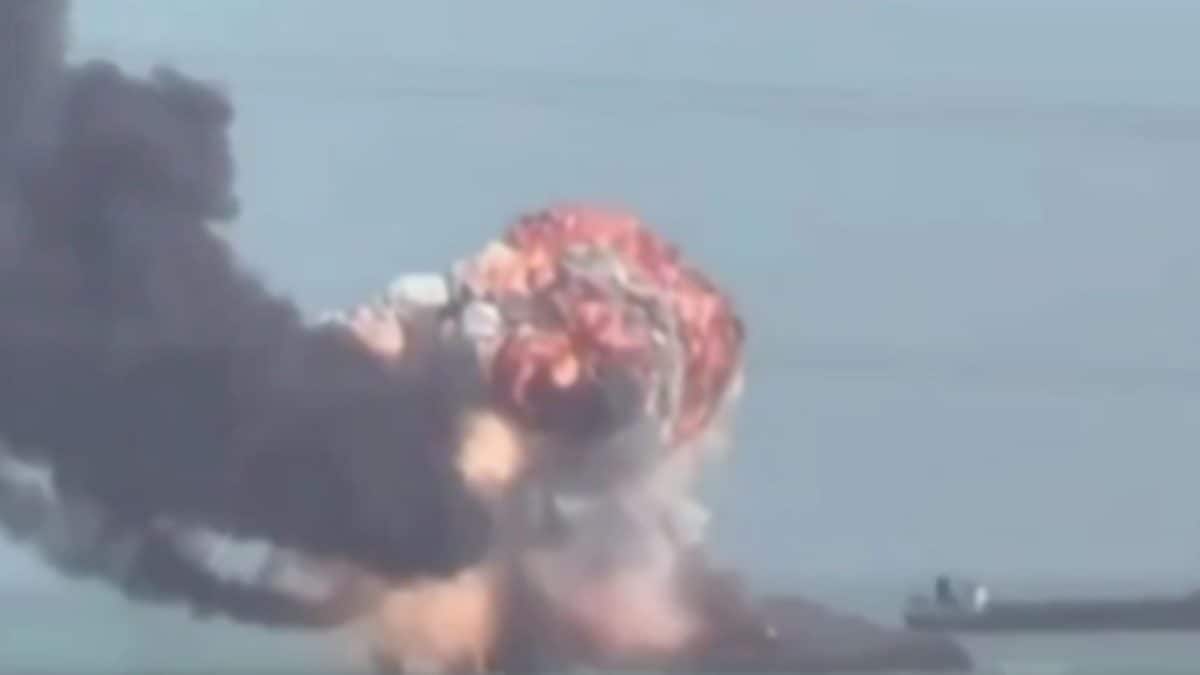
The missile was destroyed by NATO air and missile defence systems in the eastern Mediterranean Sea. (File photo)
A ballistic missile fired from Iran was intercepted by NATO air and missile defence systems deployed in the eastern Mediterranean after it entered Turkish airspace, the Turkish defence ministry said. Parts of the ammunition fell in the southeastern province of Gaziantep, but authorities said there were no casualties in the incident.
Following the interception, Turkey issued a strong warning to Iran, urging it to avoid actions that could endanger regional security and civilians. Ankara said it would take all necessary measures to protect its territory and airspace.
“A ballistic munition launched from Iran and entering Turkish airspace was neutralized by NATO air and missile defense assets deployed in the Eastern Mediterranean," it said in a statement on Monday.
In a direct warning to Iran, it added: “We once again emphasize that all necessary measures will be taken decisively and without hesitation against any threat directed at our country’s territory and airspace. We also reiterate that it is in everyone’s interest to heed Turkey’s warnings in this regard."
Amid rising tensions linked to the war involving Iran, Turkey has also deployed six F-16 fighter jets and air defence systems to northern Cyprus to strengthen the security of the Turkish community there, with the defence ministry saying additional measures could be taken if required.
Meanwhile, the US Department of State ordered non-emergency government employees and their family members to leave the US Consulate General in Adana due to safety risks, with consular services suspended. The United States has also warned its citizens against travelling to southeastern Turkey.
“On March 9, 2026, the Department of State ordered non-emergency US government employees and US government employee family members to leave Consulate General Adana due to the safety risks," the embassy said on X.
Separately, authorities in Bahrain activated alarm sirens and urged citizens and residents to remain calm, move to the nearest safe location and follow updates through official channels.
Since the US-Israeli attacks began on February 28, Iran has retaliated with missile and drone strikes across the West Asia in a bid to hit US assets.
So far, Turkey appears to have avoided the attacks, even though US troops are stationed at several bases in the country, including the Incirlik Air Base located just outside the southern city of Adana.
Incirlik air base is an important NATO facility that has been used by US troops for decades which is located just 10 kilometres outside Adana.
In a post on X, presidential communications chief Burhanettin Duran said Turkey would not hesitate to protect its airspace and border security.
“We once again strongly reiterate our warning to all parties, particularly Iran, to refrain from actions that could endanger regional security and put civilians at risk," he wrote.
Earlier, on March 4, NATO intercepted a ballistic missile launched from Iran and heading toward Turkish airspace, prompting the alliance to strengthen its ballistic missile defence posture as Iran intensified strikes across the region.
First Published:
March 09, 2026, 19:07 IST
News world ‘Heed Our Warnings’: Turkey Reacts After NATO Downs 2nd Iranian Missile In 5 Days
Disclaimer: Comments reflect users’ views, not News18’s. Please keep discussions respectful and constructive. Abusive, defamatory, or illegal comments will be removed. News18 may disable any comment at its discretion. By posting, you agree to our Terms of Use and Privacy Policy.
Read More





 English (US) ·