

 1 week ago
7
1 week ago
7
ARTICLE AD BOX
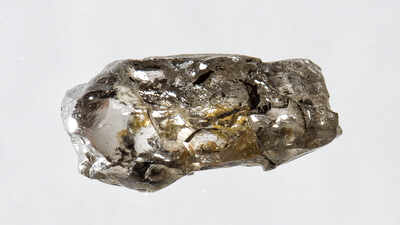
Diamonds, once symbols of perfection, now reveal Earth's deep secrets. A recent study analysed a Brazilian diamond, finding mineral inclusions that show phosphorus, vital for life, can travel deep into the mantle. Image Credit: Wikimedia Commons
When we hold a polished diamond up to the light, we usually think of luxury and elegance. For centuries, jewellery has prized diamonds for their clarity, treating tiny internal imperfections as flaws that lower value.
The common belief is that a perfect gemstone should be completely clear, acting as a sparkling token of beauty without any internal dust or structural blemishes to interrupt the flow of light.But a closer look inside these deep-earth crystals tells a different story about planetary history. For geologists, a flawless diamond is less useful than one with tiny mineral inclusions, which can preserve clues about deep Earth.
Formed under immense pressures hundreds of kilometres beneath the surface, these super-deep gemstones seal away microscopic fragments of the deep Earth, protecting them during their long journey to the surface.
What looks like dust can reveal how key elements move through Earth’s deepest layers.This deep-mantle chemical movement was recently examined in a study published in the journal Geology, titled Diamond evidence for limited subduction of phosphorus into the lower mantle. Led by an international research team, including scientist Qiwei Zhang, the paper evaluated a unique diamond discovered in the Juína region of Brazil to understand how phosphorus, an element critical for the DNA of all living things, behaves when it is dragged into the Earth.
By analysing tiny mineral inclusions, including a rare phosphate known as tuite, the authors provided some of the first natural mineral evidence that tectonic slabs can carry this life-essential ingredient down into the lower mantle, hundreds of kilometres beneath our feet.The study says the team found ferropericlase, calcite, and tuite inclusions in a Juína diamond and combined their geochemistry with thermodynamic modelling to reconstruct the host rock’s origin.
Their results point to subducted oceanic crust that was carbonatised at near-surface conditions, then carried into the mantle transition zone at temperatures more than 500°C cooler than the surrounding mantle before being trapped by the diamond.Tracking a life-giving element through the deep mantleTo understand why this discovery has changed our view of deep-earth chemistry, it helps to look at how planets manage their long-term nutrient budgets.
Phosphorus is usually concentrated in the surface crust, where it supports marine ecosystems and biological growth. When tectonic plates slide past each other at subduction zones, they carry old oceanic crust down into the hot mantle, where the extreme heat usually melts the rocks and releases the nutrients back toward the shallow surface.
For a long time, scientists had no physical proof that this essential building block could survive the intense heat of the journey to reach the lowermost layers of the mantle.The analytical work shared in the Geology paper explains that phosphorus may only make this extreme descent if it travels under very specific, unusual conditions. The research team found that the Juína diamond contained ferropericlase, calcite and tuite, minerals that help indicate the pressure and temperature conditions in which the diamond formed. Their thermodynamic models indicated that the original rock must have been a highly specific type of calcium-rich altered oceanic crust that followed an exceptionally cold subduction path.
Because this particular slab remained incredibly cold during its descent, it managed to avoid melting, allowing the phosphorus to transform into the stable mineral tuite and bypass the shallow recycling zones entirely.This fascinating tracking of deep-earth cycles was expanded upon in a related presentation delivered at the Goldschmidt 2026 conference, but relevant geodynamic models lack natural mineralogical constraints. The presentation explored how these mineral-bearing diamonds help refine our understanding of the planet's internal plumbing system.
By tracing trace-element patterns and strontium isotopes in the tuite inclusions, the paper showed that phosphorus can travel deeper than previously thought, but only a small amount likely reaches the lower mantle.In the conference paper, the authors used the tuite’s trace-element inventory and strontium isotopes as a fingerprint for its source, arguing that these crystals preserve a direct record of slab-derived material in the deep mantle.
They conclude that phosphorus can be transported downward, but only in small, highly restricted amounts, making deep recycling far less efficient than models that assume broad transfer of surface phosphorus into Earth’s interior.
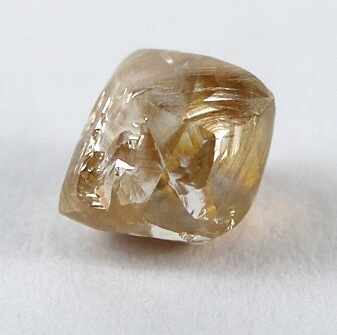
However, this journey is rare and requires specific cold conditions, suggesting most of Earth's phosphorus remains near the surface, supporting life's evolution. Image Credit: Wikimedia Commons
How the planet locks its vital nutrients within reach of the surfaceThe practical insights gained from studying these deep diamond inclusions have prompted renewed discussion. By demonstrating that the conditions required to transport phosphorus into the deep Earth are incredibly rare and stringent, the research suggests that much of the planet’s phosphorus remains in the upper crust.
This deep-seated geological barrier helps keep the vital ingredients required for biological evolution from being permanently lost to the deep interior of the Earth, but are instead continuously recycled through shallow pathways where they remain accessible to living organisms.According to the conclusions highlighted across these 2026 research outputs, this limiting effect on deep subduction was likely even more pronounced during the ancient past.
Billions of years ago, when the Earth's interior was significantly hotter than it is today, subducting slabs would have melted much faster and more easily during their descent. As a result, the early planet may have helped retain phosphorus near the surface, which could have supported early life.By showing that a rare mineral trapped inside a Brazilian diamond can rewrite our understanding of global nutrient cycles, the research reminds us that the history of life is intimately tied to the behaviour of rocks far beneath our feet. By demonstrating that the criteria for deep subduction are highly restrictive, this research implies that the vast majority of Earth's phosphorus is effectively kept within shallow recycling reservoirs.
This retention mechanism helps maintain the long-term availability of a key chemical element necessary to support life on the surface.









 English (US) ·