

 1 week ago
5
1 week ago
5
ARTICLE AD BOX
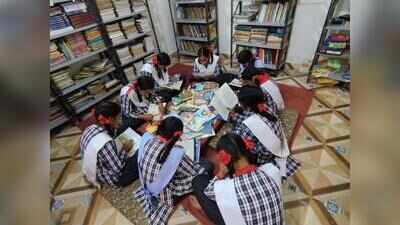
The free library draws around 250 regular readers, including school students, college-goers and candidates preparing for competitive examinations at Maniguh village in Rudraprayag district.
Dehradun: Sneha Rana’s family left Maniguh in Rudraprayag district for the same reason that has emptied hundreds of villages across Uttarakhand’s hills. Like many others, they wanted better educational opportunities than a remote hill settlement could offer.The family moved to nearby Agastyamuni, where Sneha completed her schooling. Then, while she was in Class XII, something changed in the village they had left behind. A library opened, bringing with it access to books, learning resources and a new sense of possibility. Over time, Maniguh came to be known as the first “library village” in the Himalayan region.Located on the route to Kedarnath, Maniguh today houses more than 21,000 books, many donated from the private collections of well-known authors.
Around 250 readers visit regularly, and for many young residents, the library has become an important reason to remain in the village.For Sneha’s family, that change was enough to bring them back home. “I realised that since we already have a library here with the necessary books and resources, I can prepare while staying at home,” said the 21-year-old, who is studying for the UPSC examination.Her story is one that residents often recount when speaking about the village’s transformation.
The idea took shape three years ago when Beena Mishra, her husband Suman Mishra, and their friends Aalok Soni and Rahul Rawat began discussing the lack of educational resources available to children in the village.“Every visit to my wife’s ancestral village reminded us how little access children had to books. At some point, we decided to stop talking about the problem and start addressing it,” said Suman Mishra.Their foundation, Hamara Gaon Ghar, set up the library in 2023.
Access is entirely free of cost. The library remains open on all working days throughout the year, serving school students, competitive exam aspirants, women returning to education and curious visitors in equal measure.From the beginning, however, the founders envisioned something larger than a building filled with books. They wanted the library to become part of the village’s identity. “If the village became known as a library village, residents would see it as part of their identity.
To protect their community’s image, they would also protect the libraries,” Mishra said.That thinking led to one of the initiative’s most distinctive ideas -- the ‘pustak mandir’ or book temple. These are small reading spaces stocked with 80 to 90 books that are rotated periodically from the central library. What began with two book temples in Maniguh has now expanded to eight in and around the village, with more planned in nearby Bhatwari, Malkhi, Rumsi and Jagoth.“We are actively trying to take the book temple concept to more villages. Even a single such temple can be the starting point. Over the last three years, we have invested only around Rs 12 lakh in the library, so the model is also inexpensive,” Mishra said.The concept was designed to encourage people to value and care for books in much the same way they care for places of worship. The name, Mishra said, was chosen deliberately.
“We felt that unless knowledge was presented through a framework people already understood and related to, it would be difficult to build a connection.”The responsibility of managing these spaces has been entrusted to village girls. “Every morning, the local priest opens the village temple, while village girls open the book temples,” Mishra said.Encouraging children raised on smartphones to develop reading habits has brought its own challenges.
“Instead of insisting on reading from day one, we focused on making the library a place children wanted to visit. The idea was to first bring them into the space through play and then gradually encourage them to explore books and reading,” said library manager Mahesh Negi.As a result, the library today offers much more than books. Children can play chess and ludo, use footballs, look through a telescope for stargazing and attend film screenings.
“They do not have to come only to read books. We want them to understand library culture,” Mishra said.For 22-year-old MSc student Gunjan Kunwar, that culture has become part of everyday life. She visits the library almost daily while preparing for competitive examinations. “The atmosphere is what I like the most. It’s very peaceful, and away from distractions,” she said.The library has also changed how she spends her free time. “Before the library existed, we mostly stayed at home and on our phones.
Now, whenever I have free time, I feel like going there. It’s become a productive way to spend time.”Komal Negi, 21, who recently completed her BSc and is preparing for UKSSSC examinations, said the quiet environment helps students concentrate while access to shared books reduces the financial burden on families.The effects of the project are visible beyond the reading room. Visitors travel from across the country to see the village, while Maniguh has developed a community-based homestay model in which local families host guests.
A small share of the income generated through these homestays is contributed towards supporting the library.The annual Gaon-Ghar Mahotsav has become another draw. Writers, poets and artists spend several days in the village interacting with residents, while traditional foods such as maduwa ki roti and bhatt ki bhatwani are showcased during the event.The vision now stretches well beyond bookshelves. The foundation is documenting Himalayan knowledge traditions, promoting the idea of a ‘gyan marg’ or path of knowledge through the region, supporting pine-needle craft workshops that help local women earn an income, and advocating forest conservation through efforts such as preserving old trees and encouraging less fire-prone species around villages.Yet those associated with the project say its most meaningful achievement may be something less tangible -- rebuilding the bond between young people and their village.As Negi put it: “Whenever children come back to the village during their holidays, one of the first things they want to do is visit the library. They want to see it, spend time there and sit among the books. That kind of attachment is developing, and for us, it is the most encouraging thing.”








 English (US) ·