

 11 hours ago
8
11 hours ago
8
ARTICLE AD BOX
4 min readJul 7, 2026 02:26 PM IST
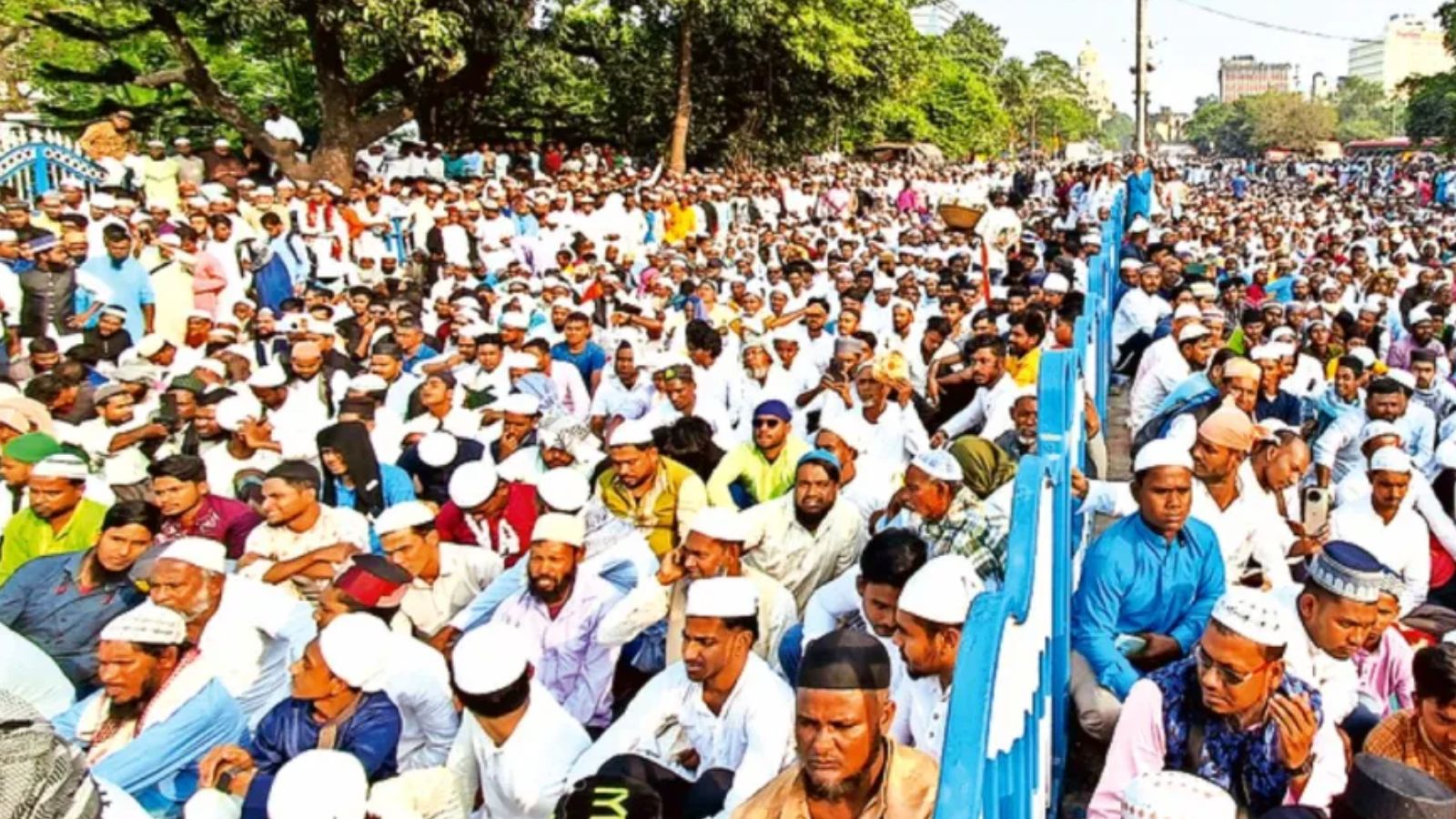 Madhya Pradesh has become the first state to implement the Waqf (Amendment) Act, 2025 provision allowing non-Muslim members in state Waqf boards. (File Photo)
Madhya Pradesh has become the first state to operationalise one of the most contentious provisions of the Waqf (Amendment) Act, 2025, reconstituting its State Waqf Board with two Hindu members, leading to ta political controversy in the state.
The Mohan Yadav government on Sunday issued a gazette notification constituting a 10-member Waqf Board headed by Sanwar Patel. Alongside Muslim members, the government appointed Manoj Malpani and BJP state media panellist Animesh Bhargava to the board as its non-Muslim members. The government said Madhya Pradesh is the first state in the country to implement this new provision.
Malpani, an Indore-based businessman and B.Com graduate, has been associated with the RSS and its affiliated organisations for nearly 30 years. He has reportedly helped fight legal battles in Waqf property cases for people who claimed they were harassed after their properties were designated as Wakf property.
Bhargava, from Raghogarh in Guna district, has an MBA in Financial Management and worked in the private sector for around 18 years before leaving his corporate career about a decade ago to work full-time in the BJP. He currently serves as a BJP state media panellist in Madhya Pradesh and is a regular party spokesperson in television debates. Unlike Malpani, Bhargava is an active political face of the BJP.
Political storm
While the notification is administrative in nature, it has quickly snowballed into a political and ideological controversy.
The controversy stems from the Waqf (Amendment) Act, 2025, which broke with the earlier framework of the Waqf Act, 1995 by mandating the inclusion of at least two non-Muslim members in state Waqf boards, besides introducing other changes to the administration and regulation of Waqf properties. The Narendra Modi government defended the amendments as measures to improve transparency, curb alleged irregularities in Waqf land management and protect public property. Opposition parties and several Muslim organisations, however, argued that the law dilutes the autonomy of institutions that administer Islamic charitable endowments.
Congress MLA Arif Masood questioned why the state government chose to move ahead before the Supreme Court delivers its final verdict on the matter. “The matter is sub judice in the Supreme Court. What was the rush?… I will move the Supreme Court against this decision,” Masood said, alleging that the government had acted in undue haste.
Story continues below this ad
Former minister and senior Congress leader P C Sharma criticised the BJP, alleging the ruling party has no issues other than “Hindu-Muslim” and “India-Pakistan”. Sharma claimed that this “step was taken to divert public attention from the theft of offerings at the Ram Temple in Ayodhya and the allegations against Chief Minister Yadav”.
The BJP, meanwhile, has projected Madhya Pradesh’s move as proof that the amended law is beginning to deliver governance reforms. Waqf Board chairman Sanwar Patel defended the reconstitution, saying the government had implemented the court’s directions “in letter and spirit” and urged critics to support measures aimed at improving administration.
‘Broad scope’
State minister Vishwas Sarang said, “This is not about including any non-Muslim in the mosque committee; the Waqf Board is separate.”
“It is surprising to view this through the lens of religion. The Waqf Board isn’t limited to mosques; its scope is much broader,” he said.
Story continues below this ad
BJP MLA Rameshwar Sharma argued that Waqf properties are public charitable assets and should benefit poor people irrespective of religion. He rejected allegations that appointing Hindu members amounted to interference in Muslim affairs, asserting that only those allegedly misusing Waqf properties had reason to oppose greater scrutiny.







 English (US) ·