

 55 minutes ago
6
55 minutes ago
6
ARTICLE AD BOX
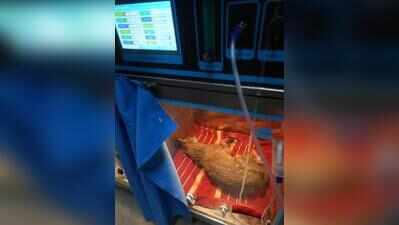
An Indian golden jackal, rescued after being hit by a speeding vehicle on the Tumakuru Highway, is making a steady recovery at the People for Animals (PfA) Wildlife Hospital in Bengaluru after receiving specialised veterinary care.
Bengaluru: An Indian golden jackal that suffered a severe head injury after being hit by a speeding vehicle near the Madavara toll plaza on NH-48 is making a remarkable recovery following timely rescue and specialised veterinary care at the People for Animals (PfA) Wildlife Hospital in Bengaluru.The jackal was found lying by the roadside on July 2 and was rescued by PfA volunteers, who rushed it to the wildlife hospital for emergency treatment. Sources at the hospital said the animal had sustained a traumatic head injury in the road accident. “Our immediate priority was to stabilise the head injury. During routine diagnostic tests, the veterinary team also detected Babesia canis, a tick-borne blood parasite that can prove fatal if left untreated.
The infection was treated alongside the trauma, which significantly aided its recovery,” a PfA official said.According to the treating veterinarians, the jackal is now alert, active and feeding normally. “It will continue to remain under observation and rehabilitation before being released into its natural habitat once veterinarians certify it fit for the wild,” said a volunteer at the facility.Wildlife experts said road accidents have become an increasing threat to animals living on the outskirts of Bengaluru, where rapid urban expansion and highways frequently intersect with natural habitats.
Jackals, which play an important ecological role by scavenging carcasses and controlling rodent populations, are particularly vulnerable while crossing busy roads.“Road accidents continue to pose a serious threat to wildlife living on the outskirts of our cities. In this case, early diagnosis and treatment not only helped manage the jackal’s head injury but also uncovered an underlying Babesia canis infection, allowing us to provide comprehensive treatment. It has recovered phenomenally, and we are now waiting for it to gain sufficient weight. After about a week’s care, we hope to release it back into the wild,” said Dr Navaz Shariff, chief wildlife veterinarian at the PfA Wildlife Hospital.





 English (US) ·