

 2 hours ago
8
2 hours ago
8
ARTICLE AD BOX
Acephate Insecticide: Bees are not just producers of honey. They are the lifeline of agriculture. These tiny pollinators quietly perform the vital task of pollination, sustaining crops and ensuring food security. Without them, agricultural productivity would collapse, threatening global food supplies. Spraying toxic chemicals such as acephate in fields is, therefore, akin to undermining the very foundation of our food system.
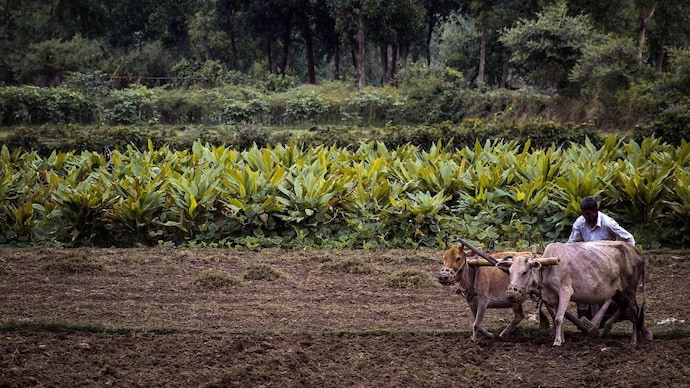
Acephate, a widely used insecticide, continues to pose risks to human health and the environment.

New Delhi,UPDATED: Jun 15, 2026 19:02 IST
It is often said that when profit and public welfare collide, powerful commercial interests tend to prevail. One of the clearest examples of this can be seen in India's agricultural sector.
Acephate, a widely used insecticide, continues to pose risks to human health and the environment. More than just a chemical, acephate has become a symbol of how industry influence allegedly succeeded in stalling a government move to ban a hazardous pesticide.
The story dates back to May 14, 2020, when India was grappling with the Covid-19 pandemic. During that period, the Union Agriculture Ministry took what appeared to be a significant step by issuing a draft notification under the Pesticide Prohibition Order, 2020. The proposal sought to completely ban 27 highly hazardous and generic pesticides, including acephate, in order to protect public health, the environment and beneficial organisms.
In the official draft notification, the government itself cited several reasons for proposing the ban. It noted that 32 countries, including the 27 member states of the European Union, the United Kingdom, China, Malaysia, Oman and Palestine, had already prohibited the chemical because of safety concerns.
Government records further indicated that both the Dr Anupam Verma Committee and the Registration Committee had concluded that there was insufficient scientific evidence to justify the continued use of acephate.
The final lines of the draft notification highlighted one of the principal concerns regarding the pesticide: "It is an organophosphate compound toxic to honey bees; therefore, its import, manufacture, sale and use in agriculture shall be prohibited."
In other words, the ministry acknowledged that the chemical not only posed risks to the human nervous system but was also contributing to the destruction of bee populations, which are critical to agriculture.
THE LOBBYING BATTLE BEGINS
The proposal triggered alarm within the agrochemical industry. Large pesticide manufacturers, whose revenues depended on such products, reportedly mobilised extensive resources to prevent the ban from taking effect.
What followed was a prolonged process of lobbying, consultations and legal challenges that gradually weakened the government's initial resolve.
FARMERS USED AS SHIELD
Industry groups argued that banning inexpensive pesticides such as acephate would increase production costs for farmers and leave them without affordable alternatives to protect crops.
Companies sought additional time to submit objections to the draft proposal. The issue subsequently became entangled in multiple committee reviews, consultations and court proceedings, slowing the decision-making process.
WHAT WAS THE OUTCOME?
The result was that the 2020 draft notification never became law. The proposed nationwide ban remained confined to official files, while acephate continued to be sold and used across large parts of the country.
Critics argue that commercial interests ultimately outweighed concerns about public health and environmental protection, forcing the government to step back from its original position.
WHAT US ENVIRONMENTAL AGENCY SAYS
The risks associated with acephate extend beyond bees. The US Environmental Protection Agency (USEPA) has classified acephate as a "possible human carcinogen."
Laboratory studies conducted on rodents have linked the chemical to liver tumours and cancer-related concerns. In light of these risks, US regulators have also proposed phasing out its agricultural use.
THE INDIAN QUESTION
The issue has gained renewed attention as Indian basmati rice exports have faced rejection in international markets because of acephate residue levels.
In response, states such as Punjab and Uttar Pradesh have imposed partial restrictions on its sale in basmati-growing regions. However, the pesticide continues to be widely available and used in many other parts of the country.
The larger question remains: How long will public health, environmental sustainability and biodiversity be compromised for the benefit of a handful of commercial interests?
And how long will one of agriculture's most important allies, the honey bee, continue to bear the consequences?
DARKER SIDE OF THE CHEMICAL
Acephate was developed in the 1970s by the research division of the American oil and chemical company Chevron.
Its history is not merely that of a conventional insecticide. Over the years, it has been associated with significant environmental controversies and health concerns.
One of the most troubling aspects of acephate is that when it breaks down inside living organisms or in the environment, it converts into methamidophos, a highly toxic by-product.
Methamidophos is considered substantially more dangerous than acephate itself and has the potential to severely damage the human nervous system. For this reason, scientists often describe it as a "hidden poison."
HOW DOES IT WORK?
Acephate is a systemic insecticide, meaning it is absorbed by plants. When insects feed on any part of the treated plant or suck its sap, the chemical disrupts their nervous system and eventually kills them.
In many local markets, it is also sold for use on chilli and vegetable crops. However, according to the Indian government's central pesticide database, acephate is primarily approved for use on cotton, paddy and safflower.
Because of concerns over residue levels and food safety standards, experts advise against its use on vegetables.
Repeated spraying on paddy and cotton crops can also kill beneficial insects, creating ecological imbalances that often allow harmful pests to return in even greater numbers.
- Ends
Published By:
Aprameya Rao
Published On:
Jun 15, 2026 19:02 IST









 English (US) ·