

 1 hour ago
5
1 hour ago
5
ARTICLE AD BOX
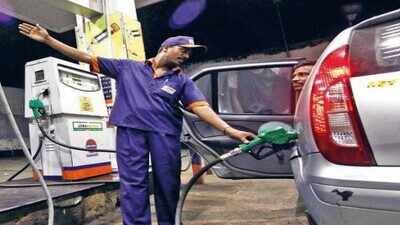
India has completed its nationwide shift to E20 petrol, which means the regular petrol sold at pumps now contains 20% ethanol. The transition was achieved in April 2025, much ahead of the earlier 2030 target.
Govt is now preparing for the next phase of ethanol blending. It has exempted petrol containing 22-30% ethanol from central excise duty, placing it on a similar tax footing as E20. Separately, it has proposed changes to the Central Motor Vehicles Rules to formally recognise E85 and E100 fuels.
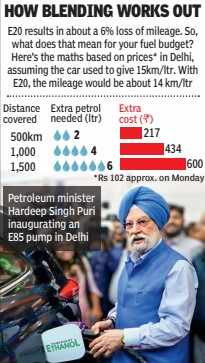
How blending works out
For consumers, the key question is how E20 affects the engine life and mileage of their vehicles and whether ethanol blending will eventually go beyond 20%. The Debate: What Comes Next? The immediate controversy is around E20, but the larger concern is about where India’s ethanol programme goes from here. The Bureau of Indian Standards has already notified fuel standards for E22, E25, E27 and E30. That has led to speculation that the govt may eventually raise the mandatory ethanol content in regular petrol beyond E20. Officials maintain that any move to a higher blend will happen only after research, testing and consultation with stakeholders.
Petroleum ministry has also said that fears around ethanol blending are not backed by scientific evidence. Automakers, however, are more cautious about blends beyond E20. They say any move to E25 or higher would require fresh validation of engines, fuel systems, materials, emissions and durability. Why Motorists Are Uneasy Many vehicle owners are still adjusting to the shift from E10 to E20. The rollout happened quickly, and consumers now have no option at regular pumps to buy petrol without 20% ethanol. Some owners have reported lower mileage. Others have raised concerns about long-term reliability, especially those manufactured before 2012. Vehicles made before April 2023 are also at the centre of the current debate because they were not all originally certified for E20 use. Mileage Is The First Pain Point For most vehicle owners, mileage remains one of the most important factors. That is why the fuel-efficiency impact of E20 has become the most visible part of the controversy. The govt and automobile companies accept that E20 can reduce mileage. They generally put the reduction at around 3-4%, compared with E10. A 2021 study by Automotive Research Association of India (ARAI), Indian Oil Corporation and Society of Indian Automobile Manufacturers (SIAM) found that fuel consumption with E20 can increase by 2-6% compared with E10, depending on the vehicle. Maruti Suzuki has said E20’s lower calorific value results in a mileage drop of around 3-3.5%.
For a car delivering 20kmpl, that would translate to a reduction of roughly 0.6 kmpl. Consumers, however, argue that the real-world loss often feels higher. They also point out that they are buying more fuel without any price reduction to compensate for the lower energy content of ethanol-blended petrol. Automakers say mileage is influenced by many other factors as well, including tyre pressure, driving style, gear selection, traffic, road conditions and vehicle maintenance. What It Can Mean For Older Vehicles The biggest worry is not just mileage, but long-term vehicle health. Ethanol contains oxygen and absorbs moisture more easily than petrol. Over time, this can increase the risk of corrosion or deterioration in some materials if the vehicle was not designed with ethanol compatibility in mind. Engineers have warned that higher ethanol blends can affect rubber and plastic parts in the fuel system. Components such as hoses, gaskets, seals and O-rings may be more vulnerable than metallic parts.
Concerns have also been raised about possible effects on valves, piston heads and fuel-system durability in older vehicles. Some have raised the issue of cold starts being more difficult with E20 fuel in winter, but automakers said there should not be any such problem. The risk is not the same for all vehicles. Newer ones are more likely to have ethanol-compatible materials and calibration. Older vehicles, especially those originally designed for E0 or E10 fuel, are more likely to face long-term compatibility issues. What 2021 Study Found The 2021 ARAI-linked assessment is central to the govt’s and industry’s defence of E20. The study did not find significant corrosion, pitting or discolouration in the metallic components tested. This has been used to argue that E20 does not cause widespread damage to vehicles. However, the same report also noted that certain rubber materials, including NBR-PVC blend elastomers, fared worse with E20 than E10. It recorded SIAM’s view that rubber parts used in fuel-system components, such as hoses, gaskets, seals and O-rings, may show deterioration and may need replacement for E20 use. Why Automakers Say E20 Is Safe Major automobile manufacturers have publicly backed the use of E20 in existing petrol vehicles. At a recent govt press conference, representatives from Maruti Suzuki, Toyota Kirloskar Motor, Hyundai Motor India, Hero MotoCorp, TVS Motor Company and Bajaj Auto said years of testing and real-world experience show E20 is safe for vehicles already on the road. Toyota Kirloskar Motor’s Vikram Gulati said E20 was introduced only after rigorous testing, including on older vehicles, and that India’s certification process follows internationally accepted UNECE standards.
Maruti Suzuki cited service-network data to support its position. The company said it serviced 2.84 crore vehicles in FY26, including more than 1.5 crore vehicles older than three years and, therefore, not originally certified for E20.
According to the company, it found no evidence of E20-related corrosion, abnormal wear or reduced component life. Maruti also said existing petrol vehicles do not require retrofitting to use E20, arguing that modern vehicles are engineered with safety margins beyond basic E20 compatibility. Hero MotoCorp made a similar claim for two-wheelers, saying its service data did not show a higher incidence of damage in vehicles using E20, compared with earlier petrol blends. What’s Fuelling The Controversy? Although E20 was introduced earlier, nationwide availability was achieved only in April 2025. That is why complaints about mileage loss and possible vehicle impact have become more visible now. The accelerated rollout is also important. If the original 2030 target had remained, many older E0 vehicles manufactured before 2012, and a large share of E10-compliant vehicles manufactured from 2013 onward, would have completed much of their usable life before E20 became the national standard.
The notification of standards for E22, E25, E27 and E30 has added to the anxiety. Many motorists now worry that E20 may only be an intermediate step and that higher ethanol blends could become mandatory in the future.
E25 Is A Bigger Leap Than E20 Automakers have endorsed E20, but they are more guarded about E25 and higher blends. “Raising ethanol content would require them to validate engine calibration, fuel-system durability, corrosion resistance, material compatibility and emissions performance all over again,” an automotive engineer said. Vehicles currently certified for E20 may require new homologation and regulatory approvals for E25 or higher blends. That would involve compliance costs, which could eventually be reflected in vehicle prices. Higher ethanol content could also make mileage loss more noticeable because ethanol contains less energy than petrol. That is why any move beyond E20 is likely to face closer scrutiny from both automakers and consumers.
E85 Is Not For Regular Cars E85 should not be confused with E20 or E25. It is a high-ethanol fuel meant only for flex-fuel vehicles. Flex-fuel vehicles are specially engineered to run on a wide range of ethanol-petrol blends, from E20 up to E85 or even pure ethanol in some cases. They require compatible fuel systems, engine calibration and materials that can withstand higher ethanol content. Maruti Suzuki has showcased an E85- compatible flex-fuel WagonR.
Hero MotoCorp has unveiled flex-fuel versions of Splendor Plus and HF Deluxe that can run on blends up to E85. Suzuki Motorcycle India also offers a flex-fuel motorcycle. Using E85 in a conventional petrol vehicle could damage components, reduce performance and affect reliability. Toyota has also stressed that E85 is meant for flexfuel vehicles and should not be seen as a replacement for E20 in ordinary petrol cars. Can Motorists Choose Fuel? At present, consumers do not have a choice between regular petrol and E20. E20 is now the standard petrol sold across the country. That is different from Brazil, where motorists can choose between different ethanol-petrol blends depending on vehicle compatibility, price and availability. Brazil’s flex-fuel ecosystem evolved over several decades and gave consumers multiple options at the pump. In India, experts say the govt should consider making higher ethanol blends optional rather than mandatory, at least initially.
That would allow compatible vehicles to use them while protecting owners of older or non-compatible vehicles. Going forward, India may develop two parallel fuel ecosystems. Regular petrol could gradually move from E20 to higher blends such as E25. Separately, E85 and E100 pumps would serve flex-fuel vehicles. The rollout of E85 has already begun, with India’s first E85 retail outlet opened in New Delhi. The next phase is expected to focus on Delhi-NCR, Mumbai, Pune and Ahmedabad, followed by a wider expansion of E85 dispensing stations. Why Govt Is Pushing Ethanol India is a major importer of crude oil, making it vulnerable to global price shocks and supply disruptions. Ethanol blending is intended to reduce oil imports, save foreign exchange, improve energy security and create a larger market for domestically produced ethanol. Govt also argues that ethanol blending can help reduce emissions and support farmers by creating demand for ethanol feedstock. The benefits of blending gained renewed attention after geopolitical tensions affected global fuel supply and crude prices.
The long-term vision appears similar to Brazil’s flex-fuel model. The difference is that Brazil built its system gradually and allowed consumer choice. India’s shift has been faster and, so far, motorists have not had the option of buying 100% petrol instead of E20.
Testing, Trust, Confidence Govt and automakers say E20 is safe, tested and necessary for India’s energy security. Many consumers, however, remain worried about mileage, maintenance and the impact on older vehicles. The next phase will be more sensitive. Moving from E20 to higher blends would require stronger evidence, transparent testing and clearer communication. Consumers will also want answers on whether older vehicles need component replacements, whether fuel prices will reflect lower mileage, and whether they will get achoice at the pump








 English (US) ·