

 5 days ago
6
5 days ago
6
ARTICLE AD BOX

In an era where the online stage seems more demanding than ever, a rising wave of social media users are embracing the role of the 'lurker' - silent observer. They are skillfully navigating the digital landscape by absorbing content rather than contributing, seeking relief from the weight of constant sharing and showcasing.
In every friend circle, there has always been that one quieter presence. The person who listened more than they spoke, who stayed grounded during our impassioned late-night debates about saving the world.
While the rest of us believed in Lennon’s Imagine, invoked Nietzsche, or debated Camus with absolute conviction that our ideology held the one true path, this friend absorbed it all with calm patience. Only when prodded would they speak—and when they did, their words had a rare power to lower the emotional temperature of the room.Two decades of smartphones and social media have dramatically multiplied the ranks of these silent observers.
Modern research calls them “lurkers.” According to a Northeastern University study, as many as 90% of social media users now fall into this category—they consume content without ever posting, commenting, or sharing. They scroll in silence. Far from being passive or “creepy,” these lurkers represent a deliberate, strategic choice: full access to information with zero cost of self-presentation.
In a world drowning in noise and performance, they have opted out of the spectacle while staying fully informed.
And this quiet rebellion is no longer confined to digital feeds—it is spilling into how we live, work, and relate offline.Two decades of smartphones and social media have dramatically multiplied the ranks of these silent observers. Modern research calls them “lurkers.” According to a Northeastern University study, as many as 90% of social media users now fall into this category—they consume content without ever posting, commenting, or sharing.
They scroll in silence. Far from being passive or “creepy,” these lurkers represent a deliberate, strategic choice: full access to information with zero cost of self-presentation.
In a world drowning in noise and performance, they have opted out of the spectacle while staying fully informed. And this quiet rebellion is no longer confined to digital feeds—it is spilling into how we live, work, and relate offline.In an era where every scroll, like, and share feels like a public audition, the lurkers are leading a quiet rebellion. We are witnessing what might be called a broader ‘D-Psychology’ moment (deliberate psychology): a collective exhaustion with the endless curation of self. People aren’t just logging off Instagram or LinkedIn; they're stepping back from the performative demands of modern life itself—in work, relationships, and public identity.
The result? A quiet pivot toward peace, authenticity, and mental bandwidth.The stage was always there. Social media just turned up the lights.
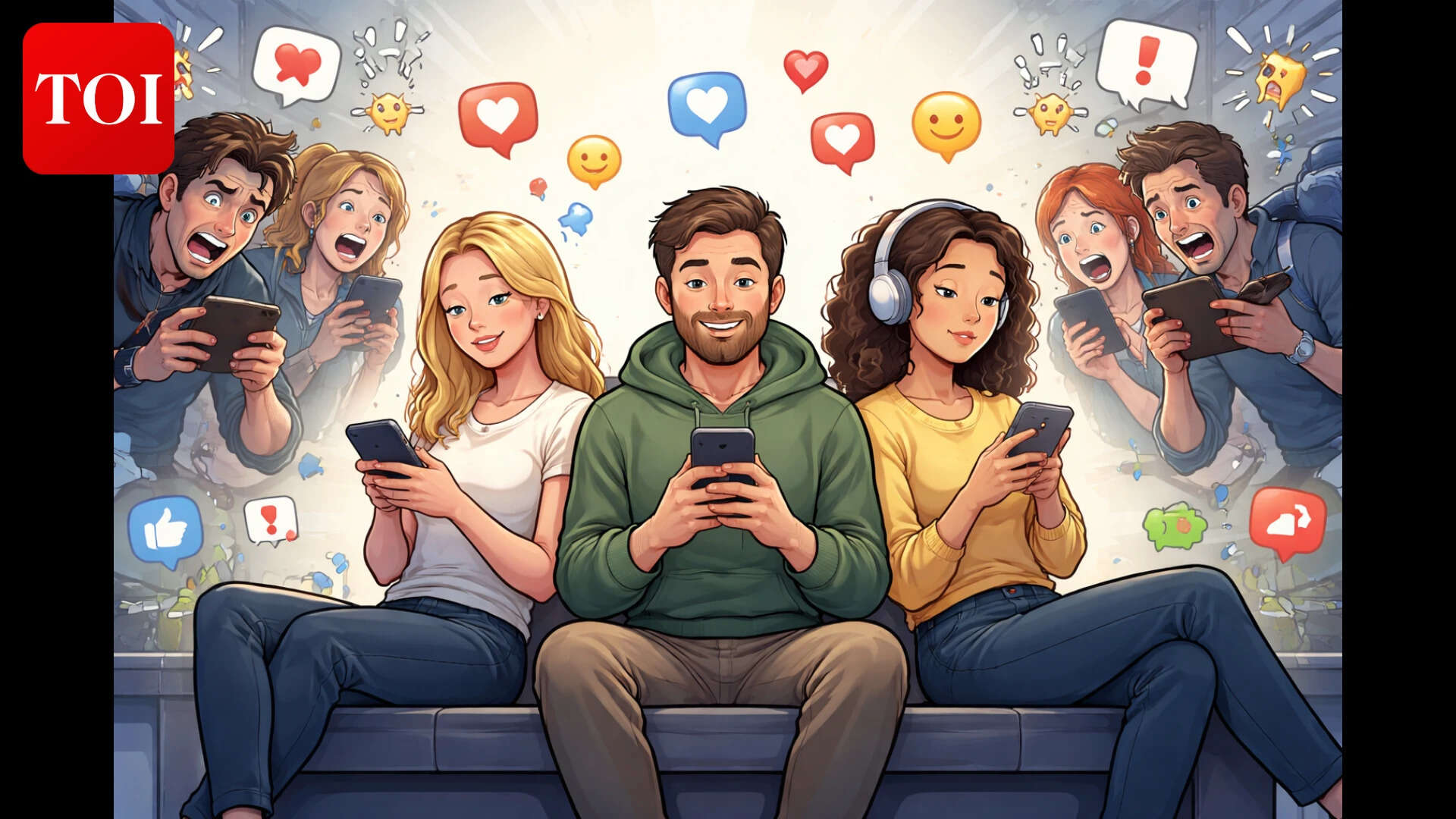
Opting out isn’t apathy, it’s agency for 'lurkers' who have understood that performance is optional and peace is a deliberate choice. (AI generated)
Sociologist Erving Goffman laid the groundwork for understanding this decades ago in his 1959 classic ‘The Presentation of Self in Everyday Life’. He described social interaction as theater: we are all actors managing impressions, performing roles for our audiences. “The self, then, as a performed character, is not an organic thing,” Goffman wrote, noting how maintaining a show we don’t fully believe creates alienation and wariness.Social media didn’t invent this performance. It globalized and gamified it. Platforms reward the highlight reel: the polished LinkedIn persona, the vacation-perfect Instagram grid, the outrage-optimized tweet. Every post becomes a bid for validation in front of invisible thousands. The result?
…Brutal cognitive and emotional tax
The moment something goes public, you lose control of how it’s received. And the emotional cost of trying to manage that reception is real.
French philosopher and filmmaker Guy Debord saw this coming. In his book, ‘The Society of the Spectacle’ (1967) he argued that modern capitalist life has shifted from being to having, and finally to appearing. Debord argues that social relations are now mediated by images (the “spectacle”), creating a passive, alienated, and consumer-driven existence where reality is replaced by representation.
He also said that modern life is mediated by images and representations, turning genuine experience into a commodified show: “The spectacle is a social relation between people that is mediated by an accumulation of images that serve to alienate us from a genuinely lived life.”Korean-German philosopher Byung-Chul Han takes this diagnosis further in ‘The Burnout Society’. He describes our shift from a disciplinary society (obey or else) to an achievement society, where we are “entrepreneurs of ourselves”. He predicted that constant outward self-optimization, personal branding, and performative productivity is bound to result in internal collapse. “The exhausted, depressive achievement-subject grinds itself down.
It is tired, exhausted by itself, and at war with itself.” Social media accelerates this. Every profile is a personal brand to maintain. Every story is a performance metric. We are all exhausted beyond our belief and understanding, and it’s taking a toll.Data backs the toll. A 2024 Frontiers in Psychology study found that intrinsic pressures like social comparison and privacy fears, plus extrinsic overloads (information, functional, social), drive social media fatigue and anxiety, pushing users toward lurking as a survival strategy.
Systematic reviews confirm drivers of fatigue span individual, relational, and environmental levels, with exhaustion now a defining feature of digital life.
Modern social scientists like Susan Cain have revitalized this focus on the “internal” through the study of introversion. In her work. ‘Quiet: The Power of Introverts in a World That Can’t Stop Talking’, she challenges the societal belief that the most effective and valuable individuals are those who are charismatic, gregarious, and always in the spotlight.
Cain argues that introverts, who listen more than they talk and think before they speak, possess a ‘Quiet Power’ that is often overlooked in our performance-obsessed culture.
The celebrity barometer
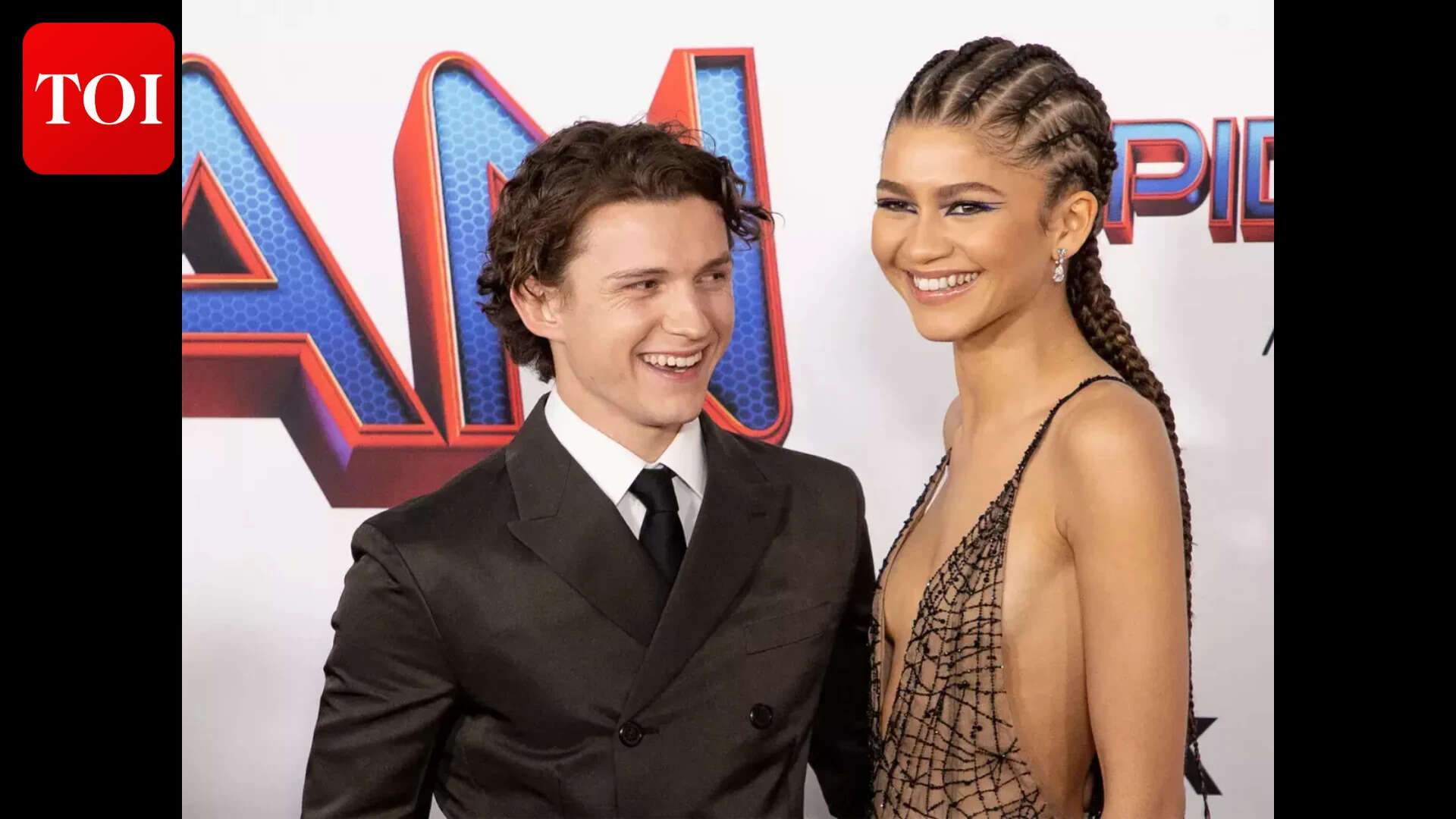
Tom Holland (see here with girlfriend Zendaya) said by deleting social media apps, he prioritized his health over his digital brand - a move that resonated with millions of users facing similar pressures.
The cultural shift away from digital performance is perhaps most visible in the actions of high-profile celebrities who have publicly stepped back from social media. These individuals, whose careers often depend on visibility, serve as a barometer for the broader societal exhaustion with the “spectacle”. Actor Tom Holland, known for his role as Spider-Man, famously announced a break from social media in a three-minute video, stating that he found Instagram and Twitter to be “over-stimulating and "overwhelming”.
Holland explained that reading about himself online caused him to “spiral”, which was “detrimental to his mental state”. By deleting the apps, the actor prioritized his health over his digital brand, a move that resonated with millions of users facing similar pressures.
Same goes for singer, actor and youth icon, Selena Gomez, who has one of the world's largest digital followings. She has repeatedly called social media “dangerous” and “terrible” for her generation. Gomez has taken long breaks from platforms like Instagram, noting that the constant need for validation and exposure left her drained and messed with her sense of self. Stepping away allowed her to be “more present” and focus on real-world connections and therapy. ‘Stranger Things’ star
Millie Bobby Brown
deleted apps to protect mental well-being and escape from cyberbullying and over-exposure. Academy Award-winning British actor
Kate Winslet
has called social media “toxic” for mental development and spoken extensively over its impact on young people.
Could ‘lurking’ be a survival strategy?
But the pivot toward peace is not just about logging off; it is about reclaiming the capacity for deep, human connection. Sherry Turkle, a professor at MIT, argues in Reclaiming Conversation that our "constant connection" to devices is actually making us feel "alone together".28 Turkle suggests that conversation is the "most human and humanizing thing we do," as it is the birthplace of empathy and intimacy. Today, that spectacle lives in our pockets.
We don’t just live, we broadcast a version of living, optimized for algorithms that profit from our exhaustion. Looking at trends on X, we get an idea of what the ‘outrage of the day’ is, and then mindlessly add our views to it, unless we are the ‘lurkers’, and have understood the game, and now, just sit there and observe. The numbers are striking. The Northeastern University research shows roughly 90% of social media users are lurkers: consuming without contributing.
But far from passive, this is efficient – information without the psychological tax of self-presentation.

Selena Gomez has one of the world's largest digital followings, yet repeatedly called social media “dangerous” and “terrible” for her generation.
Intentional disengagement works. A JAMA Network Open study of young adults who reduced social media use for just one week saw depression symptoms drop 24.8%, anxiety 16.1%, and insomnia 14.5%. Another experiment limiting use to 30 minutes daily boosted positive affect while slashing anxiety, depression, loneliness, and FOMO.
This isn’t niche. It's a cultural undercurrent. Anees Baqir, assistant professor of Data Science at Northeastern University notes in his study that lurkers still shape trends through consumption alone, proving influence doesn’t require broadcasting.
In workplaces, the “always-on” hustle culture mirrors the same fatigue. In friendships, curated vulnerability on apps has given way to quiet real-life connection for many.
Opting out isn’t apathy, it’s agency
Tech thinkers echo the philosophers. Cal Newport, in his book ‘Digital Minimalism’, argues that we must reclaim attention from the “nervous twitch” of constant checking to build an intentional life. Tristan Harris, co-founder of the Center for Humane Technology, highlights how platforms shred shared reality and erode peace through engineered distraction and comparison. In such a scenario, opting out isn’t apathy.
It's agency. It’s the rejection of the spectacle for the uncurated self. Lurking, logging off, or simply refusing the performance frees our mental energy for deep work, genuine relationships, and inner quiet. In the larger social context, this exhaustion signals a deeper hunger. We've built a world that rewards visibility over substance, noise over signal, performance over presence. The quiet majority opting for peace—whether by lurking, detoxing, or redefining success offline, are not dropping out. They're modelling a saner path forward. The performance is optional. Peace is the deliberate choice. And more of us are making it every day.






 English (US) ·