

 1 hour ago
5
1 hour ago
5
ARTICLE AD BOX
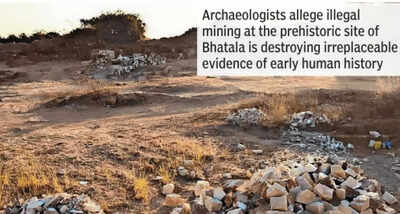
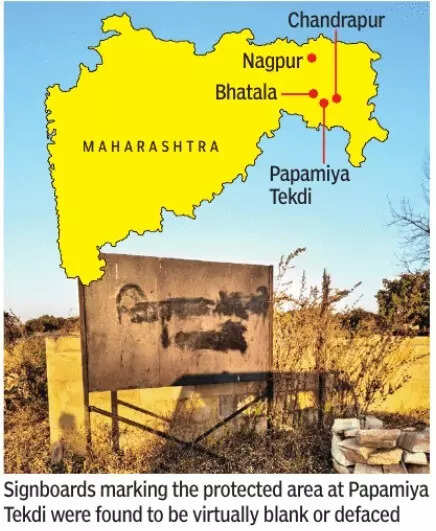
Papamiya Tekdi, on the outskirts of Chandrapur city, is recognised as one of Maharashtra’s largest Stone Age sites. Documented since the late 1950s, it once yielded thousands of Acheulian (Lower Palaeolithic) hunting tools, offering evidence of early human presence dating back over 150,000 years.This rich trove of history, however, is in danger of getting lost forever because of illegal mining and unfettered construction activity.Archaeologists say a similar story is unfolding at Bhatala village, about 80km from Nagpur. Researchers from Nagpur University (NU) say Bhatala is part of a wider prehistoric landscape, more than two million years old, linked to early human activity along the Wainganga-Wardha river systems.
Field surveys have found red quartzite artefacts, hand axes, cleavers and scrapers — tools that help explain how early humans lived, hunted and moved through the region.The Palaeolithic period accounts for over 95% of human history, yet key questions about India’s earliest inhabitants — their origins, migration routes and adaptive strategies — remain unresolved. Sites like Papamiya Tekdi and Bhatala offer rare clues through the tools, geological layers and spatial patterns found there.
In 2025, Nagpur University researchers formally flagged Bhatala as vulnerable, warning that alleged mining and blasting in and around the site could destroy deposits that have survived for millions of years. Bhatala’s value lies in what rests on and just below the surface, such as Palaeolithic tools embedded in quartzite, red sandstone and chert. Archaeologists say quarrying has crept dangerously close, despite the site having no mineral wealth.At Papamiya Tekdi, a govt medical college and a cancer hospital were approved in 2014. Even after fresh Stone Age tools were found there in 2019, construction continued in 2020, permanently altering the prehistoric landscape, say researchers.
.
In Nov 2018, the state govt approved a prehistoric museum-cum-archaeological park on a four-acre plot at the site, but eight years later, the project remains on paper. Independent researcher Amit Bhagat, in an appeal to Pravin Pardeshi, chief economic adviser to the chief minister, said that despite the state cultural affairs department announcing a Rs 258-crore heritage revitalisation package in 2023, no progress had been made in securing or developing the site.Archaeologists from NU alleged that signboards marking the protected area were removed or defaced. A spot visit revealed that the signboards were virtually blank. After a TOI report, the state archaeology department did survey the site and ask district authorities to curb mining and trespassing, but violations continue to this day, the researchers allege.At Bhatala, a 10th-century temple listed by the Directorate of Archaeology and Museums also faces risk as the surrounding prehistoric deposits remain unfenced and poorly demarcated.District officials deny any violations. Warora tehsildar Yogesh Kautkar said no destructive activity was taking place within the prohibited area and that mining was being done beyond the restricted radius, with permissions. Archaeologists dispute this, arguing that once an area is established as a prehistoric site, mining should be avoided altogether.







 English (US) ·