

 1 hour ago
5
1 hour ago
5
Thangzuala’s (name changed) life seemed perfectly normal until he began experiencing persistent fever, diarrhoea and infections late last year. Alarmed by rapid weight loss, the 24-year-old typed his symptoms into his phone.
When HIV popped up as a likely cause, he froze. The search results also listed clinics, helplines and next steps. But he wasn’t sure where to begin — or indeed, whether to begin at all. “How could this be happening to me,” he recalls asking himself. “To me, HIV was a disease of sex workers and drug users. I feared being called immoral.”
He was struggling with the thought of visiting a testing centre when he came across an Instagram post by the Mizoram State AIDS Control Society (MSACS), about a new health and outreach hub called SPOT or ‘Safe Place for Open Talk’. The liberating sound of its name, together with its promise of free HIV services, was an instant draw, but what intrigued him more were the accompanying visuals: the place didn’t look anything like a clinic.
The next day, Thangzuala found himself in the basement of the Mizoram Upa Pawl (MUP) headquarters in Aizawl, where he discovered a vibrant café that offered not just brews and snacks, but also free HIV and STI testing, condoms, counselling and support.
Before long, Thangzuala was responding to an unhurried counsellor’s gentle questions. For the first time since his turmoil began, he had loosened up without flinching at the attention. By the end, he was ready to visit a testing centre, encouraged by the counsellor’s offer to accompany him.

At SPOT cafe in Aizawl. | Photo Credit: MSACS
The anti-clinic
Opened on February 9 this year, SPOT is rewriting the rules of engaging with young people on sexual health. In its relaxed, intimate setting — complete with a graffiti wall, TV, karaoke and fun games — youngsters can feel at home even amid condom dispensers and counsellors.
The picture-postcard landscapes of Mizoram have long belied a staggering public health challenge. One of India’s smallest states — second smallest by population and fifth smallest by area — Mizoram has the country’s highest HIV prevalence, currently at 2.75% of the population, and the highest incidence with new cases at around 0.9%, according to the India HIV Estimate 2025 technical report.
Between April 2025 and January 2026, Mizoram recorded 1,478 new cases — 955 men and 523 women, including 86 pregnant women. “What is especially worrying is that the majority of people testing positive are in their most productive years,” says Dr. Jane Rinsangi Ralte, Project Director, MSACS.

“We cannot force people away from certain actions, but we can definitely give them safer options.”Dr. Jane Rinsangi RalteProject Director, Mizoram State AIDS Control Society
The situation has been compounded by the influx of cheap drugs from across the porous border with Myanmar, part of Southeast Asia’s drug-producing Golden Triangle; abysmally low condom use; and ‘serial monogamy’, where multiple monogamous relationships over a lifetime increase the risk of HIV transmission.
The epidemic was once driven almost entirely by intravenous drug use. That has now fallen to around 27%. Nearly 70% of new cases are attributed to sexual transmission.
Shadows out, humans in
It is against this grim backdrop that SPOT has emerged as a first-of-its-kind, people-centred health initiative, created through a partnership between MSACS and AHF India Cares, the India programme of AIDS Healthcare Foundation, a U.S.-based non-profit. SPOT is not a clinic trying to mimic a café, but a social hub meant to normalise conversations and care around sexual health and sexually transmitted infections (STIs).
“In a State where adult HIV prevalence is almost 13 times the national average, we need to look beyond incrementalism,” says Lalrinpuii, Health and Family Welfare Minister of Mizoram. She has revived the NACO-mandated Legislative Forum on AIDS in Mizoram and raised ₹20 lakh through legislator contributions to help those who cannot afford to travel to ART (antiretroviral therapy) centres. “Unfortunately, the most affected age group also happens to be the one most reluctant to seek out help,” she says.
For services to outpace stigma, the minister believes innovation must become the cornerstone of public health. “New models like SPOT, aligned with rights-based national and international principles and frameworks, bridge the gaps left by conventional systems,” she says. “The initial response to SPOT indicates a great opportunity for us to institutionalise novel approaches so as to deliver clinical outcomes with dignity and comfort. Our goal is to scale up such cafés across Mizoram. They can also be replicated across India in keeping with local cultures.”
“In a State where adult HIV prevalence is almost 13 times the national average, we need to look beyond incrementalism.”LalrinpuiiHealth and Family Welfare Minister of Mizoram
Prevention can work only when young people don’t feel reduced to a statistic. “It is unrealistic to expect them to walk into conventional health facilities that make them feel judged,” says Dr. V. Sam Prasad, Country Programme Director, AHF India Cares. “SPOT meets young people where they already belong — socially, emotionally, culturally — to help them own their health with confidence and dignity. For young adults in Mizoram, this can make all the difference between meaningful engagement and being left behind.”
The café thus becomes more than just a setting. “Coming out of the closet is critical to replacing stigma with empathy. This is where SPOT can play a vital role,” says Henry Zodinliana Pachuau, Professor of Social Work at Mizoram University and co-author of several national and global studies on HIV/AIDS and STIs in Mizoram. “Amid the State’s booming café culture, SPOT provides the perfect push for young people to not only talk freely about STIs but also benefit from crucial guidance on healthy behaviours and harm reduction services such as syringe distributions and opioid substitution therapy.”
The name SPOT was deliberate. “In the Mizo language, ‘spot’ is slang for illicit places where people go to drink or use drugs,” explains Dr. Ralte. “We wanted to change that negative connotation.”
A counselling session at SPOT cafe | Photo Credit: MSACS
In the few weeks since it opened, SPOT has welcomed dozens of youngsters, one as young as 10, who come after school or college, between work shifts, during dates, or while hanging out with friends. They seek life-critical answers, mental health support, relationship advice and free condoms — all over a cuppa in a discreet environment, unburdened by tedious appointments and explanations.
Like in real life, curiosity is often how it begins. The 10-year-old, for example, visiting with her parents, wanted to understand how SPOT could help children her age deal with stress and confusion.
All heart, no judgment
“To me, SPOT feels like the safe space I didn’t have when I first discovered I was HIV-positive,” says Vanlalruati Colney, activist and founder of Positive Women’s Network of Mizoram. She was one of the earliest Mizo women to publicly disclose her HIV-positive status in 2003. “I have lived through the brutal reign of fear and shame that accompanies HIV and can break people to the point where they lose the will to even seek help,” she adds. “SPOT humanises the challenges that ignorance and affliction throw at young people. This is what the battle against HIV/AIDS needs — compassion, courage and care without judgment.”
In the few weeks since it opened, SPOT has welcomed dozens of youngsters. | Photo Credit: MSACS
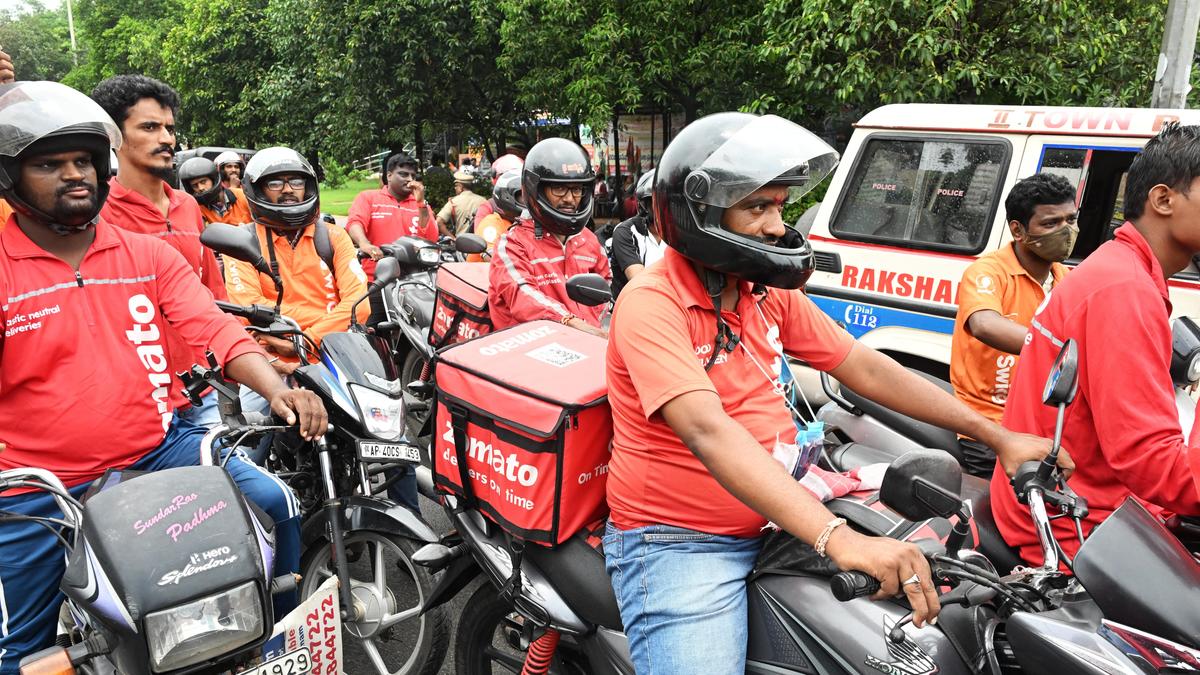
SPOT has good company in a city devising new ways to puncture the shroud of reticence, such as a massive 30-ft. condom billboard — Aizawl’s first — and the unique ‘Love Brigade 2.0’ campaign, where two-wheeler taxi riders, wearing condom jackets, distribute free protection. Yet, Dr. Ralte says, it was hard to find a place for SPOT. “We wanted a central location, but most people were hesitant to rent us the space. Eventually, Laltanpuia, owner of Aizawl Art Gallery, offered us a nearly 400 sq.ft. space below the gallery and the project became a reality with the support of MUP.”
SPOT will soon begin dual-kit HIV and syphilis testing, says Dr. Ralte. “There’s already growing demand to start blood tests as well.”
SPOT wants a positive diagnosis to become the beginning of care, not the end of hope. “We cannot force people away from certain actions, but we can definitely give them safer options,” concludes Dr. Ralte.
The writer is an independent journalist and commentator.








 English (US) ·