

 58 minutes ago
6
58 minutes ago
6
ARTICLE AD BOX
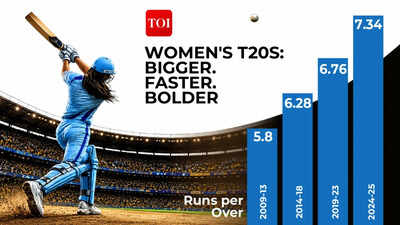
Run rates among elite nations are up 27%, boundaries have surged and franchise leagues have changed batting habits, making 150 the new benchmark.
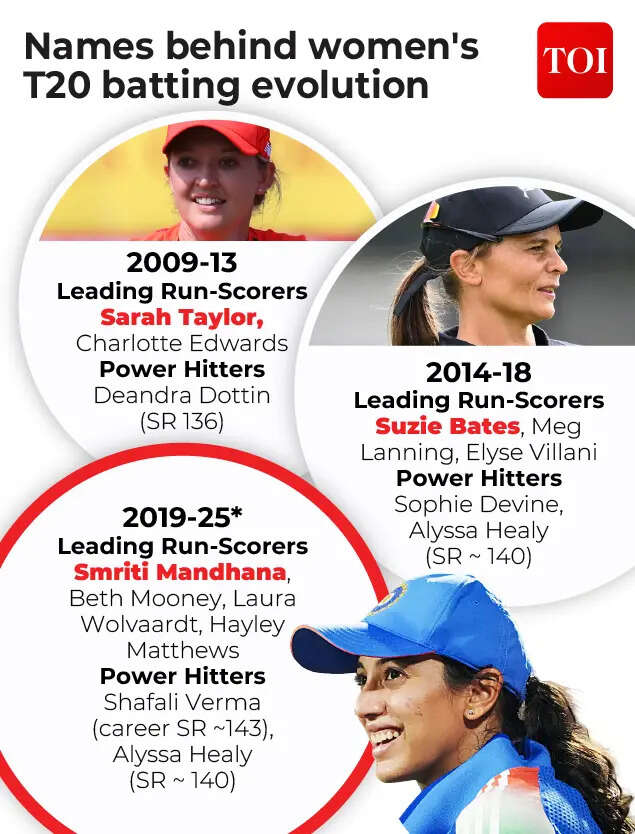
Long before Beth Mooney combined consistency with high tempo, Hayley Matthews evolved from a promising all-rounder into one of the most destructive batters in the game, or Shafali Verma's first instinct became to attack rather than assess the conditions, women's T20 cricket operated under the usual get settled and go for runs mantra.To be fair, men’s T20 cricket also went through that phase in the early years of T20s. Batters prized wickets in hand, risk-taking was cautious, and powerplay was something to navigate, not exploit.In women’s cricket, there was the Charlotte Edwards era, where strike rates around 100 separated the best from the rest. There was Suzie Bates, whose greatness was built on accumulation and consistency. Even Meg Lanning, arguably the most complete batter the women's game has produced, was more about building an innings rather than dismantling attacks from the outset.Back then, scores of 120 or 130 were competitive and team batting first and reaching 140 felt comfortably ahead.
Design: Mukesh Sharma
However, seventeen years later, on the eve of another Women's T20 World Cup, those assumptions have changed, and not because one tournament or one player changed everything.Like the men’s game, it was part of the natural progression.There is always a trade-off in batting. Score heavily or scored quickly: Rarely both, unless you are Vaibhav Sooryavanshi, that is.
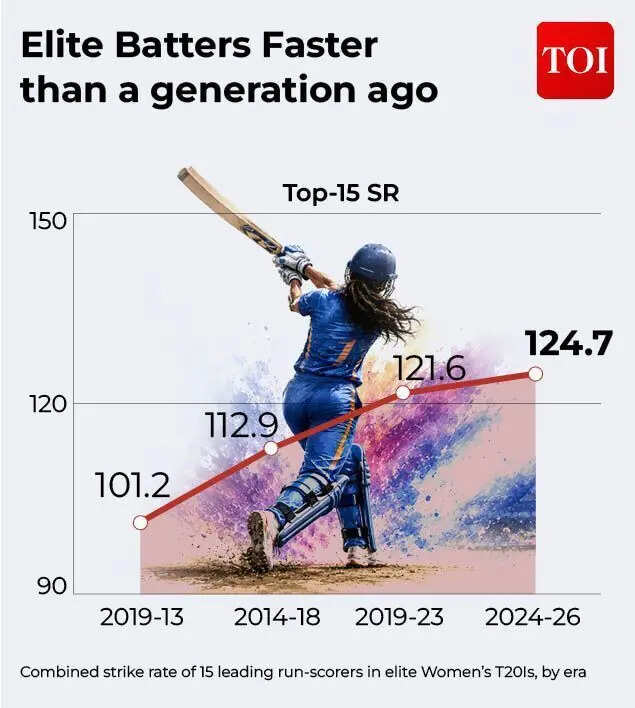
Be that as it may, the England legend Edwards finished with over 2600 T20I runs at a strike rate a shade over 100. Bates spent much of her career around similar territory.Then came Lanning. The long-time Australian captain was the bridge between eras. She retained the consistency of the previous generation while adding a level of aggression. Averaging over 36 and striking at nearly 124, Lanning occupied a sweet spot that few before her had managed.And then the game moved again.Currently, Mooney averages close to 40 while striking above 125. Current England captain Nat Sciver-Brunt combines a strike rate north of 120 with incredible consistency. West Indian Matthews has become one of the most dangerous powerplay batters in the world, while Shafali's career strike rate hovers around 130.
Design: Mukesh Sharma
And it is a trend not for a select few only.Among the established nations in women’s cricket (Top 10), run rates have risen from 5.8 an over during 2009-13 to 7.34 in 2024-25.
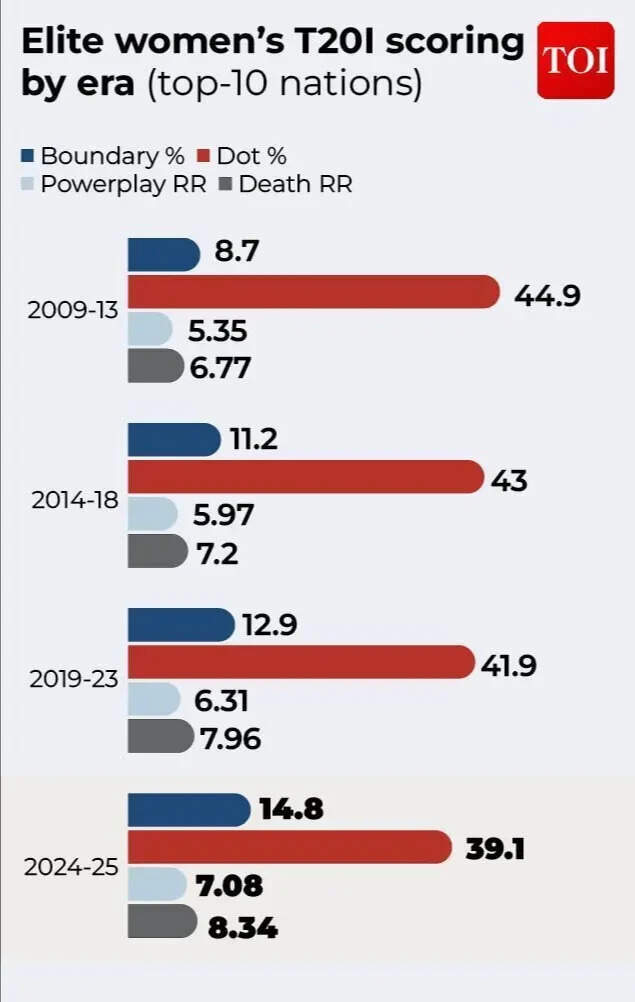
In 2025, they touched 7.85 - the highest figure on record.A 27 per cent increase spread across nearly two decades.Boundary percentage among elite sides has risen by almost two-thirds over the years. Dot balls have steadily declined. Six-hitting, once occasional, has become increasingly central to scoring.
Design: Mukesh Sharma
And more strikingly, Powerplays are being exploited to the hilt. Shafali doesn't believe in settling in.
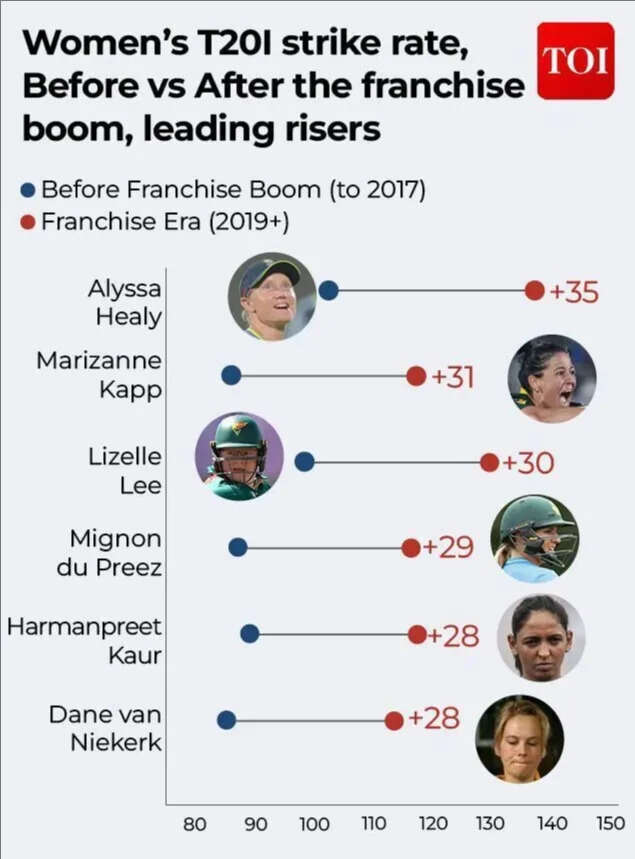
Matthews treats the first six overs as an opportunity, and the likes of Danni Wyatt-Hodge and Phoebe Litchfield go for the kill early on. Powerplay scoring has improved over the years, even faster than death-over scoring.So the natural question is, what changed? Or what was the catalyst for this change in mindset? Numbers say franchise league. The Women's Big Bash League laid the foundations. Leagues like the Women's T20 Blast and the WCPL took it forward, and the Women's Premier League supercharged it.The sharpest increase in international scoring coincides almost perfectly with the maturing of the WBBL and the arrival of the WPL. High-scoring cricket became a habit.
Design: Mukesh Sharma
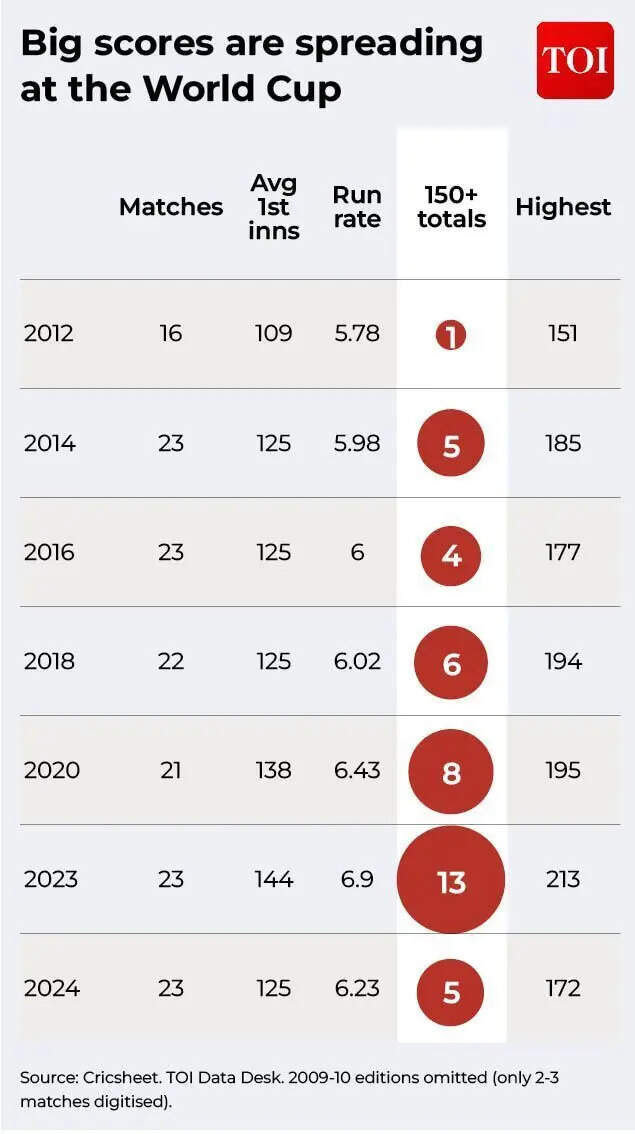
Which brings us to the World Cup.Viewed across time, even the World Cup has begun to reflect the broader changes taking place around it. In 2012, only one team crossed 150 throughout the tournament. By 2020, there were eight such totals.In 2023, South Africa recorded 13 scores of 150 or more, while Sri Lanka's 213 against Scotland was the highest total in Women's T20 World Cup history.The UAE edition in 2024 brought those numbers down again. But that dip says more about conditions than it does about direction.Outside the World Cup bubble, scoring rates in women's T20 internationals continued to climb and touched their highest level ever in 2025.And that is why this Women's T20 World Cup feels different. The definition of a winning score has changed. 120 once felt commanding; today, 150 feels merely competitive.
Design: Mukesh Sharma
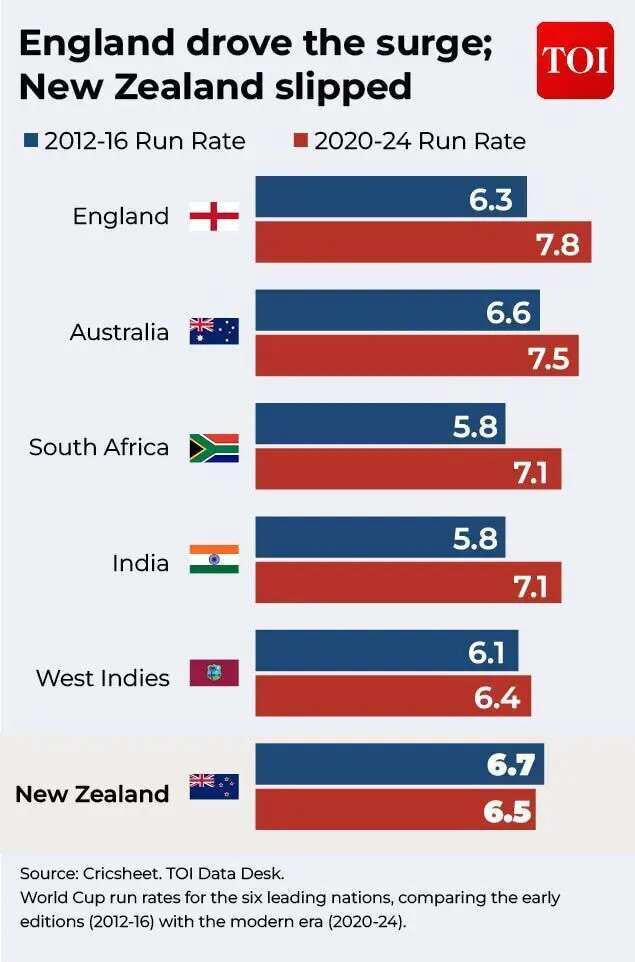
However, not every team drove that surge equally. Comparing early World Cups (2012-16) with recent ones (2020-24), England accelerated hardest - run rate up from 6.41 to 7.82 and powerplay scoring from 6.5 to 7.85 an over.Australia, the dominant side, pushed from 6.76 to 7.48. India made the single biggest powerplay leap, from 4.74 to 7.20, a sign of how completely their top order has been rebuilt around aggression.
South Africa climbed sharply too.The one exception is New Zealand, whose World Cup scoring actually drifted slightly down - the only top side not to join the surge.
Design: Mukesh Sharma
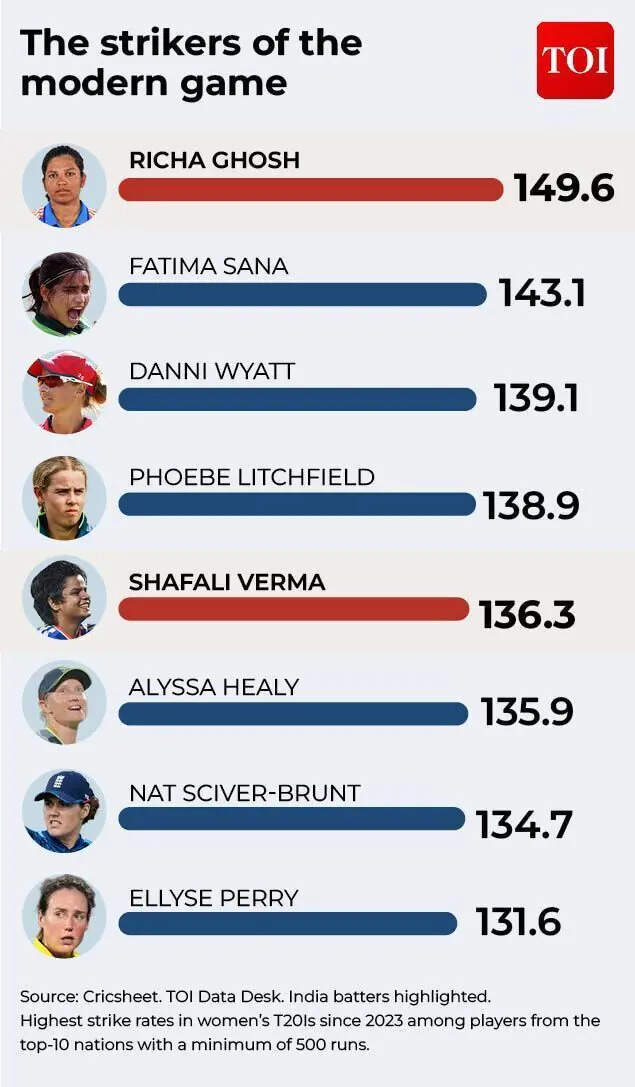
And who are the strikers driving this surge today? Among batters with 500-plus runs since 2023, India's Richa Ghosh leads the way at a strike rate near 150 - a designated finisher who holds the joint-fastest fifty in women's T20I history.Behind her sit Pakistan's Fatima Sana, England's Danni Wyatt, Australia's Phoebe Litchfield and India's Shafali Verma
Design: Mukesh Sharma







 English (US) ·