

 1 week ago
7
1 week ago
7
ARTICLE AD BOX
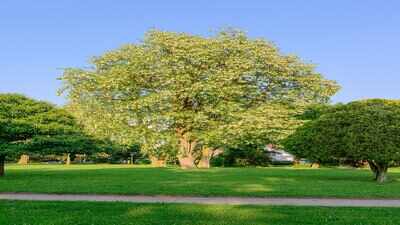
A mature black locust tree in full bloom. Native to North America, the species has become Hungary's most widely planted forest tree, valued for its rapid growth, durable timber, and ability to improve soil fertility through nitrogen fixation. Image Credits: Wikimedia Commons
Trees introduced outside their native habitats often struggle to adapt, but a few go on to reshape entire landscapes. One of those species is the black locust tree, which is an originally North American tree that has become one of the key resources of Hungary.
Black locust was brought to Europe in the early 17th century and introduced to Hungary in the 1710s and 1720s to stabilise the wind-blown, sandy soils of the Great Hungarian Plain. The goal was to stabilise the wind-blown, sandy soils of the Great Hungarian Plain. In the following three centuries, the role of this species gradually changed from that of restoring the lands to being the main commercial tree species. Black locust now covers 23% of Hungary's forest area and provides 19% of annual timber production, making it the country's most widely planted tree species.
Hungary's long experience with black locust management offers lessons for countries seeking resilient tree species that can thrive in a changing climate.From soil stabilisation to a forestry success storyThe story of black locust in Hungary began with a specific purpose: to rehabilitate degraded areas. Extensive plantations were created on the Great Hungarian Plain during the 19th century to combat soil erosion induced by moving sands. The tree turned out to be particularly useful in a rather short period of time due to its rapid growth, deep-rootedness and its ability to enrich soil through nitrogen fixation.
Unlike many other tree species, black locust grows well not only on fertile soils but also on relatively infertile sites, improving conditions for future vegetation.As the uses of this tree became more diverse, its function evolved into a much broader range of applications. Hard, durable, rot-resistant wood can be used in construction, furniture, fence posts, poles and firewood. In addition, the flowers of black locust are an important source of nectar for bees, supporting one of Hungary's most profitable beekeeping sectors.Researchers began breeding programmes in the 1960s to improve productivity, building on Hungarian research. Superior trees with desirable traits such as faster growth rate, straight stem and higher-quality timber have been chosen and used for developing better cultivars. Jászkiséri, Kiscsalai, Nyírségi, Üllői and Szajki are examples of cultivars that produce more timber than trees grown from ordinary seed.
Another round of breeding programs yielded more clones tolerant to drought and different soils and climatic conditions.According to Acta Silvatica et Lignaria Hungarica highlights that Hungary's breeding and management programmes transformed black locust into one of Europe's most productive plantation species. Through clone selection, improved propagation techniques, and scientifically guided forest management, researchers significantly increased timber yield while improving wood quality and environmental adaptability.
These long-term improvements continue to influence black locust cultivation both within Hungary and internationally.Supporting sustainable forestry and renewable energyBeyond conventional forestry, black locust has emerged as an increasingly valuable species for renewable energy production. As agricultural land is gradually withdrawn from food production in some regions, fast-growing tree plantations have become an attractive source of biomass.
Black locust is particularly well suited for this purpose because of its rapid juvenile growth, excellent coppicing ability, dense wood, high dry matter production, and favourable combustion characteristics.Hungarian field experiments have demonstrated that plantation design plays a major role in biomass yield. Trials comparing different planting densities showed that closely spaced plantations produced significantly greater annual biomass than wider spacings.
Researchers also found that improved cultivars such as Üllői outperformed common black locust in dry matter production, making them especially suitable for dedicated energy plantations.
Coppice systems, in which new shoots regrow from existing roots after harvesting, reduce establishment costs while allowing repeated biomass production without replanting.Effective forest management has also contributed to the species' commercial success.
Black locust reaches its fastest height growth during its first five years and typically achieves peak annual volume growth between 20 and 35 years of age, depending on site quality. Careful thinning, pruning, and spacing allow foresters to maximise timber quality while maintaining healthy stands. On productive sites, plantations can generate 12 to 14 cubic metres of timber per hectare a year, while poorer sites can still be used economically for biomass and fuelwood. Black locust also has ecological value beyond wood production. Its nitrogen-fixing root system improves soil fertility, helping rehabilitate degraded land and reducing the need for artificial fertilisers. The species also contributes to erosion control, carbon storage, biodiversity support, and landscape restoration. Although it requires careful ecological management because it can spread aggressively outside plantations, controlled cultivation has shown considerable economic and environmental benefits.
A study published in Forest Ecology and Management concludes that decades of breeding, silvicultural improvement, and careful stand management have made black locust one of the most productive plantation tree species in Central Europe. The research emphasises that improved cultivars, combined with site-specific management practices, have enhanced timber quality, biomass production, and resilience under diverse environmental conditions.
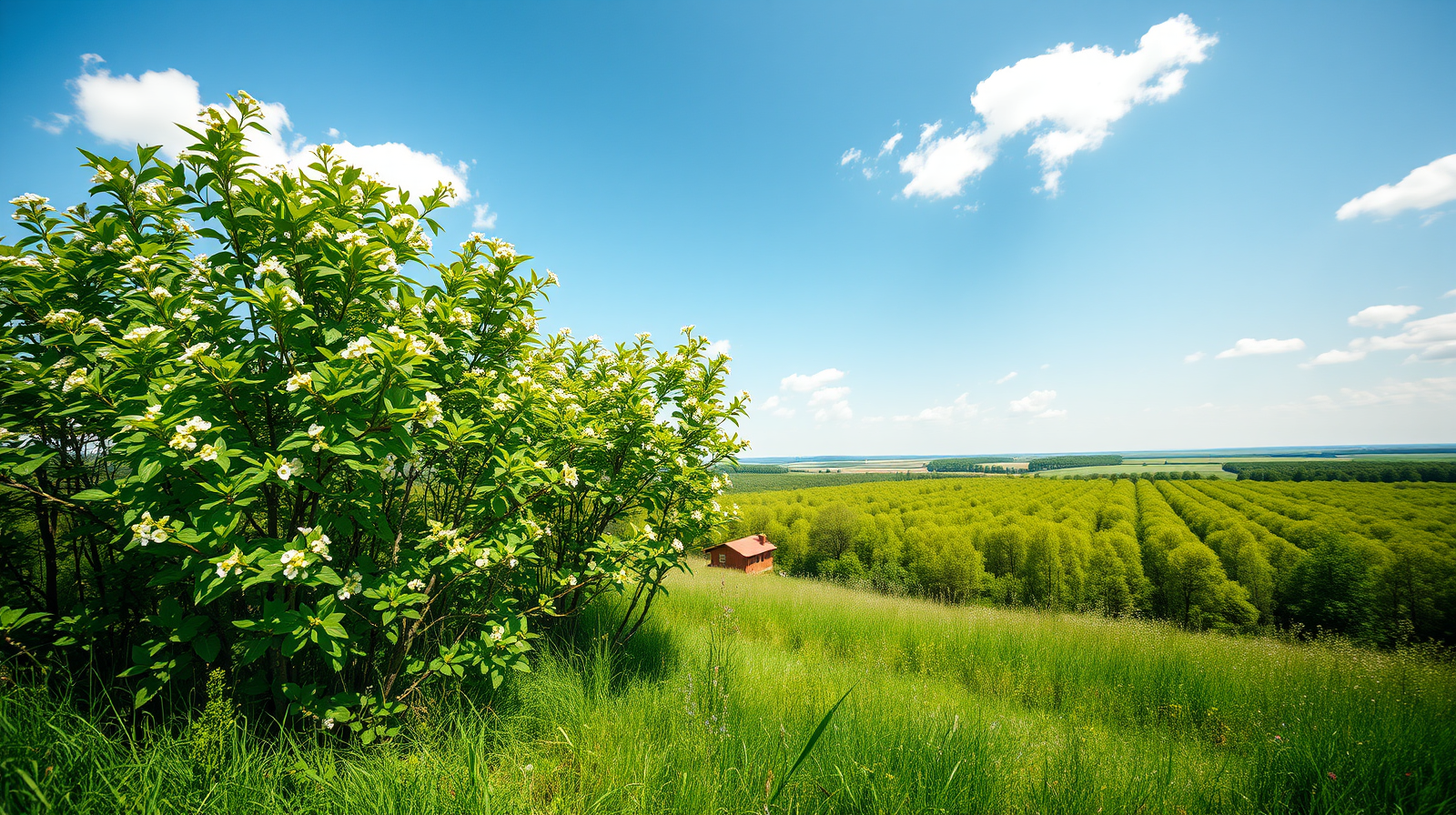
Young black locusts bloom vibrantly, sunlight dapples a lush forest floor, and the Great Hungarian Plain stretches to a clear sky.
A model for climate-resilient forestryAs climate change increases pressure on forests worldwide, black locust is attracting renewed international interest because of its resilience and adaptability. Hungary's experience demonstrates that long-term scientific research can transform an introduced species into a sustainable forestry resource capable of delivering economic, environmental, and renewable energy benefits simultaneously.Researchers expect cultivation to expand further in parts of Southern Europe, including Italy, Greece, Spain and Turkey, as well as in China and South Korea, where demand for fast-growing, drought-tolerant tree species is rising. Its combination of rapid growth, durable timber, soil-improving properties, and strong biomass potential makes black locust particularly valuable in regions facing increasing environmental stress.It shows how breeding, scientific management and ecological planning can support both economic development and environmental sustainability. As countries seek resilient solutions for future forestry, Hungary's black locust programme provides an example of how research-driven innovation can transform a single tree species into a cornerstone of sustainable land management.









 English (US) ·