

 1 hour ago
3
1 hour ago
3
ARTICLE AD BOX
5 min readApr 27, 2026 03:00 PM IST
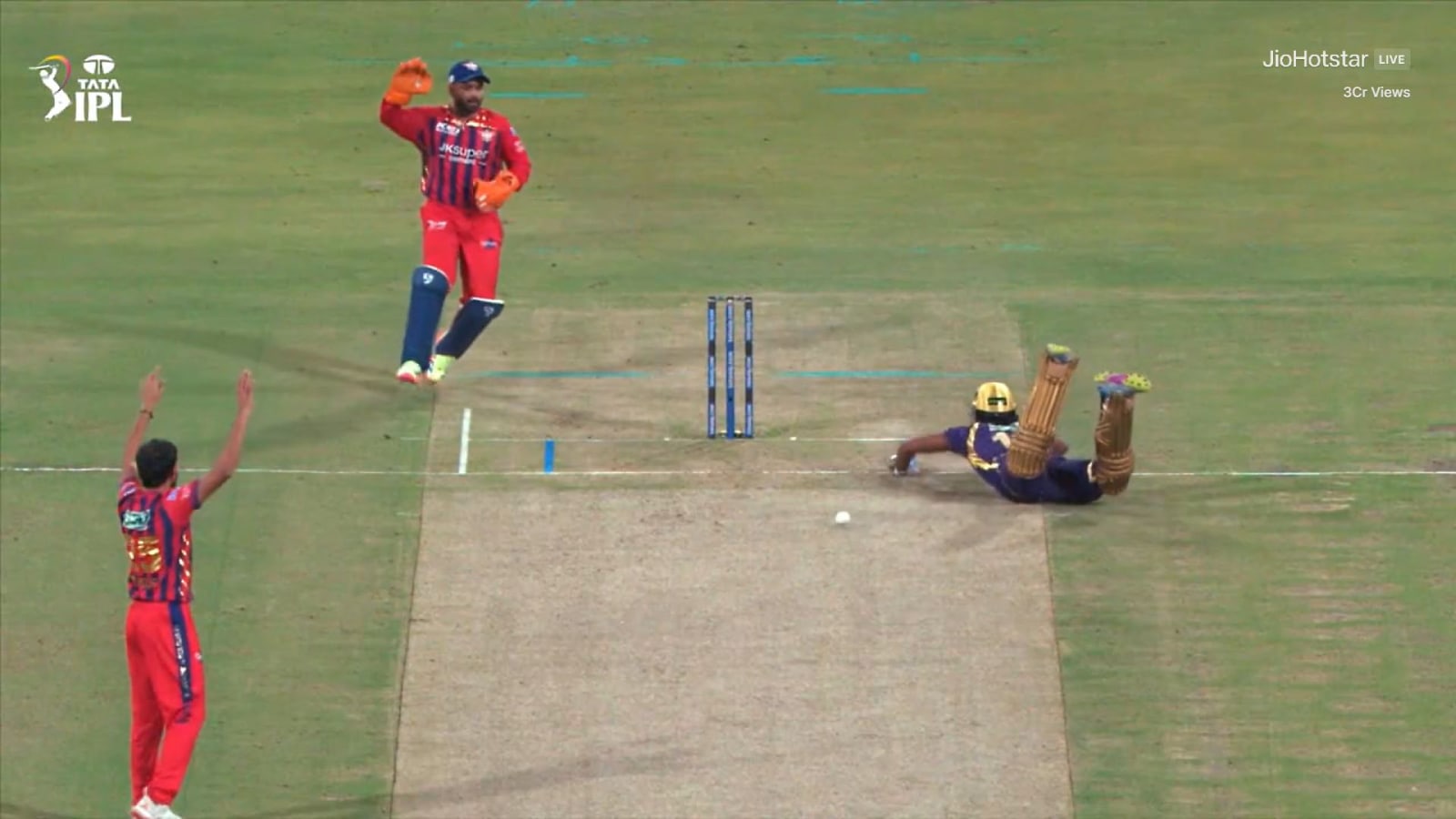 Angkrish Raghuvanshi was given out for obstructing the field. (Credit: JioHotstar)
With his dismissal in the match against Lucknow Super Giants on Sunday evening, Kolkata Knight Riders batsman Angkrish Raghuvanshi became only the fourth batter in IPL history to be given out for obstructing the field.
In the match, which KKR won eventually in a super-over, Raghuvanshi punched a Prince Yadav delivery towards mid-on and started to take a run only to be sent back by Cameron Green. With fielder Mohammad Shami aiming for the strikers’ end, the ball hit a diving Raghuvanshi, with the third umpire adjudging Raghuvanshi to be out. The KKR batter soon joined the likes of Yusuf Pathan (2013), Amit Mishra (2019) and Ravindra Jadeja (2024) to be adjudged out while obstructing the field.
Former India opener Virender Sehwag believes a harsh decision was made by the umpire in Raghuvanshi’s case, and the batsman was ‘not out’ in his eyes.
“Every batsman looks at the fielder when the ball goes to them. You take one run, you take two runs, and you see which end is safer. If the throw was coming to the bowling end, there was no need to dive. But when you know the throw is coming to your end, then you will dive. Your eyes will naturally go towards the fielder. It’s not that his eyes were on the fielder because he thought, ‘I am stopping something.’ He dived after that. So, I believe it’s not out. When he turned, he was looking at the fielder to see where the ball was coming from. But after turning, he ran and jumped. He wasn’t looking at the fielder anymore, nor was his attention in front. In my opinion, a slightly harsh decision has been made here,” Sehwag said on Cricbuzz.
According to the IPL playing conditions, which include the MCC rulebook, clause 37.1.4 states about the dismissal mode being obstructing the field.
“For the avoidance of doubt, if an umpire feels that a batter, in running between the wickets, has significantly changed his direction without probable cause and thereby obstructed a fielder’s attempt to effect a run out, the batter should, on appeal, be given out, obstructing the field. It shall not be relevant whether a run out would have occurred or not,” states the IPL 2026 rulebook.
Former India batsman and coach Sanjay Bangar too said that Raghuvanshi was not out and his turnaround was intentional. “Yes, he did have a look when the ball was about to be released but it isn’t possible for a batter to make an abrupt turn there has to be a little bit of a curvature for a batter to turn. Now if he had turned on his left, he would have run on the pitch. So it’s a very natural instinct for a batter to run away from the pitch. And that is what gets into our subconscious. Because having played for such a length of time for any player. I think he is hard done by because no batter at that point of time would have gone back immediately making that 90 degree turn and avoided being hit by that particular ball. I don’t think it was intentional,” said Bangar on ESPNCricinfo.
Story continues below this ad
Post the dismissal, Raghuvanshi was seen discussing the dismissal with the on-field umpires.
Former T20 World Cup winner Carlos Brathwaite added that: “I think the funniest part of it all is when he (Angkrish Raghuvanshi) went to the umpire and he kind of gesticulated like do you want me to just turn like that? It’s genuinely not possible. And if you watch the arc that he ran up, he has hit the ball over his hand, he is running as you are told to run the bowler if he is coming over the hockey. Then if you start to put on the brakes, then how are you going to run from there and then just stop? Like you will have a little bit of curvature and you are looking to see where the ball is. Because if the ball doesn’t come to your end, you just relax.
“If it is coming to your end and you are in trouble. You have to put in the dive, which I did. I think it was a tough one and I feel sometimes umpires better understand and appreciate the rhythm of the game. So if you look at it, just square on and think, did he look at the ball before it was thrown and did he dive in the way of the ball? Yes but if you add some context, and add did he somewhere else to go in the natural motion, the answer is no. So he was doing what he was doing. I think that’s where some context could have been added and it should have been not out on the pretext that he could not go anywhere else,” said Brathwaite on ESPNCricinfo.






 English (US) ·