

 1 week ago
4
1 week ago
4
ARTICLE AD BOX
- News
- India
- ‘I worked even on day my daughter died’: Paid just Rs 66 daily, Chhattisgarh midday meal cooks seek better wages
Protesters are demanding that their wages be increased to Rs 340 a day. They also spoke of being under pressure to work every day.
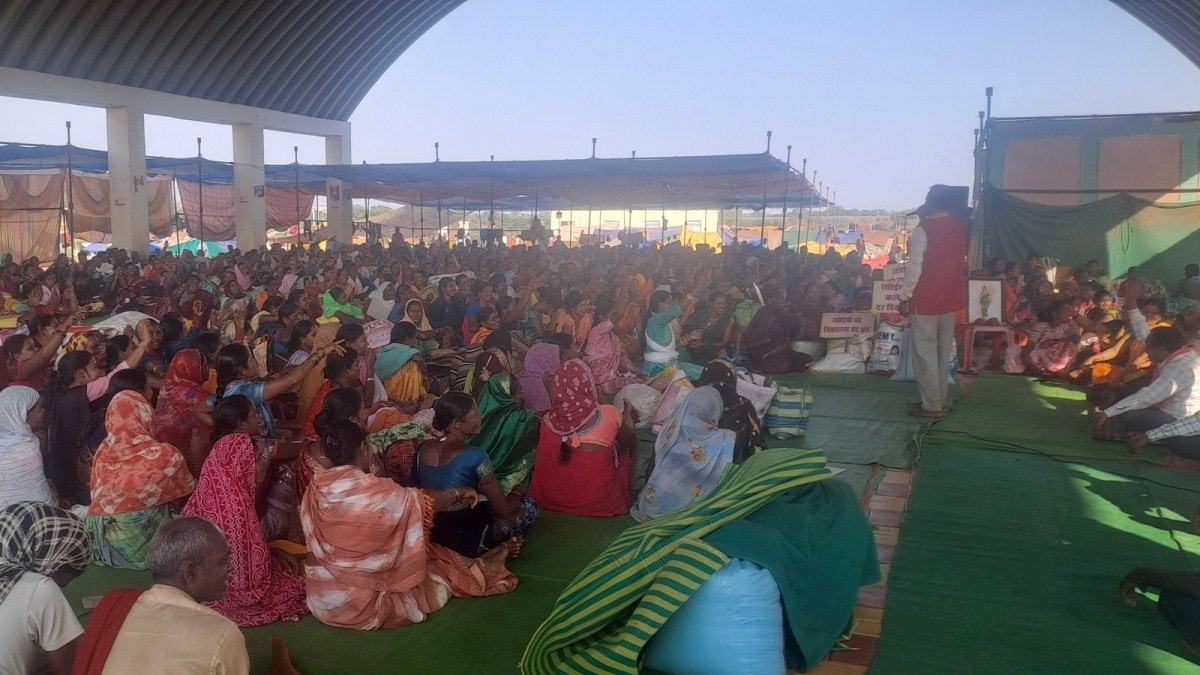 The cooks turn up at the protest site in batches, staying around three days, before others take their place.
For twenty-one days, cooks who prepare midday meals in government schools across Chhattisgarh have been on an indefinite strike at a ground in New Raipur demanding an increase in their daily wages from Rs 66 to Rs 340.
Story continues below this ad
The cooks turn up at the protest site in batches, staying around three days, before others take their place.
The ground, Naya Dharana Stal (new protest site) at Tuta, is lined with tents, where the protesters stay. It is also populated by local vendors who seek to cater to the teeming crowds.
Story continues below this ad
The midday meal cooks are protesting under the banner, Chhattisgarh School Madhyanbhojan Rasoiya Sanyukta Sangh. The association’s secretary, Meghraj Baghel (45), a resident of Kondagaon district in the Bastar region, said, “I have been working as a midday meal cook for the last 30 years. It has become difficult to survive. I have taken loans worth Rs 90,000 to complete my children’s studies. When I started off back in 1995, we used to get Rs 15 per day, and now we are stuck at Rs 66 per day. This is an injustice. Another issue is if the number of children in a school go down, then they terminate our service… This should not happen.”
Baghel said their first protest began in 2003-2004, and after six years of protest, the daily wages were increased to Rs 33 i.e., Rs 1,000 per month. The wages were again increased in 2019 and 2023, taking it up to Rs 66 per day i.e., Rs 2,000 per month. “Our first demand is that we should be paid… Rs 11,400 per month or at least Rs 340 per day,” said Baghel.
Story continues below this ad
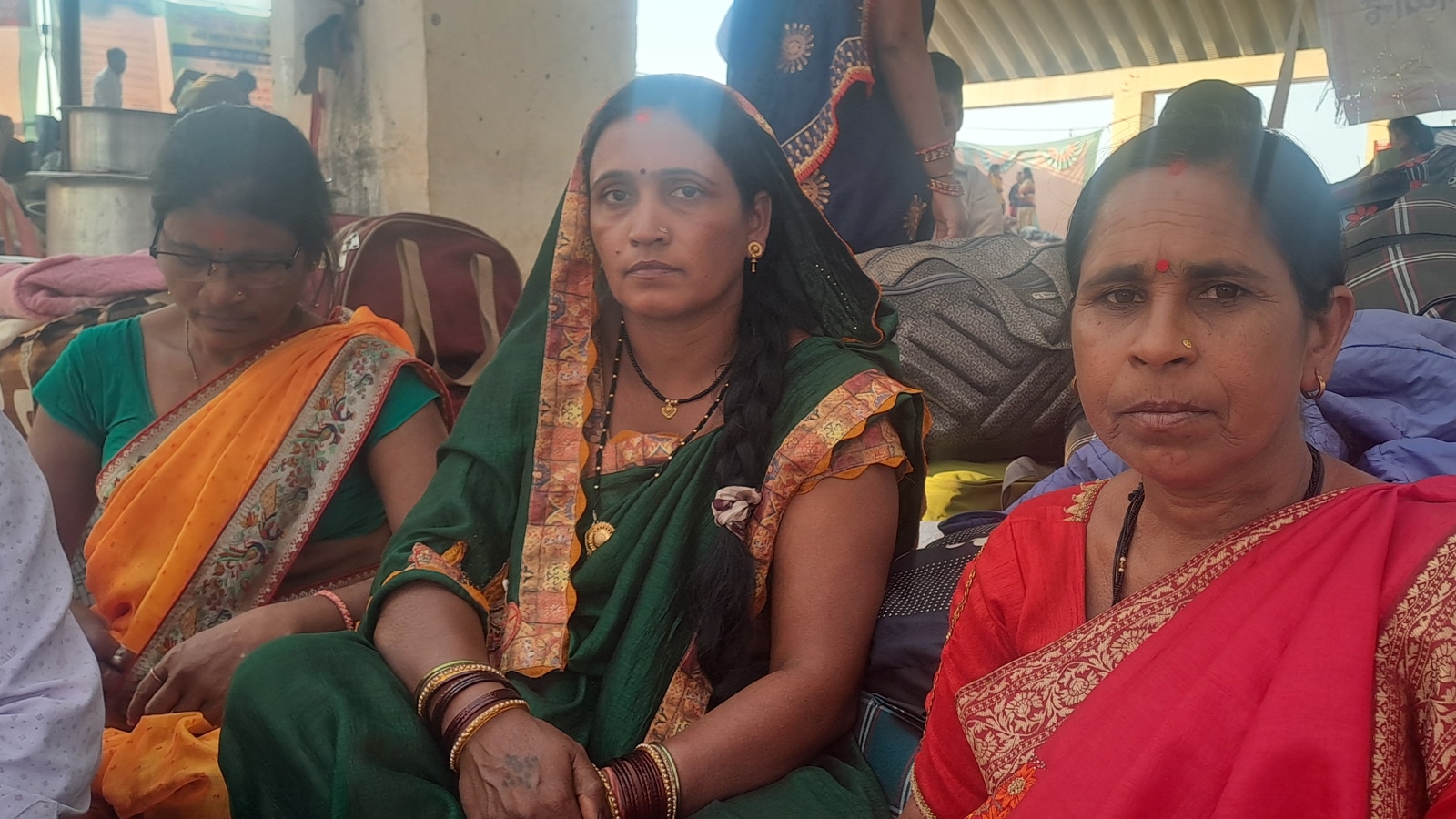 The midday meal cooks are protesting under the banner, Chhattisgarh School Madhyanbhojan Rasoiya Sanyukta Sangh.
Baghel said the cooks are under pressure to work every day, and that he had worked even on the day his father died. Another protester, Sukrita Chavan, echoed his concerns, saying, “I worked on the day my daughter died in 2024. We have many problems, but government is unable to listen.”
Chavan (40), who is from Rajnandgaon, said, “I have been working since 2003, when we used to get Rs 15 per day. I have not got wages since October. My husband is a labourer. I have two more daughters, and we have taken loans to complete their studies. The government thinks we have to work for just two hours, but we start at 10 am by washing and cleaning the rice. After cooking dal, rice, sabzi, papad and achar, we also have to help in serving and then washing the utensils. The work ends by 3 pm. If there is a school function, then we work till 4 pm. In 2013, I used to cook alone for 170 children, and now I cook for 60 children.”
Another protester, Pankaj Pramanik from Kanker, said, “We are like bonded labourers. During any election, we are made to cook. We do not get paid for that. After Covid, they stopped paying us for the last 15 days of June, saying they get money from the central government only for 10 months and these 15 days get adjusted as we get offs on school holidays.”
Story continues below this ad
“We avoid buying good clothes. We avoid eating tomatoes. We see, but we do not buy. Everything is becoming costly for us,” Pramanik said.
Shakuntala Sen from Dhamtari said her family was facing difficulties in running the house. “My two children, aged 19 and 20, have dropped out of college as I do not have the money to further educate them. My husband is a farmer,” she said.
Shipra Tarafdar from Kanker said the cooks are “not treated with respect like anganwadi workers and Mitanians, who are honoured for their work”.
Story continues below this ad
While senior government officials from the Revenue and Education departments did not respond to requests for comment, a government source said, “There is a proposal to increase their wages by Rs 1,000 per month, which means total wages will be Rs 3,000 per month. But no decision has been taken on it.”

Jayprakash S Naidu is a Principal Correspondent for The Indian Express, currently serving as the state correspondent for Chhattisgarh. With an extensive career in frontline journalism, he reports on the political, security, and humanitarian landscape of Central India. Expertise and Experience Specialized Conflict Reporting: Jayprakash is a leading voice on the Maoist/Naxalite conflict in the Bastar region. His reporting provides a critical, ground-level view of: Internal Security: Tracking high-stakes encounters, surrender programs for senior Maoist leaders, and the establishment of security camps in formerly inaccessible "heartland" villages. Tribal Rights & Displacement: Investigative reporting on the identity and land struggles of thousands of displaced tribals fleeing conflict zones for neighboring states. Governance & Bureaucratic Analysis: He consistently monitors the evolution of Chhattisgarh as it marks 25 years of statehood, covering: Electoral Politics: Analyzing the shift in power between the BJP and Congress and the impact of regional tribal movements. Public Policy: Reporting on landmark infrastructure projects (e.g., mobile connectivity in remote zones) and judicial interventions, such as High Court rulings on civil and family law. Diverse Investigative Background: Prior to his current focus on Chhattisgarh, Jayprakash held reported from Maharashtra, where he specialized in: Crisis & Disaster Management: Notable for his extensive coverage of the Cyclone Tauktae barge tragedy (P-305) and the COVID-19 pandemic’s impact on frontline personnel. Legal & Human Rights: Investigative pieces for platforms like Article-14, focusing on police accountability and custodial deaths across India. Environmental & Social Justice: Authoritative reporting on the Hasdeo Aranya forest protests and the approval of major tiger reserves, highlighting the tension between industrial mining and environmental preservation. ... Read More
Stay updated with the latest - Click here to follow us on Instagram
© The Indian Express Pvt Ltd



 English (US) ·