

 1 hour ago
6
1 hour ago
6
ARTICLE AD BOX

It was they who texted first, not you. They wanted to meet. They remembered the little things you said and found reasons to keep the conversation going. For a while, it felt like they were making all the effort.The moment you started liking them back, something shifted. The replies became slower. Plans were cancelled. Conversations that once flowed naturally turned into short exchanges. Before long, the person who seemed so interested, had quietly disappeared.It is a dating experience many people go through, and one that often leaves them feeling cheated or wondering if it was their own mistake. They wonder if they did somthing wrong and if they could something to fix it and make it all rosy again.But more often than not, it's not about that. Psychologists say this is a pattern in many wherein certain people respond to emotional closeness rather than by something the other person did.
Hunter who didn't want prize
One of the best-known explanations comes from attachment theory, first developed by psychologist John Bowlby and later expanded through the work of Mary Ainsworth. The theory suggests that our earliest relationships can influence how we behave in adult relationships.
People with an avoidant attachment style often enjoy the excitement of getting to know someone. But when the relationship starts becoming emotionally serious, they may feel uncomfortable without fully understanding why, and might start creating space instead of getting closer.But that does not necessarily mean they have stopped caring. Rather, emotional closeness can trigger unconscious coping mechanisms that encourage withdrawal.
The cost of saying 'yes'
Researchers have found that avoidantly attached people may see intimacy differently from others. A study published in the journal Personality and Social Psychology Bulletin by researchers including Stephanie S. Spielmann found that people with higher levels of avoidant attachment often expect less emotional reward when a relationship has the potential to become truly intimate. As a result, they may unconsciously reduce emotional investment when closeness increases.However, we cannot say that everyone who pulls away has an avoidant attachment style. Relationships are influenced by many factors including someone's personal circumstances and compatibility. But for some people, intimacy itself can feel stressful.
It's about validation
Some people enjoy the excitement of being pursued more than the stability of the relationship.In the intial stages of the relationship, the uncertainty activates the brain's reward system.
Once the uncertainty disappears and feelings become mutual, the excitement can fade for those who are mainly seeking validation and are not seeking a long-term emotional connection.The trill may have come just from winning someone's attention.
.
The intimacy paradox
People with avoidant attachment usually value independence and emotional self-sufficiency. As relationships deepen, they may begin focusing on a partner's flaws, spend more time on work or hobbies, or emotionally withdraw.
These behaviours, known as "deactivating strategies", help reduce feelings of vulnerability.Many people with this attachment style, may also experience stress during emotional closeness, even if they do not openly admit it. Research suggests that their bodies still respond to intimacy with signs of stress, even when they say they feel fine.
It isn't your fault
One of the biggest misconceptions is that someone losing interest after you return their feelings means you did something wrong.However, that is often not the case. Relationship patterns are shaped by one's personality, which is inturn shaped by their previous experiences. A person's decision to pull away may reflect their own fears of vulnerability rather than something wrong that you did.That is why it is important to not take every withdrawal personally. Someone who is emotionally unavailable may genuinely enjoy the early stages of dating but struggle once deeper commitment becomes possible.
Healthy relationships
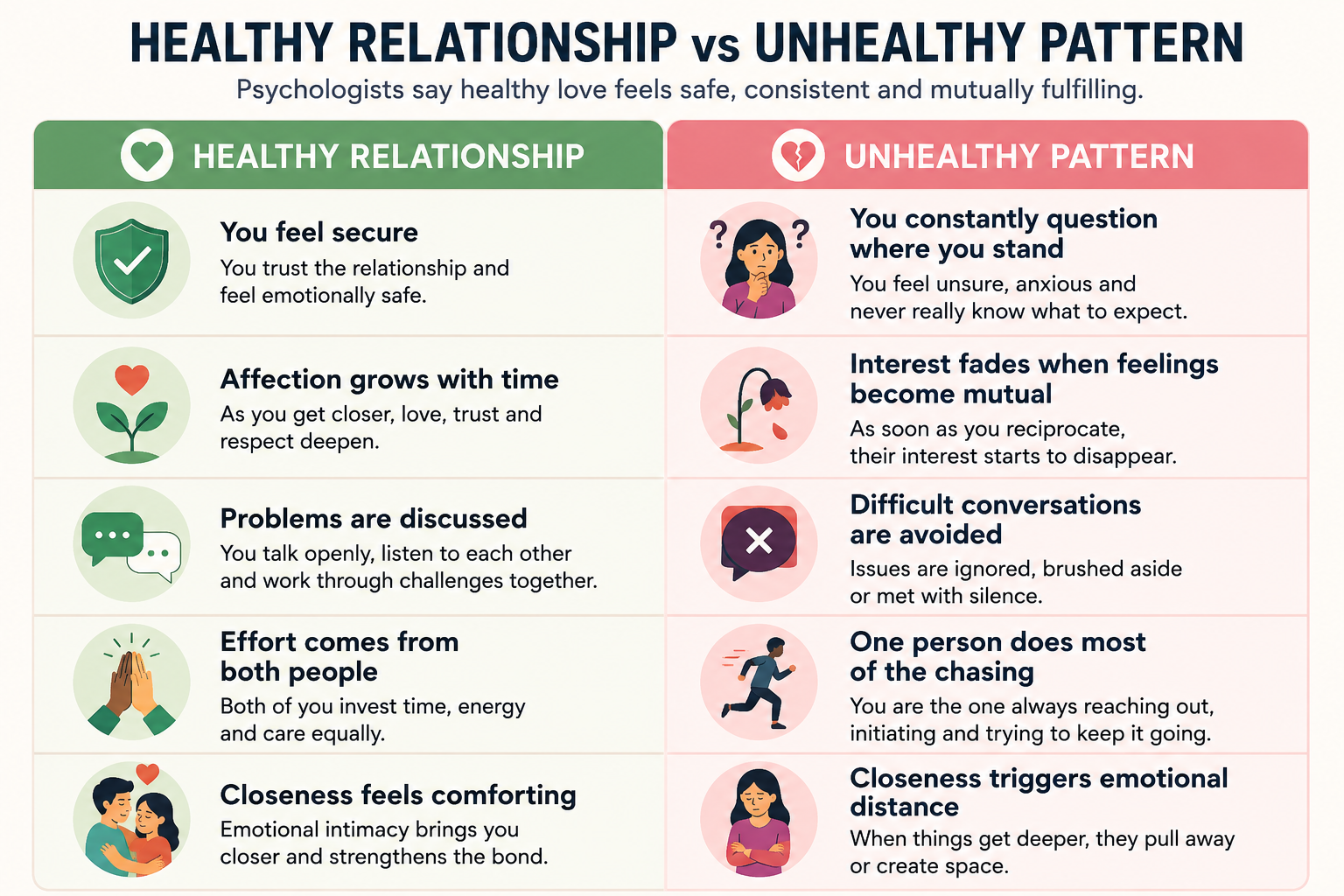
Popular culture often celebrates unpredictable romances, mixed signals and dramatic reunions. But healthy relationships usually feel much less chaotic than that.People with a secure attachment style are comfortable do not lose interest because someone returns their feelings. In fact, mutual affection often strengthens the relationship because both people feel safe in expressing themselves.That does not mean secure relationships are perfect and there are no disgreements in it.
Like every couple, they go through misunderstandings and difficult conversations. But at the end of the day, they deal with those moments through honest communication rather than emotional withdrawal or mind games.Relationships built on uncertainty can feel exciting in the beginning, but trust, reliability and emotional safety are the qualities most strongly linked with long-term relationship satisfaction. In the end, the right person is unlikely to make you question whether liking them back was a mistake. They'll make it feel like the easiest decision you ever made.









 English (US) ·