

 1 day ago
6
1 day ago
6
ARTICLE AD BOX
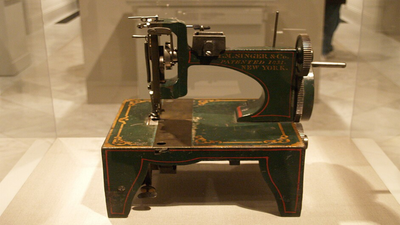
This 1854 sewing machine model that Isaac Singer submitted to the Patent Office provided further refinements to the device he patented in 1851. Image Credit: Wikimedia Commons
For centuries, making or mending clothing was an arduous task that took countless hours. No wonder that inventors in the nineteenth century dreamt of a way to accomplish this task mechanically.Contrary to popular belief, no single inventor discovered mechanical sewing in one burst of creativity; the story is more complex. Today’s sewing machine is a result of intense competition and constant refinement in an overcrowded field.The singularity raceBy the middle of the nineteenth century, competition for mechanical invention was intense. Inventors all over the world applied for patents and adjusted existing designs in an effort to invent a machine that would not clog up or fall apart.Based on an historical piece that appeared on the website of the U.S. National Park Service, the two names most associated with the sewing machine invention are those of Elias Howe and Isaac Singer. Nonetheless, it is pointed out in the report that many other manufacturers added important features to the machines and obtained patents for their versions.Competition produced early machines that were bulky, costly, and unreliable. The main challenge was not creating a sewing machine, but making one robust enough for repeated heavy use at home and in workshops.
The revolutionary design of 1850Singer succeeded by stopping his attempts to reinvent the basic principle and instead focusing on a better arrangement of parts. It happened in September 1850.According to a historical report by the U.S. Census Bureau, the sewing machine patented by Singer in September 1850 was the first of its kind to incorporate a rigid overhanging arm, a vertical needle, a shuttle, and a wheel feed.Before this design, there were many sewing machines whose needles moved in a horizontal position or in an odd manner, making the thread break and resulting in uneven gathering of fabric.
With a vertical needle placed firmly within an overhanging, rigid metal arm, Singer equipped his invention with the rigidity it required so badly.This arrangement not only improved the machine but, according to the report, also became the basis for many sewing machines produced around the world.
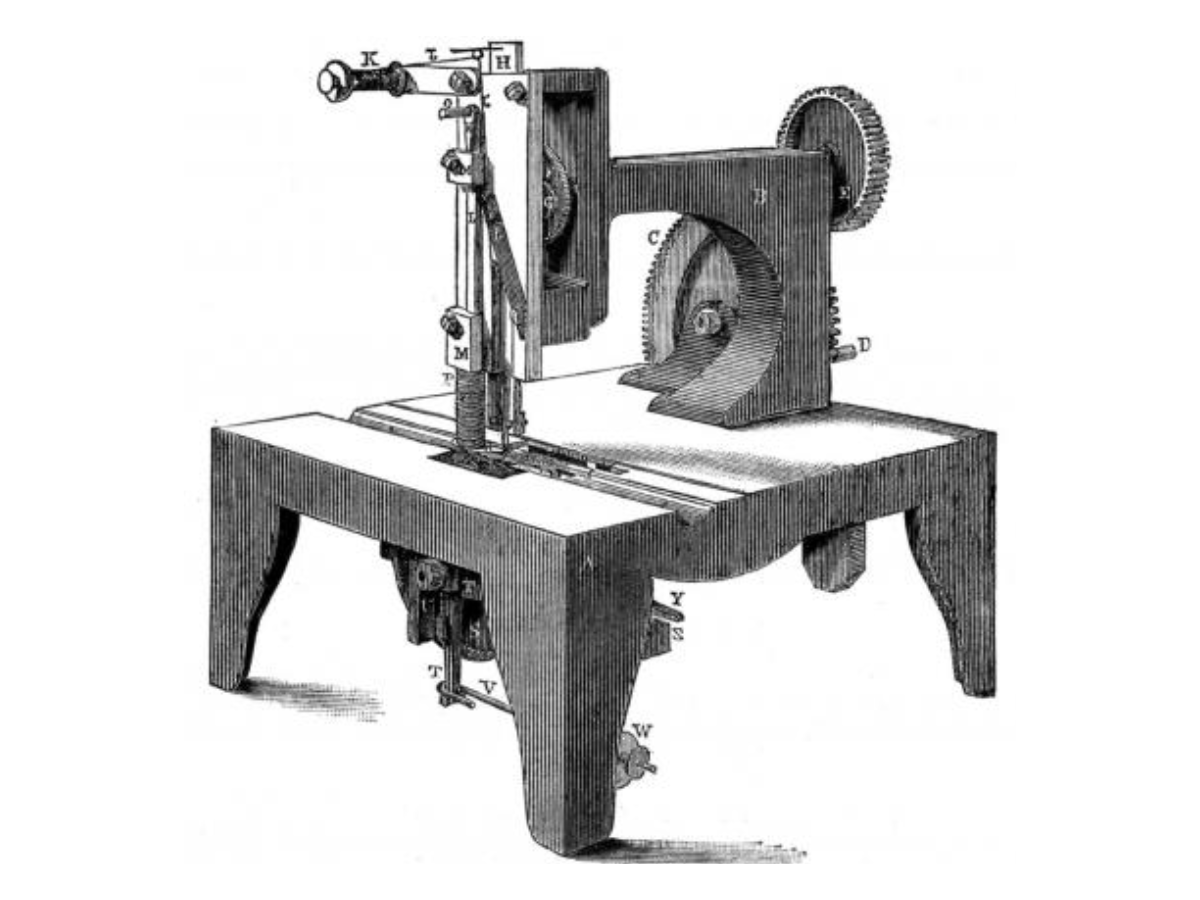
The Singer machine, August 12, 1851. Earliest model filed in Patent Office. Reproduced from Scientific American of November 1, 1851. Image Credit: Wikimedia Commons
The global standardAs the design evolved, it quickly became an industry standard. One key factor in its success for so many years was its simplicity.By combining known components such as the shuttle and wheel feed under a rigid arm, Singer created a machine whose parts worked together consistently. The design was practical for factory workers, easy for consumers to use at home, and simple to produce at scale.Over time, this assembly became so widespread that its form became synonymous with the company. When people think of a sewing machine, they often picture a rigid arm with a vertical needle.A design tested through timeThe history of the sewing machine shows that great ideas often come from combining existing concepts rather than inventing something entirely new. Singer did not need to invent gears or needles; he needed to configure the design effectively.This design of 1850 is as clear as ever. The sewing machine of today, even its electronic variety, still employs the same basic design template – the massive arm over the feeding plate with a vertical needle.








 English (US) ·