

 1 hour ago
6
1 hour ago
6
ARTICLE AD BOX
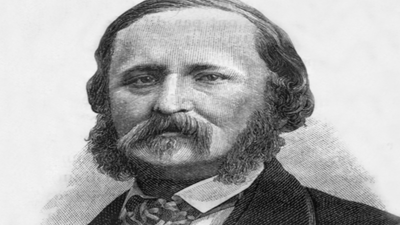
Portrait from Les Merveilles de la science by Louis Figuier. Image Credit: Wikipedia
In most histories of sound recording, Thomas Edison’s phonograph in 1877 is treated as the starting point. However, that version is incomplete: nearly twenty years earlier, another inventor recorded sound not for playback, but to create a visible trace of it.
His name was Édouard-Léon Scott de Martinville, and the world did not rediscover him until the 21st century.One of the most remarkable things about him is that he did it long before anyone else, and his recording could not be heard for almost 150 years until it was finally reconstructed and brought back into sound.The printer who tried to draw speechÉdouard-Léon Scott de Martinville was born in Paris in 1817. He worked as a printer and bookseller. According to the documentation kept by the U.S. Library of Congress Library of Congress Phonautograms Archive, his interest in sound recording arose because of the desire to find a solution for a question that intrigued many people in the nineteenth century – how to record speech in its entirety without using shorthand or memory.This idea was based on the belief that, just as photographs could capture light, sound waves could also be etched. This resulted in the creation of a machine that would record vibrations of the air into something visible.In 1857, he invented and patented the phonautograph in France. This invention was not intended to play back sound like later devices. It just wanted to draw the sound.Phonautograph and the first sound patternsThe phonautograph operated by collecting sound waves through a horn.
The sound waves made vibrations on a membrane, which was attached to a stylus. These waves were recorded as lines in the surface that had been covered with lampblack.These lines were called phonautograms, the first physical records of human sound ever recorded in a physical form. They could not be played, however. As Scott imagined, the people trained in their interpretation would eventually read these sound waves as speech, like the way they read printed text.
This method, however, never became practical.This invention attracted the interest of scientists who used it for their research in acoustics. Scientists studied vibrations and vowels with it. As the National Recording Preservation Board of the Library of Congress National Recording Registry notes, this device contributed to experiments with sound even before audio engineering developed.Without playing a function, however, the impact of this device stayed limited.
After Scott died in 1879, he was largely forgotten.
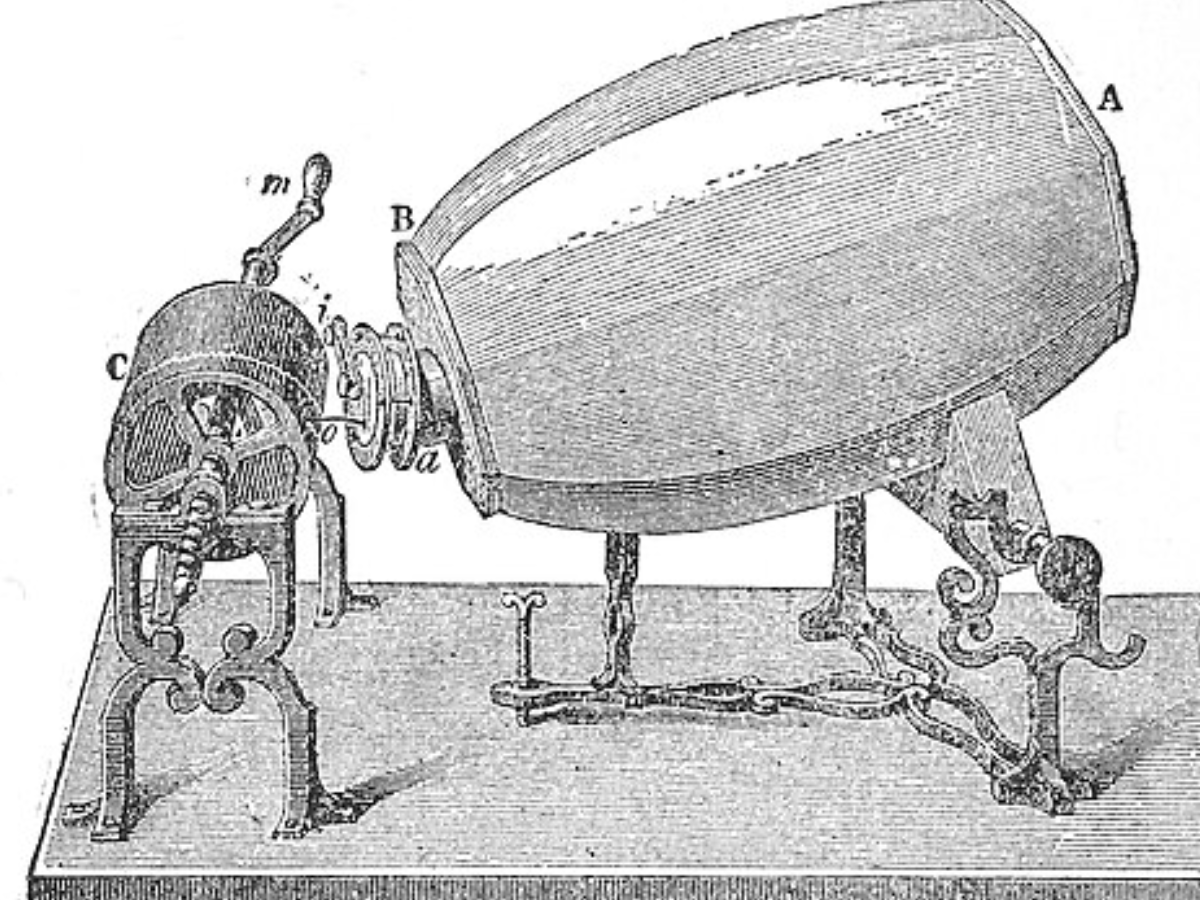
Illustration of a phonautograph. The inside of the barrel is made of Plaster of Paris.. Image Credit: Wikipedia
A recording the world could not hearFor many decades, the phonautograms were considered scientific curiosities. However, in 2008, people associated with the First Sounds, an organisation composed of audio historians and engineers, were able to convert them into audible sound.Using optical scanning and digital reconstruction methods developed at Lawrence Berkeley National Laboratory, they reconstructed a recording of the French folk song “Au clair de la lune” made on 9 April 1860.What resulted was quite surprising. Initially, the audio file sounded distorted and too slow. Once corrected, it produced the voice of a human being, probably a man and possibly Scott himself.The discovery was reported in The New York Times in March 2008, in a report on the earliest recording playback.Why is this discovery significant? Not just because of the sound itself, but also because it predates the invention of the phonograph by Thomas Edison by 17 years.
While Edison's invention could record and reproduce sound, Scott's invention could only record them visually. But still, in terms of recording human voice, it was invented earlier.Recognition after years of forgettingIn recent times, contributions by Scott de Martinville have been officially recognised. His collection of phonorecordings was registered with the UNESCO Memory of the World Program, which safeguards important cultural documents from all over the world.This recognition places him among the important figures who contributed to the development of human knowledge and civilisation.
It shows that the history of technology tends to forget about devices that were commercially unsuccessful but scientifically great.His phonautograms are now not only considered scientific objects, but also as some of the first steps taken towards modern audio recording and archiving.Importance of the story in the current timesScott de Martinville’s story questions the belief that inventions must have been commercially successful or become common practice in order to be considered inventions.
The machine did not reproduce sound, nor was he financially or socially recognized for his invention. However, his creation managed to capture an important element, the possibility of recording the human voice physically.The discovery also highlights a common pattern in technological history: many inventions are incomplete when they first appear. Later inventors built on those ideas and made them practical.Modern recording devices, voice memos, podcasts, and text-to-speech tools all build on the basic idea Scott explored more than 160 years ago.A voice that has waited 148 yearsThe playback of the weak recording of “Au clair de la lune” in 2008 marked more than a scientific victory. It marked a correction of history. By trying to transcribe sound into a visual form, Scott inadvertently created the first recording of a human voice.For almost 150 years, the voice was nothing but lines on paper. Once it was heard, it brought together the inventions of two centuries within one fragile recording.It is a reminder that some discoveries are not recognized until technology catches up.









 English (US) ·