

 5 hours ago
7
5 hours ago
7
ARTICLE AD BOX
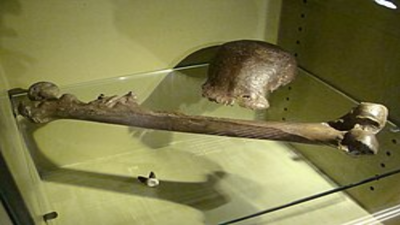
Java Man is an early human fossil discovered in 1891 and 1892 on the island of Java (Indonesia). Image Credit: Wikipedia
In 1894, a Dutch scientist, Eugène Dubois, was digging on the serene banks of the Solo River in Java, Indonesia. In his search for evidence about human origins, he found a few fossil remains.
Dubois actually found a partial skullcap (or calotte), a remarkably complete femur, and a molar tooth.The discovery quickly drew international interest because the bones seemed to fall somewhere between ape and human. There were heated arguments among the scientists of the time concerning the bones. The debate has continued for more than a century. Java Man is scientifically referred to as Homo erectus.Shifting sands, creeping soils, and a new understanding of landscape evolutionSince its discovery, Trinil has been a difficult site for scientists to interpret clearly. This has been due to the complexity associated with the soil structure where the fossils were found. According to a 2023 paper cited in PubMed, scientists have revisited the excavation sites using historical information, field notes, and current geological maps.
The study suggests the hominin fossils were not buried in a single geological formation but were deposited in channels cut by river systems through the sediments.The geological composition of the soils is the reason for scientific confusion when trying to reconstruct the history of the fossils. According to the 2023 paper, the femur's present condition may reflect later movement of the sediments in which it was found.
Simply put, owing to natural processes of shifting, moving, and mixing by river systems over time, the original place and age of fossils become obscured.
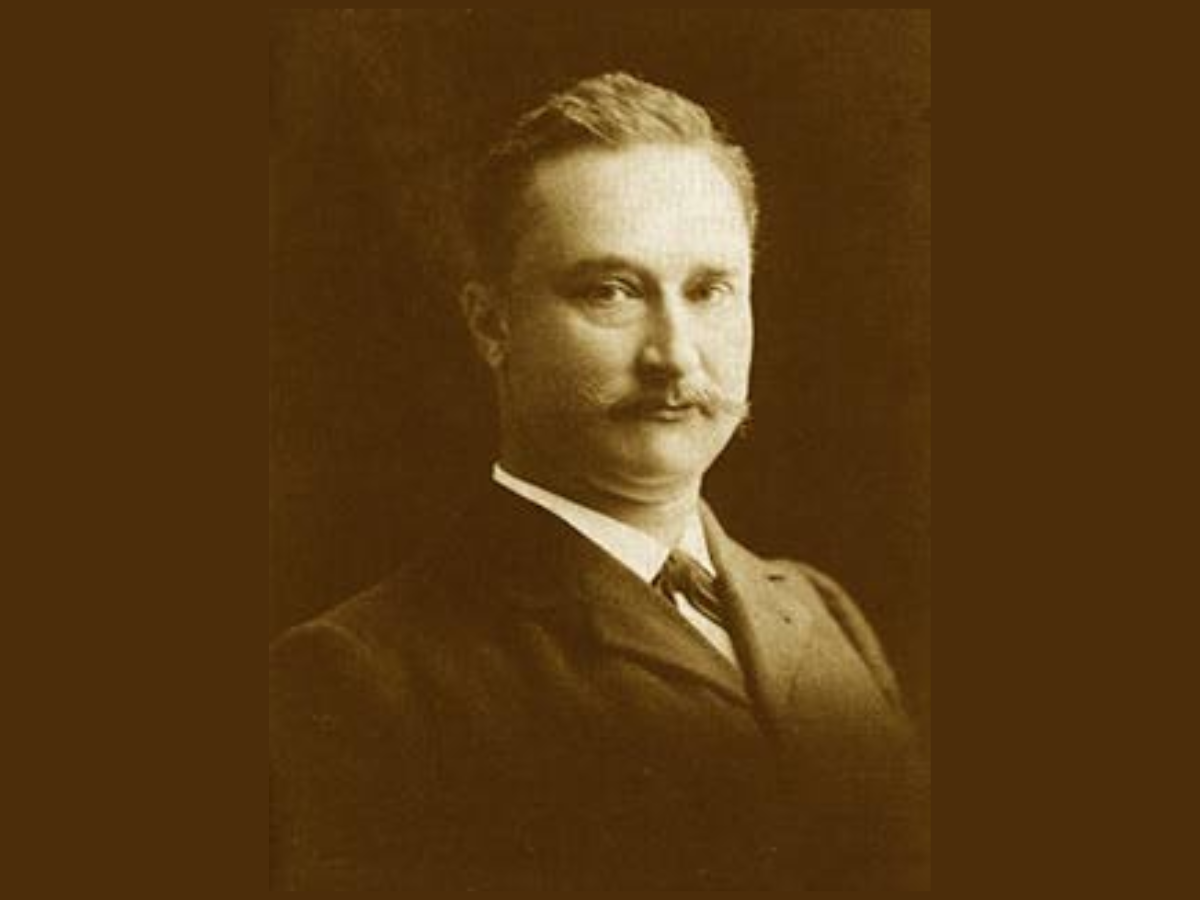
Marie Eugène François Thomas Dubois ( 28 January 1858 – 16 December 1940) was a Dutch paleoanthropologist and geologist. Image Credit: Wikipedia
Ancient behaviorFor many years, the discussion about Java Man had focused strictly on anatomical features and the physical form of the skullcap. But then the artifacts found at the riverside started telling an entirely different tale about the actual way of life of those early people. A report that came out in 2015 in Nature magazine opened up a whole new vista by analyzing a shell collection at the original excavation location.The authors reported signs of shellfish eating, a shell tool, and a geometrically engraved shell among objects from Dubois’s collection. According to the study, such discoveries indicate technological and symbolic behavior in Homo erectus at the Trinil site. This suggests that Java Man used tools and had more advanced cognitive abilities than previously assumed.What makes the discovery endureJava Man remains relevant because the discovery still raises questions about early human evolution.
First of all, it was an event that made a sensation right from its first appearance in 1894. It came at a time when interest in human evolution was growing rapidly.Despite the fact that the specimens found were fragmentary and the field context extremely complicated, Java Man was never overlooked. It helped establish Asia as an important region in anthropological research on human descent and migration. "Calvaria" is singular, but the sentence is otherwise fine; the issue is that the term is unexplained and may confuse general readers.









 English (US) ·