

 1 week ago
8
1 week ago
8
ARTICLE AD BOX
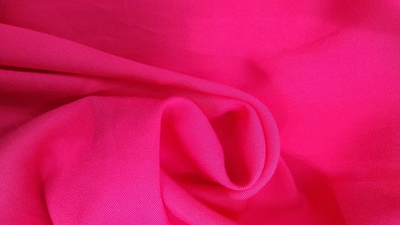
Close-up of pink rayon challis fabric in a swirl to show drape. Image Credit: Wikimedia Commons
Long before fast fashion, synthetic blends, and high-tech fabrics, a handful of chemists were trying to solve a simple problem: could a material as luxurious as silk be made from something far more common?In 1898, one answer arrived in the form of a sample produced by cellulose chemists, now widely recognised as the earliest known surviving example of viscose rayon: a silky fiber that would revolutionize the fabric industry.Now it can be found woven into everything from dresses and blouses to furnishings, though its origin could hardly be less glamorous: it's manufactured from wood pulp.A silk-substitute that wasn't entirely artificialThough it's usually grouped with today's high-tech fabrics, rayon sits uniquely in textile history. In comparison to modern man-made fibers such as polyester and nylon, it’s not fully synthetic.Rayon is essentially regenerated cellulose, usually made from trees, that is chemically treated to form a fluid solution.
The solution is then passed through a small opening, or die, to create filaments that, when cooled, harden into fibers that can be spun and woven into cloth. Because its raw material is plant-based, rayon is also called a semi-synthetic material, unlike a purely synthetic fiber.The sentence is missing an article before 'demand,' which makes it read unnaturally. Limited supply and exorbitant prices for silk at the time drove a search for substitutes that possessed silk’s soft handle and sheeny finish, without any help from silkworms.
The decision that led to wood pulp as an ingredientThe secret lay in cellulose, the natural building material that makes up plant cell walls.Wood pulp provided manufacturers with a readily available, cheap supply of this material, prompting researchers to look beyond natural textile fibers such as silk and wool. They soon realised that if cellulose could be dissolved, treated chemically, and regenerated into a continuous filament, it would create a fiber that mimicked the silk yarn as closely as possible.According to a 1928 article published in Nature, commercial production of artificial silk had begun by the end of the 19th century. It notes that sulfite wood pulp, sourced from pine and spruce trees, became a fundamental element of the viscose process. That method would later prove dominant in manufacturing rayon.This step was groundbreaking because it reduced textile production’s dependence on sericulture and offered a more resilient alternative suitable for mass production.
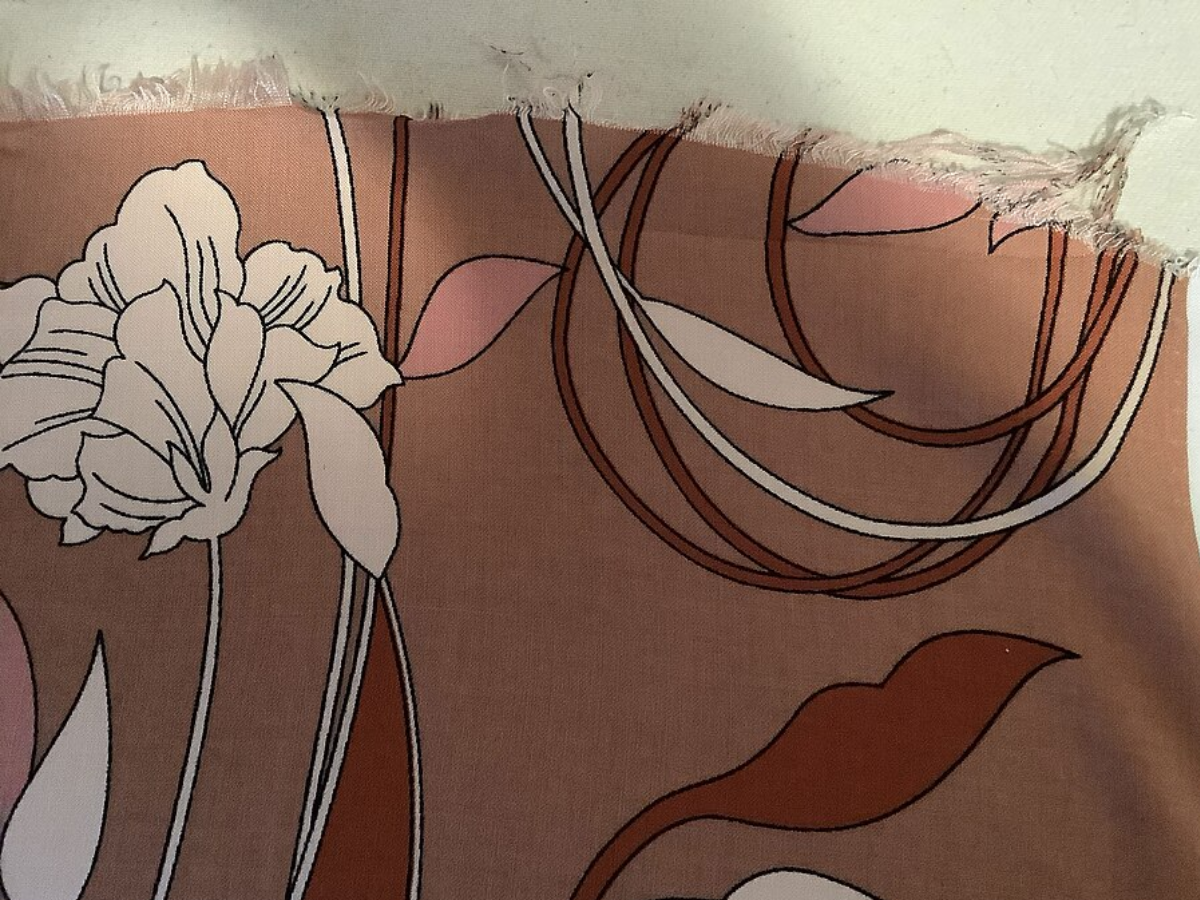
Rayon Challis Fabric. Image Credit: Wikimedia Commons
The sample of thread from 1898, which represents a turning pointOne of the most fascinating surviving artifacts representing this chapter is now in the collection of the UK's Science Museum Group.The collection includes what is described as the earliest surviving specimen of viscose rayon, dated 30 August 1898, and produced by British chemists Charles Frederick Cross and Edward John Bevan. It builds on the viscose process developed and patented by Cross, Bevan, and collaborators in the 1890s.The sample is very small, but of immense significance. It serves as a physical representation of a moment when laboratory science made a giant leap towards industrial application.The United Kingdom's part in the rayon revolutionThe United Kingdom plays an important role in the story of rayon.Textile historians credit Cross, Bevan, and Clayton Beadle with helping develop and patent the commercially viable viscose process during the 1890s. This process permitted the production of artificial silk on an industrial scale using cellulose.According to the Textile Research Centre in Leiden, the British company Courtaulds produced the first commercial viscose rayon in 1905. What began as an experimental material soon became a major industrial product.By the dawn of the 20th century, factories in the UK and beyond were making artificial silk and establishing what has become an entirely new part of the textile industry.A fiber beyond its silk imitationThough it was once sold purely as 'artificial silk', rayon gradually began to forge its own identity.In a review published, the fiber is described as arguably the most successful regenerated cellulose fiber ever developed. The fiber is light and has a good drape, absorbs moisture readily, and accepts dyes well-qualities that make it suitable for virtually every type of garment and home textile.What began as an attempt to replicate a luxury commodity quickly grew into something valued for its own unique qualities.Why it still resonates todayThe importance of the 1898 wood-pulp thread goes beyond textile history.It marked an important shift in how scientists and manufacturers thought about materials. Previously restricted to what nature could offer in a ready-to-use format, materials scientists and manufacturers showed they could manipulate natural matter into entirely new and practical forms through chemistry.The long and sometimes convoluted road from a test tube of regenerated cellulose to high street clothing stores was far from direct. It required years of experimental research, industrial investment, and manufacturing improvements, but the core principle was consistent: a cellulose derived from plants could be transformed into a textile fiber that was more widely accessible than silk.A century later, that principle still underpins a widely used textile material. A silken thread made from wood pulp laid the foundation for a material that millions wear every single day.









 English (US) ·