

 4 days ago
7
4 days ago
7
ARTICLE AD BOX
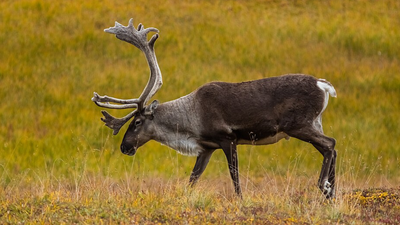
Reindeer (Rangifer tarandus), Denali National Park, Alaska, United States. Image Credit: Wikimedia Commons
In 1944, at the height of World War II, a group of U.S. Coast Guardsmen unknowingly set in motion what would turn out to be one of the most well-known stories about wildlife in North America.
Twenty-nine reindeer were let loose on the icy St. Matthew Island in the Bering Sea. The idea behind this move was to use the reindeer as an emergency supply of food for the men stationed at a radio station on the island. The war was over before long, and the station closed down, leaving only the reindeer behind to fend for themselves.Without any hunters and without any natural enemies like wolves and bears to curb their numbers, the reindeer found themselves in an idyllic world.
The island was covered with lichen, a slow-growing plant that is ideal winter food for deer.From paradise to overpopulationThis small initial population began growing rapidly. According to the data provided by the University of Alaska Fairbanks Geophysical Institute, the herd increased from the initial small number of 29 animals to about 6,000 individuals in just a matter of years. The rapid, uncontrolled growth was confirmed by field observations performed by biologists in 1957 and 1966.
At first sight, the island ecosystem appeared to be quite robust; however, there were some limitations. Reindeer are voracious grazers, and as their numbers grew, they stripped the island bare. There was one important detail: lichen grows very slowly, thus being unable to restore itself as quickly as needed because of the rapidly increasing population.The collapseIn the early 1960s, the herd reached its maximum size, and food resources became depleted.
After that, the breaking point occurred.It did not fade gradually over successive generations; instead, it collapsed within two years. For many years after, it was widely accepted by researchers that the only cause of the collapse was due to starvation caused by overgrazing. Recent studies by the University of Alaska Fairbanks Geophysical Institute suggest the weather was a factor. The herd had experienced an unusually harsh winter, and there had been excessive amounts of snowfall.
Since the reindeer were starving due to the lack of food, the bitter climate, and the snow, survival was impossible for them.
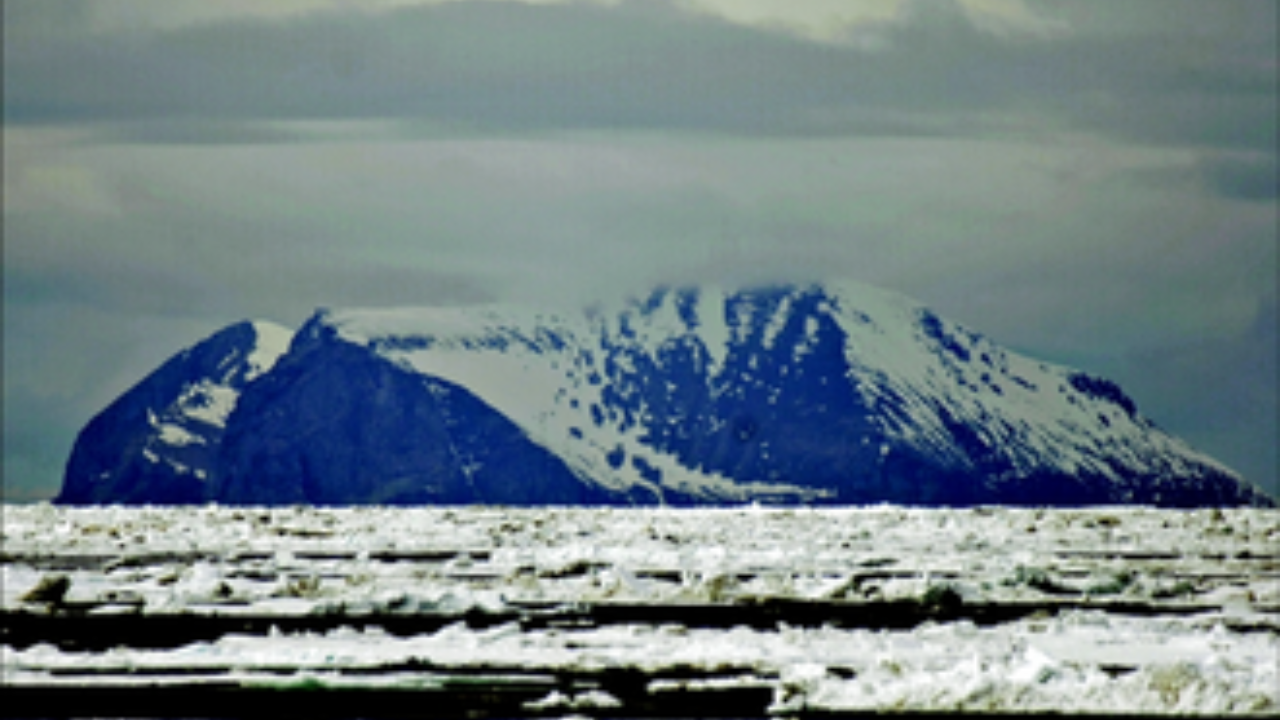
St. Matthew Island is an uninhabited, remote island in the Bering Sea in Alaska, 183 miles (295 km) west-northwest of Nunivak Island. Image Credit: Wikipedia
A transformed landscapeHowever, the history of St. Matthew Island did not end with the death of the deer. The enormous deer herd had altered the island’s plant life for years to come. Researchers returning to investigate the plant life found that the ecological food web had been damaged. With the lichens gone, grasses and mosses started colonizing the empty ground.As a result of research conducted by scientists David R. Klein and Martha Shulski, it was found that by 1985 – about twenty years after the deer die-off - there was barely any lichen on St. Matthew Island compared to the amounts of lichen present on similar nearby islands where the deer had not grazed. While the animals had been wiped out within just a few months, the plants carried the traces of their presence for more than twenty years.Echoes of the last herdThe last remnants of the initial herd survived on the island for another few decades. Modern records provided by the US Geological Survey indicate that the last surviving female reindeer perished in 1981, rendering the island devoid of the animal once again.In modern times, the saga of St. Matthew Island represents one of the basic lessons that is discussed in ecology classrooms worldwide.







 English (US) ·