

 6 days ago
6
6 days ago
6
ARTICLE AD BOX
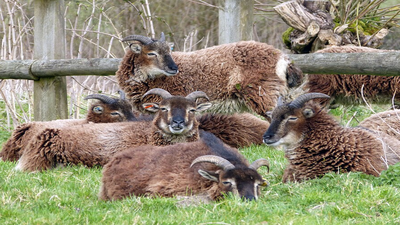
The Soay sheep is a primitive breed of domestic sheep (Ovis aries). Image Credit: Wikimedia Commons
On a far-off Scottish island frequently hit by Atlantic windstorms, scientists have been conducting an unusual study of a herd of wild sheep. After more than 20 years of observations on the Soay sheep population on Hirta, the main island of the St Kilda group of islands, the scientists found that these sheep seemed to be getting smaller.This trend was observed for a period of 24 years through field studies and reported in a landmark paper in the Science journal in 2009 by researchers Arpat Ozgul et al of Imperial College London, among others.A rare natural laboratory in the North AtlanticThe Soay sheep of St Kilda are one of the most intensively studied wild mammal populations in the world. The sheep live on Hirta in an isolated population with no active human management, making them a valuable model for studying ecological and evolutionary change.Since individuals have been observed for decades, it is possible to determine the effect of changes in the environment on survival, reproduction, and physical characteristics. Thus, the population is an ideal model for investigating the adaptation of wild animals to climatic variability. Based on ecological theory, larger animals were expected to survive better in harsh environmental conditions, especially during long, cold winters when fat is crucial.
An unexpected trend for the long termAlthough one might expect otherwise, the long-term statistics revealed a trend that defied expectations. According to Scientific American, from the mid-1980s to the late 2000s, the average body weight among the population reduced by about five percent.The Science study noted that although there were certain years where natural selection favoured bigger bodies, the population trend contradicted this. One might then ask how this could happen if a bigger body size was sometimes selected for.
A significant part of the changes was due to environmental conditions, especially mild winters throughout the period of observation. According to the 2009 Science paper, reduced winter severity altered survival patterns among lambs.Under previous, more severe winters, smaller lambs were prone to dying off, whereas larger and well-fed lambs had higher chances of survival. With winters becoming less severe, such selection pressure has been relaxed.
Smaller lambs that used to perish in harsher weather now survive and grow up to adulthood.This mechanism of changing survival patterns is one of the mechanisms mentioned in the paper.
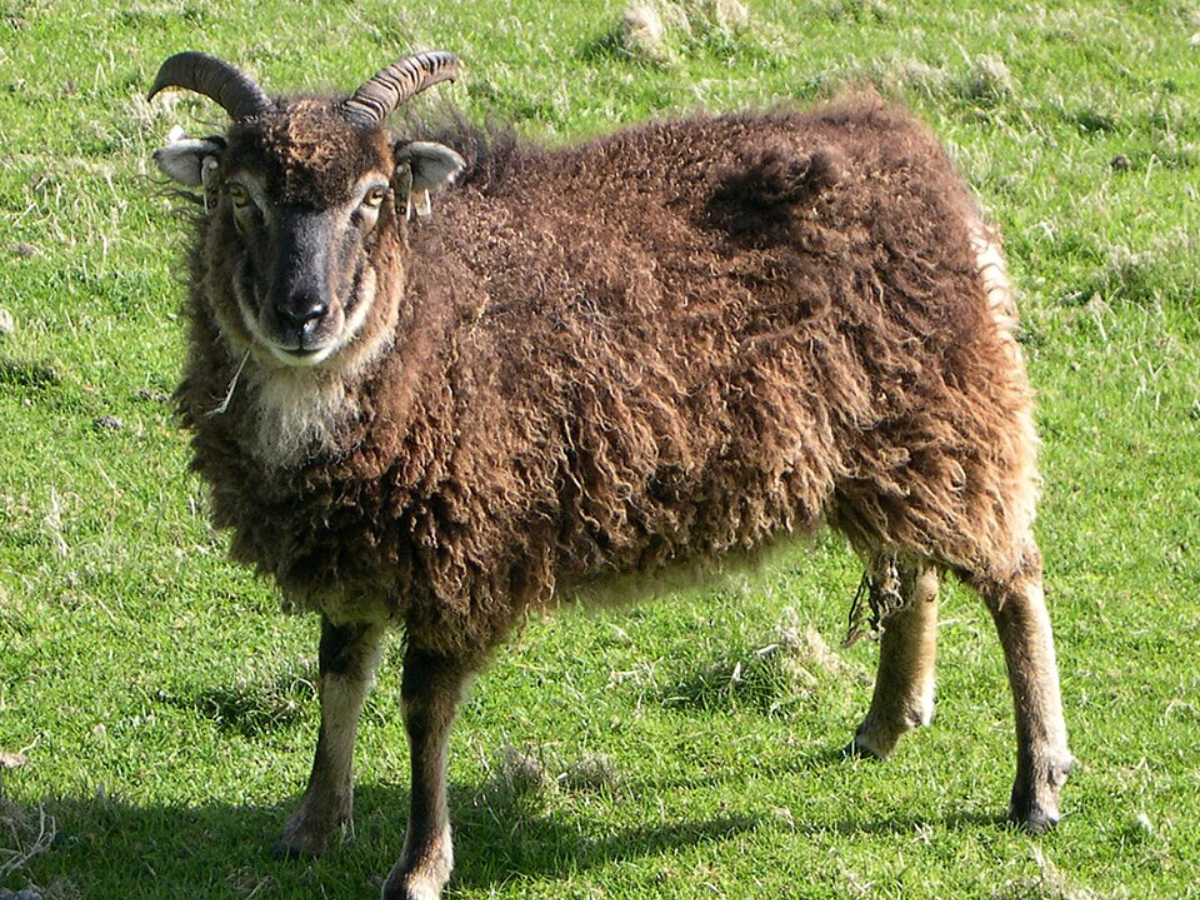
The Soay sheep. Image Credit: Wikimedia Commons
Growth, food, and population densityThe scientists have also pointed out that the climatic conditions had an effect on the availability of food. The milder winter contributed to vegetation growth and also altered the timing and amount of available food resources. As more sheep survived the winter, population density increased.
Increased competition for limited food sources would then impact the growth rate of the sheep. In such circumstances, sheep may not reach the same adult body size because survival rates and food availability change.Such is the complexity of factors involved here, yet taken into consideration, they offer an explanation for the decreasing body sizes.Maternal conditions were another point that was mentioned in the long-term examination of the population.
Younger ewes usually give birth to smaller lambs than older ewes do. It could become a reason for smaller body sizes on the part of the population because of the possibility for younger animals to survive and breed under favourable environmental conditions. Although this impact does not play the main role in this process, it is a biological influence on the population.Differing paces of evolution and environmentAmong the key takeaways of the research carried out on St Kilda is that evolution and environment may not always work towards the same end goal.
Even when natural selection favors a trait such as larger size, environmental change can favor survival and reproduction in ways that produce the opposite outcome.This is shown in the Science publication, where the physical transformation of the sheep population could not be attributed to any genetic factor. Rather, environmental variation played a crucial part. While the study takes place among a small population of animals living on an isolated island, its relevance reaches far beyond those boundaries.
The study illustrates how changes in climate over time can affect the biology of animals in ways that aren’t readily apparent based on short-term observation alone.The significance of the St. Kilda data set is that it has remained consistent over the years. Very few wild animal populations have been studied with this consistency over time.A faint message from an island far awayWhile the declining number of sheep on St Kilda is not a clear-cut story, it demonstrates how complex the interaction between environmental changes, survival strategies, and natural reproduction can be over time.What this research ultimately reveals is that even in a secluded environment, the physical features of wild creatures can change over a couple of decades due to both genetic and environmental factors.On this island, natural processes are changing slowly over time.









 English (US) ·