

 1 week ago
6
1 week ago
6
ARTICLE AD BOX
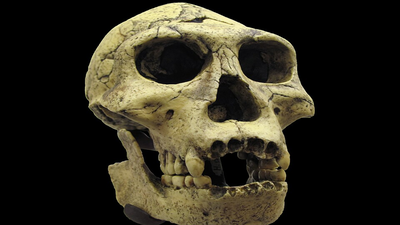
Homo Georgicus. Image Credit: Wikimedia Commons
A viral claim circulating online suggests that in 1989, a man named Ryszard Kapuscinski was walking along a dig line at Dmanisi in present-day Georgia when he unexpectedly stumbled upon early Homo skulls.
However, the scientific record does not support this account, with published research indicating that the first major hominin discovery at the site was a jawbone found during excavations in 1991, while the well-known skulls were uncovered later.The site of Dmanisi has been considered to be one of the greatest discoveries in terms of archaeology and the study of early human evolution. Its importance, however, did not originate from the discovery of the skull while someone was out on a stroll but rather through a series of discoveries over several years of diligent work at the excavation site.The Dmanisi discoveryAccording to a landmark 1995 paper published in Nature, archaeologists excavating a medieval hilltop site of Dmanisi reported the finding of a well-preserved lower human jawbone at the end of 1991. The fossil was discovered in the older geological strata beneath the medieval strata, along with animal fossils dating back to the Late Villafranchian age.What makes this discovery unique is the fact that it was found in a secure archaeological and geological setting.
It was not found just as a separate fossil buried somewhere, but was found in strata that were capable of investigation.The Nature study noted that the fossil belonged to one of the earliest known members of the genus Homo in western Eurasia, and it was probably between 1.8 and 1.6 million years old.Why the skull claim of 1989 does not agree with the evidenceThe widely spread story about skulls discovered in 1989 is not true, considering the scientific literature.The scientific reviews of the Dmanisi fossils indicate that the first significant specimen of the Dmanisi hominins was the D211 mandible, discovered in 1991.
The well-known skulls, which became famous afterwards, were discovered later on.The sequence of discoveries is carefully described by researchers. After the discovery of the mandible, important skull fossils were discovered in the late 1990s and at the beginning of the 2000s, forming one of the most significant collections of early Homo fossils.The timeline is relevant since the significance of the Dmanisi fossils appeared as a result of the process rather than as a result of some accidental discovery.
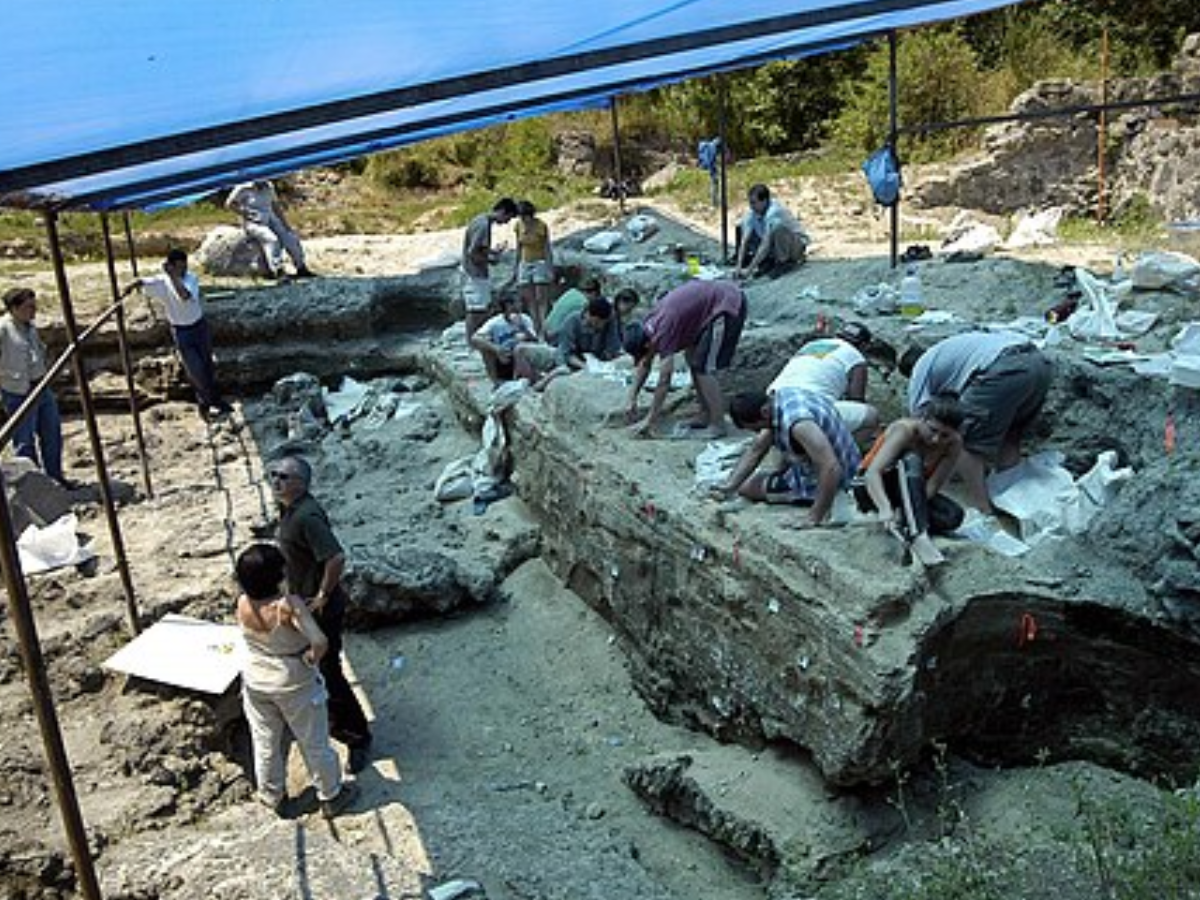
Excavation site at Dmanisi in 2007. Image Credit: Wikimedia Commons
A glimpse of the world of nearly two million years agoOne of the reasons for Dmanisi becoming so significant is its great age.According to research published in the Proceedings of the National Academy of Sciences, the early occupation of the site dates back to 1.85 to 1.78 million years ago. Research has further shown that the strata where fossils are located are located underneath the medieval city located on the surface of the site.It can be stated that Dmanisi reveals two completely different narratives separated by a huge amount of time.
While one can witness the remains of a medieval city at Dmanisi, beneath it lies the story of some of the earliest-known humans outside of Africa.The geological sequence at Dmanisi is particularly well-preserved.The skulls which altered the argumentWhile the jawbone in 1991 initially caught the scientific eye, it was later the skull finds that brought Dmanisi to worldwide attention.One of the most amazing discoveries included an extremely well-preserved skull published in Nature in 2013.
It added to the growing number of skulls discovered at the site and sparked a major scientific debate on the ways by which scientists classify the early specimens belonging to the genus Homo.Instead of representing distinct types of individuals, the Dmanisi samples showed an unexpectedly great variability. Scientists have questioned whether distinctions which were considered to distinguish several species might be just variations in a single evolving group of humans.The find made scientists review their previous beliefs concerning the variability of early humans.Why Dmanisi still mattersEven more than three decades since the major discovery of hominins at the site, Dmanisi retains importance as a locus of debate on the topic of human evolution.The site has three aspects which make it unique - great age, clear geological context and an exceptionally large amount of fossils unearthed. In combination, these traits give us one of the best windows on human existence outside of Africa.It has become clear that early humans populated the territory of the Caucasus much earlier than previously assumed. But even more significantly, the fossils suggest that variation within early human populations may have been greater than previously thought.That is why Dmanisi remains relevant in the study of human evolution. The site is not famous for a single find made on a walk in 1989 and is told as a story. It is rather famous because it represents what all archaeologists value most - a carefully studied archaeological record providing insights into nearly two-million-year-old events.Ultimately, the truth of Dmanisi lies not in the lucky find in 1989. It lies in years of careful excavation that produced one of the most important collections of early human fossils known to science.









 English (US) ·