

 1 hour ago
7
1 hour ago
7
ARTICLE AD BOX

The T9 Text Input logo. Introduced in 1991 by Bellcore engineer Cliff Kushler and his colleagues. Image Credits: Wikipedia
Before touchscreens with swipe keyboards and autocorrect features, texting on a cellphone was an extremely difficult task. The reason was that each key of the numeric keypad had to be pressed several times to type a certain letter.This problem was solved in 1991, when Bellcore engineer Cliff Kushler designed T9, which stands for "Text on 9 keys". With the help of T9, the predicted word was selected from a dictionary based on knowledge of language rules. T9 turned the 12-key keypad into a more advanced device for typing messages.This proved important because it addressed a major limitation of the era: the need to communicate, store contacts, and make notes on devices that could do far less.Cliff Kushler: The creator of T9One of the people responsible for the creation of T9 was Bellcore engineer Cliff Kushler. In 1991, along with other members of his team, Cliff Kushler created T9 in order to address one of the major issues with early mobile phones, namely increasing the speed of typing using a keypad featuring only 12 keys.Instead of changing the hardware, he created software that used a built-in dictionary and word-frequency analysis to predict the words being typed.
Kushler's invention was widely adopted and made typing on mobile phones faster for many users without requiring them to learn a completely new input method.Why was keypad typing so slow?The traditional 12-key mobile phone keypad, where multiple letters share each number key, makes text entry slow.Early mobile phones featured small keypads consisting of only 12 keys. This made typing inconvenient and error-prone. Letters, numbers and punctuation marks had to share a limited number of buttons, meaning users often had to press the same key several times to enter a single character. As noted in a research paper hosted on PMC, this was a structural problem rather than a minor inconvenience.
Mobile phones were becoming increasingly useful for storing contacts, keeping appointments, sending messages and even accessing emails. However, the hardware remained difficult to type on. In that context, a faster text input method was not just a convenience but a necessity if mobile devices were to be used for more than voice calls.This was precisely the problem T9 was designed to solve. By the early 1990s, the challenge was to make text input work efficiently on severely limited keypads without adding more buttons or increasing the size of the device.
That research also notes that improving typing speed and reducing user effort on small devices became a major focus, underscoring T9’s importance in the early mobile era.How T9 changed the gameT9 changed the way people typed on mobile phones. Instead of pressing the same key several times to choose a single letter, users only had to press each key once. Since every number key represented multiple letters, the software analysed the sequence of key presses and compared it with a built-in dictionary to predict the word the user intended to type.A scholarly review, Language Model Applications to Spelling with Brain-Computer Interfaces, describes this as predictive text, where the system uses language patterns and word frequency to determine the most likely word. A word that once required several repeated key presses could now be entered with just one press per letter, making text messaging far more practical on early mobile phones.
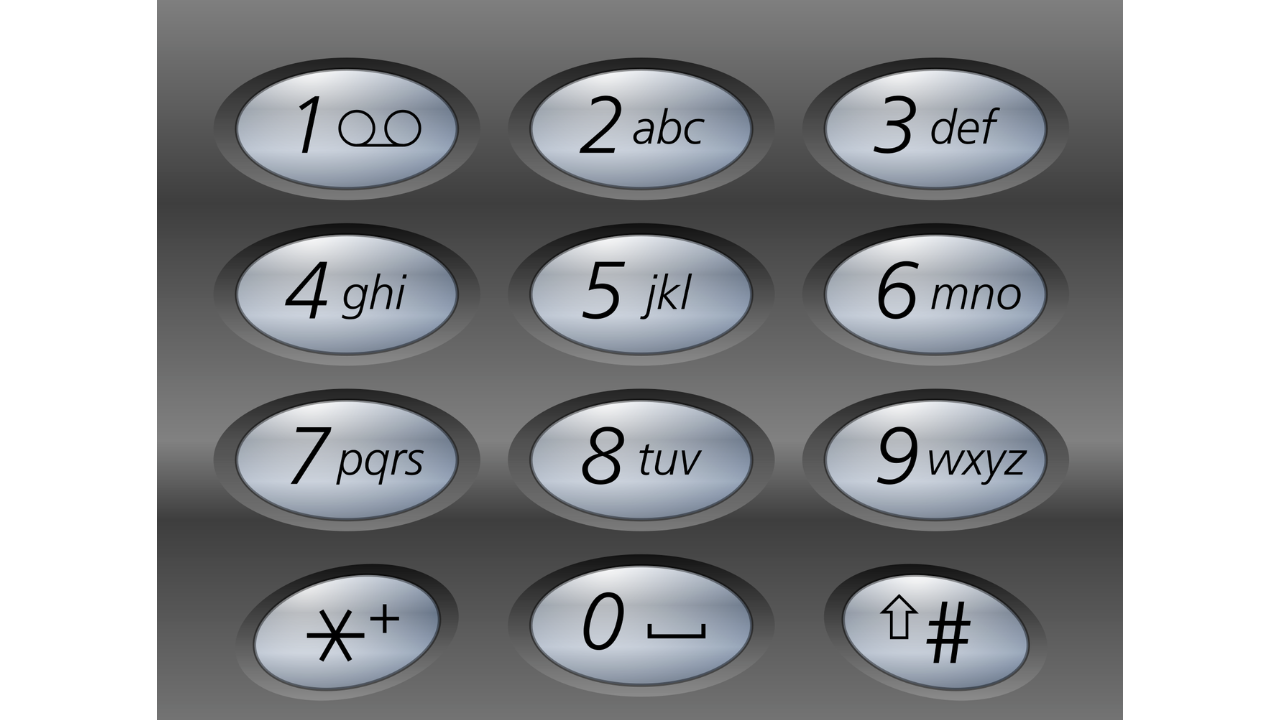
The traditional 12-key mobile phone keypad, where multiple letters share each number key, makes text entry slow. Image Credits:: Wikipedia
A turning point for mobile habits T9's impact extended beyond making typing faster. Simplifying text entry, it encouraged people to use their mobile phones for more than just voice calls.
Sending messages, saving contacts, writing reminders and even composing emails became easier, helping mobile phones evolve into more versatile communication devices.Even though touchscreens took over the 12-key keypad design, the concept underlying T9 lives on in many technologies. Autocomplete, autocorrect, and predictive typing are just different ways of using the idea behind T9 – to simplify the typing process by helping the user through software that understands the user's intention.This invention showed that software could compensate for hardware limitations without adding much complexity. The numeric keypad is now outdated, but the principle behind T9, letting the phone complete the word, lives on in many keyboard applications.









 English (US) ·