

 1 week ago
9
1 week ago
9
ARTICLE AD BOX
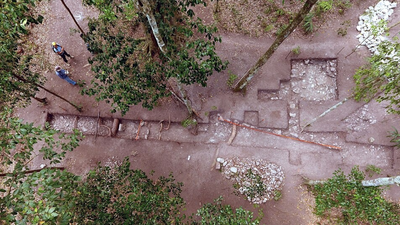
Excavations at the ancient Maya city of Xultun in Guatemala uncovered a painted chamber whose walls preserved some of the oldest known records of Maya calendar calculations and astronomical observations. Image Credits: Wikimedia Commons
The ancient Mayans are celebrated for their towering pyramids, intricate temples and sophisticated knowledge of astronomy. Their calendars have fascinated historians for generations, often inspiring myths that they could predict the future or even the end of the world.
However, one of the most interesting findings on the Mayan approach to calculating time did not come out of any of the royal monuments or manuscripts of the Mayans but out of the walls of a small and damaged room buried under the dense jungles for centuries.Archaeologists excavating the Maya city of Xultun in northern Guatemala unearthed a small room whose walls displayed lines of numbers, glyphs and astronomical computations.
While at first glance, it seemed like mere artistic representations, it turned out to be much more significant. They realised that what they found was one of the oldest known working examples of calculations done using the Maya calendar mathematics system, providing insights into the way the ancient scribes and astronomers recorded their computations.
This room, in other words, preserved working calculations rather than a complete artistic creation.
A chance discovery beneath the jungle canopyThe discovery began almost accidentally. A team from Boston University was investigating an area disturbed by looters when an undergraduate student noticed faint traces of painted plaster on a wall. As archaeologists carefully cleared the chamber, they revealed human figures, hieroglyphs and columns of numerical signs covering the walls and even parts of the ceiling.At first, researchers believed they had uncovered another painted Maya room. However, the repeated number sequences and carefully arranged glyphs suggested that the markings served a practical purpose rather than simply decorating the chamber. Instead of ceremonial murals, they appeared to record calculations linked to the movement of celestial bodies.Detailed analysis made the significance of the find. According to a research paper on Ancient Maya astronomical tables from Xultun, Guatemala, the chamber contains astronomical and calendrical tables associated with lunar cycles and the movements of Venus and possibly Mars.
The researchers concluded that the inscriptions represented working calculations rather than symbolic art, making the room one of the earliest surviving examples of Maya astronomical record-keeping.Whereas the renowned codices produced by the Maya have survived, the calculations at Xultun appear directly on the plastered walls of the room. Unlike a completed work, the space resembles an ancient work site for experimenting with new ideas and theories.
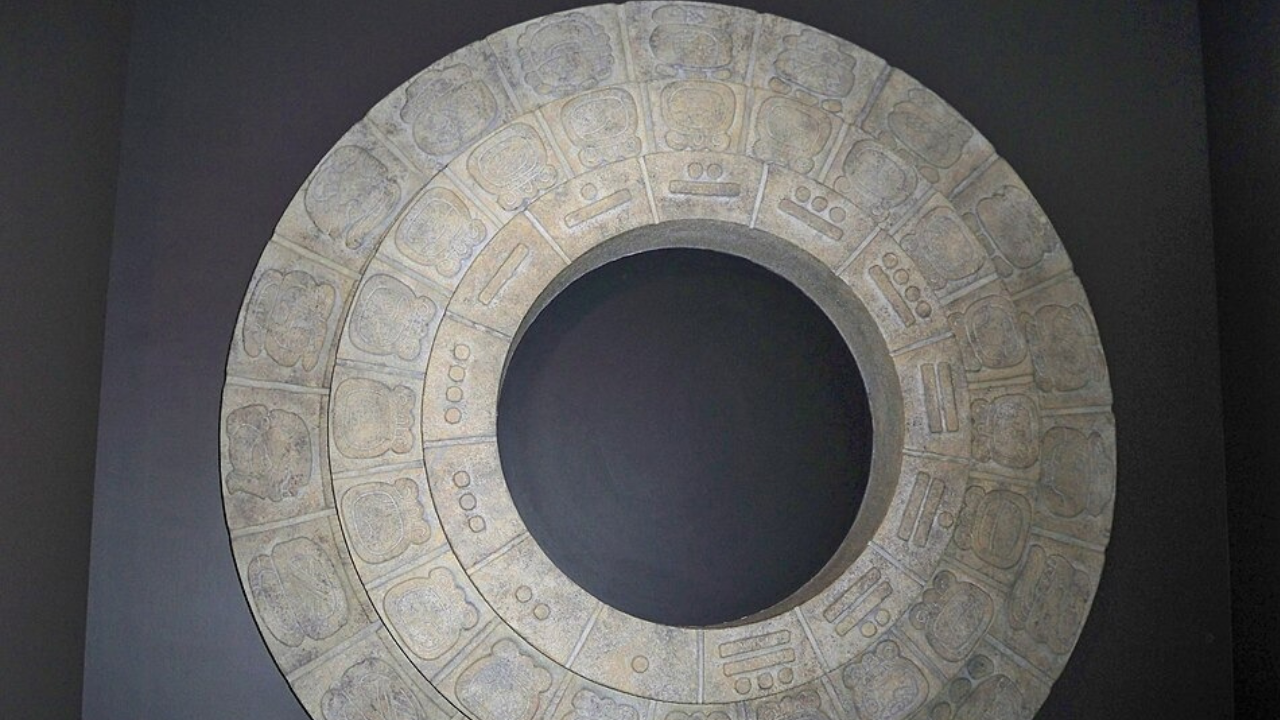
Stone Version of Mayan calendar. Image Credits: Wikimedia Commons
Where astronomy met mathematicsA study published by Boston University notes that the Maya developed one of history's most sophisticated systems for measuring time. Rather than relying on a single calendar, they tracked several overlapping cycles, including the 260-day ritual calendar, the 365-day solar year, lunar phases and the movements of visible planets. These systems might have allowed priests, rulers and astronomers to coordinate religious ceremonies, agricultural activities and political events.The paintings found at Xultun help show how all these calendars worked together. Instead of marking individual dates, the inscriptions compared a series of cycles, showing that ancient Maya scholars used mathematical calculations to track celestial bodies. Far from being mystical symbols, the wall painting shows very exact calculations made by Mayan scholars.The research also notes that the chamber contained a painted image of a seated king surrounded by attendants, suggesting a link between astronomy and royal authority.
Rather than working in isolation, scribes likely advised rulers using complex calendar calculations that shaped important decisions within the kingdom.A small room with a lasting legacyThe significance of Xultun goes way beyond just the painting on the walls of the room. Prior to the excavation of this site, there was no physical evidence for the relationship between the complicated calculations made in the Maya codices and the practice in the Classic era.
Thus, the wall inscriptions provide a historical link showing that calendar computations existed long before the codices were written.More than a thousand years after the room was abandoned, the fading calculations are still clear enough to read. The Maya were skilled builders and painters, as well as careful observers of the sky and mathematicians whose knowledge of time still interests modern scientists. Sometimes, the most impressive archaeological discoveries are not the most impressive structures but the modest places of creation of the knowledge itself.









 English (US) ·