

 1 day ago
6
1 day ago
6
ARTICLE AD BOX
A GPU by AMD based on the Curaçao XT architecture. Image Credit: Wikimedia Commons
In the fall of 2012, a computer program revolutionized the technology competition and changed how scientists viewed machine vision and processing.Many specialists once thought training deep neural networks was impossible.
Nevertheless, this program showed that given enough data, computing power, and design, machines can do something incredible.
This progress improved accuracy and helped launch the modern boom in computer vision that still shapes our lives.The World Cup is now a heat mapAlexNet gained fame because it arrived at the right moment. This system took part in the ImageNet challenge, which became a widely used benchmark for recognizing natural images. According to a historical overview indexed in PubMed, AlexNet was the first convolutional neural network that took part in such a competition.
Thus, the software was evaluated publicly rather than in a closed laboratory.The enormity of the challenge cannot be overstated. In this case, the program needed to classify 1.2 million images into 1,000 categories, including different dog breeds and household items such as receptacles. With the test being publicly administered and the competition based on established standards, the performance of the algorithm could be objectively assessed and ignored at one's own peril.
AlexNet won the competition by a wide margin and helped usher in a new era in computer science.Graphics processing units made depth possibleThe key technical innovation introduced by AlexNet was as much an engineering feat as it was a scientific breakthrough. As the creators state in their original paper, they used graphics processing units, or GPUs, to train the model. Before this work, GPUs were used mainly to render graphics in video games.A review in an academic journal says that using GPUs turned a theoretical idea into a practical reality. Training a deep neural network requires many image-recognition computations, which makes the task computationally intensive, costly, and slow on a regular PC. Passing the data through GPUs, the creators of AlexNet managed to create an extremely deep network within a reasonable amount of time. It significantly changed attitudes within the scientific community.
Expensive computations were no longer regarded as something unfixable but rather as an engineering problem.Why the win affected people's beliefsThe 2012 win changed how many technology companies and research institutions viewed machine learning. According to a comprehensive anniversary review in the Royal Society Open Science journal, the win of AlexNet marked the arrival of a new era in artificial intelligence. The review presents the three key components behind the victory: a vast amount of labeled data, low-cost parallel computing power, and deep neural networks.This combination gave researchers new confidence. After the public demonstration that a deep neural network could beat established methods in a difficult challenge, the field changed quickly. Vision systems that once seemed limited suddenly looked far more promising. Investment, research, and products increasingly flowed into deep learning technologies.
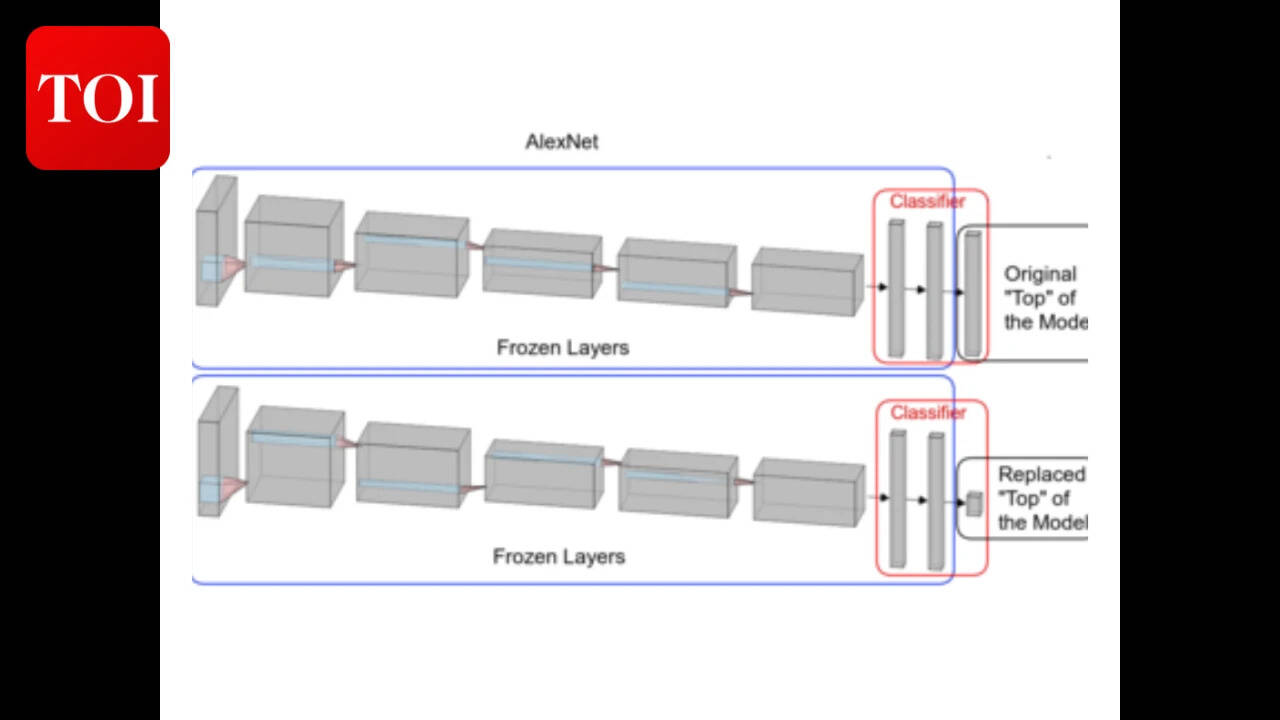
AlexNet is a convolutional neural network architecture developed for image classification tasks, notably achieving prominence through its performance in the ImageNet Large Scale Visual Recognition Challenge (ILSVRC). Image Credit: Wikipedia
New template for the futureAlexNet was deep in more than just an abstract way. Academic studies have shown that this model uses Rectified Linear Units and dropout techniques to reduce overfitting.
Those technical features soon became common in the field.Vision-science research shows that when the team removed parts of AlexNet, its performance declined. This became important historical evidence. It suggested that architectural depth was important to success and challenged the idea that simpler systems were always better.A lasting lesson about modern technologiesThe tech community’s quick reaction to AlexNet was significant.
Medical imaging reviews and broader computing studies show a sharp rise in interest in deep learning after the 2012 competition.There were still problems in computer vision that AlexNet did not solve, but the project significantly shifted the field. After AlexNet’s success, scientists focused less on whether deep learning was possible and more on how far it could go.









 English (US) ·