

 1 week ago
5
1 week ago
5
ARTICLE AD BOX

This treasure, a collection of crowns and crosses, was discovered in late 1858 on the outskirts of Guadamur. Image Credit: Wikimedia Commons
Pedro Bosque discovered his trove while walking across an extensively ploughed field in Spain in 2013. What caught the farmer’s attention was not ordinary debris from farming or recent times, but a treasure hoard from the Visigothic era.
Archaeology of the early Middle Ages often shows how ordinary farmland can preserve the past for centuries until it is uncovered by chance.For historians, it offers clues about how ordinary people lived, stored wealth, and adapted to environmental change during a turbulent period.Secrets buried undergroundPedro Bosque’s accidental find shows both the role of luck and the risks involved in modern archaeology.
While ploughing can destroy buried structures, it can also bring old treasures to the surface.In early medieval Spain, life extended far beyond stone structures and urban centers. The majority of its population resided in rural areas practicing agriculture, burying their dead, and conducting everyday activities in a setting of complete interrelation. Because these communities lived on the land, many of their possessions were buried there.
A walk across a field can reveal an extraordinary find and show that history lies just beneath our feet.The countryside as an archiveSpecialists studying early medieval Spain know that material remains are often found in the open countryside. According to one study indexed in PubMed, thorough exploration of historic rural sites such as the Las Gobas necropolis in Northern Spain demonstrates the existence of communities residing and developing in the area over a period of several centuries from the 7th to the 11th century AD.Since these lands were used for many generations, the soil has become a natural archive of information. Older deposits became buried in layers as settlements and farming changed over the course of several centuries.Such a find is not only a matter of luck but also evidence of how medieval society managed its resources in response to changing conditions.
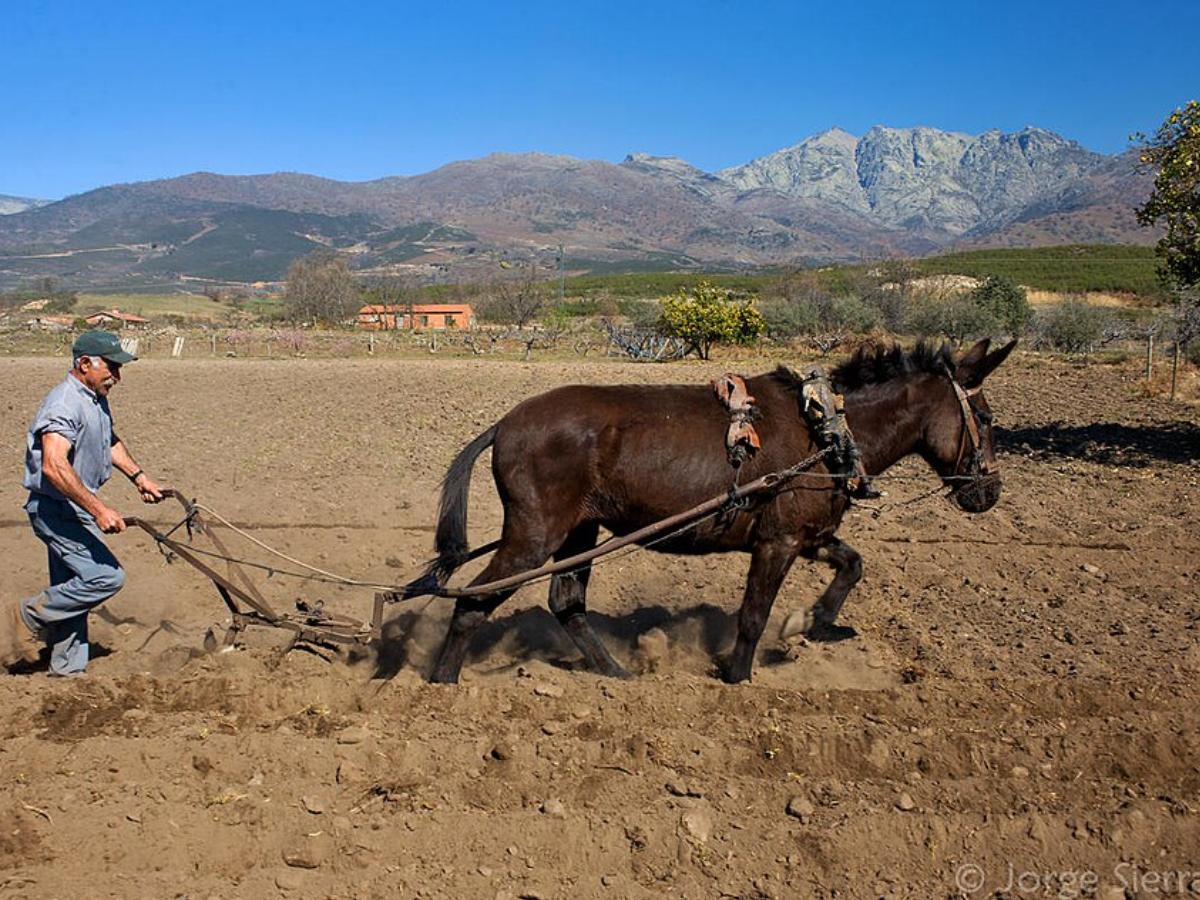
Plowing the fields with a mule to plant peppers for the production of Candeleda Paprika. image credit: wikimedia commons
Struggles with climate and collapseThe history of the Visigothic kingdom is often associated with collapse and warfare, but archaeology reveals another side of daily life.
The survival of people who lived during that time depended much on weather conditions, the fertility of the ground, and the success of local crops.According to climate and archaeology research published in Nature Communications, the region endured harsh climatic stressors - droughts, which failed agriculture and socio-political unrest during the 5th to 10th centuries AD.In times of crop failure and political tension, quick adaptation would have been essential.
Thus, when speaking about a hoard of valuables discovered in an open field, it is necessary to remember that such a discovery is far from being a coincidence. A hoard of treasures may indicate fear or precaution, reflecting an effort to protect wealth during unstable times.An eternal lesson below our feetPedro Bosque’s 2013 walk shows that important history is not always found in formal excavations or museum collections.
Much of our shared history lies in plain sight, hidden in the farmlands where crops are still being grown.Such knowledge serves as a powerful reminder of the fact that our history was not written in courtly palaces by kings, but rather lived in the real world.The next time you pass a plowed rural field, think of the possibility that beneath the surface lies another piece of our world’s history.







 English (US) ·