

 56 minutes ago
7
56 minutes ago
7
ARTICLE AD BOX
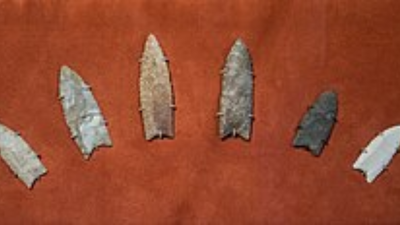
The Clovis culture is an archaeological culture from the Paleoindian period of North America, spanning around 13,050 to 12,750 years Before Present (BP). Image Credit: Wikipedia
One ancient genome changed how scientists discussed the early settlers of the Americas in 2014. It was extracted from the bones of Anzick-1, a young child whose burial site contained distinct stone tools.
Archaeologists have studied the Clovis tradition for decades because these stone tools were among the earliest examples of human culture in North America. After sequencing the boy's DNA, scientists could finally ask a major question: Did the ancient people of the Clovis tradition belong to the ancestry of modern Native Americans?The burial site belongs to the late Pleistocene period and thus provided an extremely rare context for this genetic information, linking together stone tools, human bones, and population history.What made the Anzick burial uniqueBefore this discovery, scientists compared stone tools and charcoal dates from different archaeological sites to chart early human migrations. What made the Anzick site special is that it is the only known human burial directly linked to Clovis artifacts. The remains were therefore important in terms of understanding the actual people who created these well-known stone tools.
As described in the landmark study published in Nature magazine, geneticists managed to map the genome of the child with high coverage. The article noted that there is a very close genetic relationship between the Anzick child and modern-day Native Americans. This result strongly suggested that the child belonged within the ancestral lineage of Indigenous peoples of the Americas.Information provided by the child’s genomeNot only did the scientific community consider the straightforward comparison between the child’s genetics and that of current-day populations, but thanks to the detailed sequencing of the DNA, they could trace back ancestry with an incredible degree of confidence.
According to the researchers' 2014 report, the child's genes carried evidence of ancient admixture. Specifically, this was gene flow from an ancient Siberian population, the Upper Paleolithic Mal’ta population, into the ancestors of Native Americans.This gene flow was already present in the Anzick child. In other words, it means that one of the major ancestral components of the indigenous Americans was already there in place by 12,600 years ago.
It is a significant milestone for a scientific discipline that has been debating the migration route and dates for decades.An absolutely reliable connection with the pastOne of the key strengths of the Anzick genome is that the connection between the child's remains and the nearby Clovis tools is well supported. The scientists did not take the burial context at face value; later chronometric reanalysis using advanced scientific pretreatment techniques confirmed the age of the skeletal remains.It is said in one review on PubMed that this chronometric reanalysis suggested that the Anzick-1 boy was actually contemporaneous with the Clovis tool complex from the burial. This means that the child and the artifacts came from the same late Pleistocene context. Had the remains been jumbled up with more recent or older materials for thousands of years, interpreting the genetic data would have been extremely difficult.
The secure context showed that the child lived during the time of Clovis technology in North America.
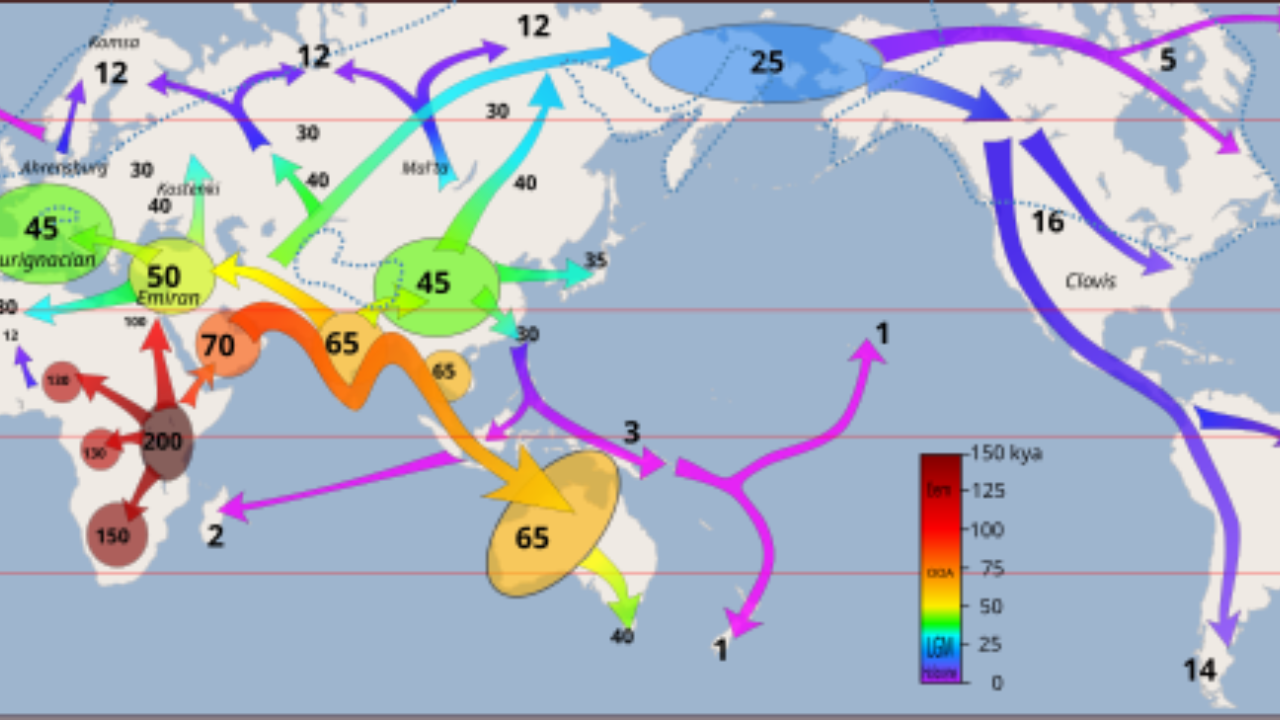
It is believed that the peopling of the Americas began when Paleolithic hunter-gatherers entered North America from the North Asian Mammoth steppe via the Beringia land bridge, which had formed between northeastern Siberia and western Alaska due to the lowering of sea level during the Last Glacial Maximum. Image Credit: Wikipedia
Migration story not as straightforwardWhile the genome answered one question about common ancestry, it also showed that the peopling of the Americas was more complex than once thought. Broader reviews of Native American genomics show that the child was more closely related to Central and South American Indigenous groups than to many Indigenous groups in North America.In other words, this discovery showed that the population structure of early Native Americans was complex. The finding supports the hypothesis that northern and southern lineages split after a common founding population arrived in the Americas.How is the case relevant in modern times?Even today, scientific reviews still highlight the Anzick genome as an important example in ancient genomics. It brought together archaeological evidence from stone tools and genetic evidence about Native American origins.Subsequent ancient genomes have only confirmed this picture without changing it radically. Ancestry, tool traditions, and migration routes do not always align, and a well-dated burial can reshape what genetics and archaeology reveal about the past.









 English (US) ·