

 3 days ago
6
3 days ago
6
ARTICLE AD BOX
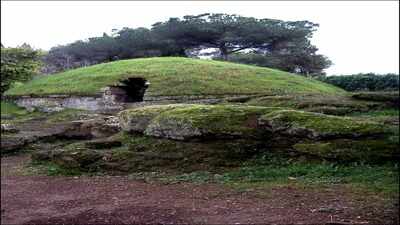
An Etruscan tumulus tomb in central Italy, where sealed burials have preserved valuable evidence of ritual practices, social status and elite life before the rise of Rome.Image Credits- Wikimedia Commons
History is often pieced together from broken pottery, weathered inscriptions and scattered bones. But every so often, a single object changes the questions archaeologists ask.
In 2018, that object was an exquisitely crafted ceremonial chariot uncovered inside an Etruscan tomb in central Italy. The chariot is important not just as a rare artefact, but as a clue to how honour was staged for the dead. Seen this way, the tomb fits into a broader story of ritual life in pre-Roman Italy and how archaeologists read identity from burial objects.A tomb that was more than a burialThe discovery of an Etruscan tomb is significant because burials were part of a wider ritual. A study, The Etruscans: Setting New Agendas, states that sanctuaries, burials, women, and craftworkers should be studied together, since they formed one connected landscape of belief and practice.
This explains why a ceremonial chariot in a tomb can carry more than one meaning. It can be an indication of prestige, but it can also indicate ritual performance, social hierarchy, and the cultural values that the society intended to keep alive even after death.
For this reason, the burial is more than just a repository of artefacts; it is a stage on which status and memory were carefully arranged.This tomb is especially fascinating because of its connection to elite women.
For years, historians of the ancient Mediterranean focused on male domination in politics and warfare. But Etruscan archaeology suggests a different picture: women from influential families took an active part in ceremonies and public life.Why the chariot changed the story
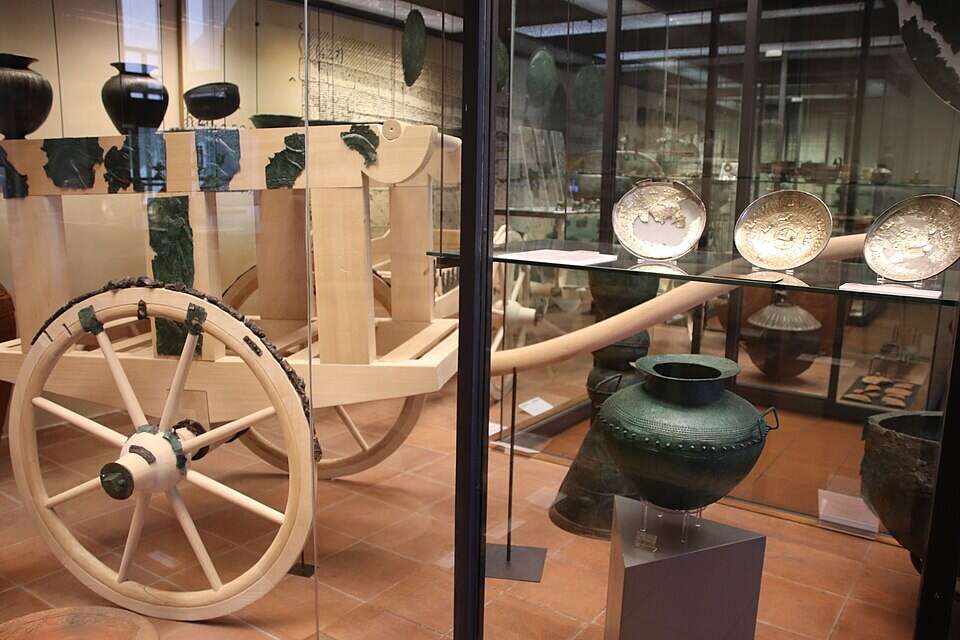
A reconstructed Etruscan ceremonial chariot displayed with ancient bronze vessels, reflecting the rich funerary traditions of pre-Roman Italy.Image Credits- Wikimedia Commons
The ceremonial chariot was an unusual grave good. In the tomb, it suggests movement, ceremony, and respectability, even though the actual burial may have been a private affair.
For archaeologists, this kind of thing represents a performance of status. It can indicate a person's rank and status within his or her family and a desire for a formal display of the deceased. The key question is not just who owned the chariot, but what its presence said about the person buried there.
In the context of Etruria, with its close association between ritual and burial, this could say a lot.Elite women in the Etruscan worldThe excavation shifted attention from the artefacts themselves to what they reveal about gender and ritual.
In Etruscan contexts, funeral offerings can reflect how families wanted the dead to be understood by later generations.So, if elite women were honoured with ceremonial equipment, that suggests a society where female prestige could be expressed through formal symbols, not only through domestic life. An analysis conducted at Xavier University contends that the elite Etruscan women held a more respected place in society compared to their Greek counterparts at the same time.
Based on images from family tombs, sarcophagi, and funerary art, this analysis asserts that women were honoured in the same manner as men were, rather than being restricted to domestic spaces. Moreover, it is suggested that Etruscan women maintained their individuality as part of the family lineage, participating actively in public activities, which implies that status could be bestowed upon women, something rare for the Mediterranean world of that time.A legacy preserved undergroundThe 2018 Etruscan tomb discovery turned a ceremonial chariot into a new way of studying Italian society before the Roman Empire. It is more than an ancient artefact: it reflects the intersection of ritual, status, and memory in elite burial practices. The archaeologists have come to realise that tombs of this kind are not only meant for storing items of value but also contain well-preserved information about how societies functioned.









 English (US) ·