

 1 hour ago
5
1 hour ago
5
ARTICLE AD BOX
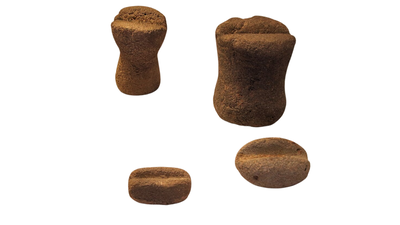
Basalt Sharpening Stones, Natufian Culture Israel Museum, Jerusalem, Israel. Image Credit: Wikimedia Commons
For many years, the story of human history seemed straightforward. First, people started agriculture. Once people began growing wheat and barley, they settled in villages and developed baking.
It sounds quite logical. Bread cannot be baked without flour, and it is impossible to have flour without agriculture.However, an amazing finding made in the Black Desert of northeast Jordan totally changed this established concept. A tiny amount of charred food crumbs shows that people were baking long before they sowed any seeds.The crumbs that made historyThe tale started at an excavation site referred to as Shubayqa 1.
During the examination of an ancient fireplace, archaeologists found something odd amongst all those ashes. There were 24 small and charred crumbs. They were not random crumbs from wood ash and charcoal, but crumbs from a deliberately prepared meal.As it was stated in an extremely important scientific article indexed on PubMed, these crumbs date back to about 14,400 years ago. This exact period is really crucial as it is much earlier than the time when farming started in Southwest Asia.
What we should understand here is that bread was not invented after agriculture started. In reality, it was a product consumed in meals when people used to be hunter-gatherers.Discovery of the oldest flatbreadIt was particularly challenging for scientists to find any traces of old food since it decomposes in several thousand years. The only way to preserve the bread was to thoroughly burn it and thus leave charcoal-like crumbs.
Charred food can resemble other materials, such as debris or even natural grains.To show that the remains were ancient flatbread, scientists conducted a series of experiments. Scientists examined the microscopic structure and small bubbles preserved in the burned fragments. They then compared these patterns to modern experimental food that was created from wild cereals.These tests revealed that the fragments were formed by a special baking procedure involving the creation of dough.
Therefore, ancient people of Shubayqa 1 did not merely throw grains to burn; they carefully ground wild cereals and made a dough out of them.Baking in an era without agricultureThis finding redefines our understanding of history in a whole new light. Throughout many years of history, it was believed that the complex art of cooking was something that existed solely in the post-agricultural period.Shubayqa 1 residents belonged to the Natufian culture, which represented late hunter-gatherers in the Levant region.
They did not practice farming or possess farming technology such as plows or domesticated plants.However, these nomadic people were rather inventive. They likely spent hours collecting wild seeds, grinding them into flour with stones, and baking flatbread over an open fire. It turns out that all essential culinary skills of grinding, mixing, and baking appeared way earlier than anyone started thinking about planting.
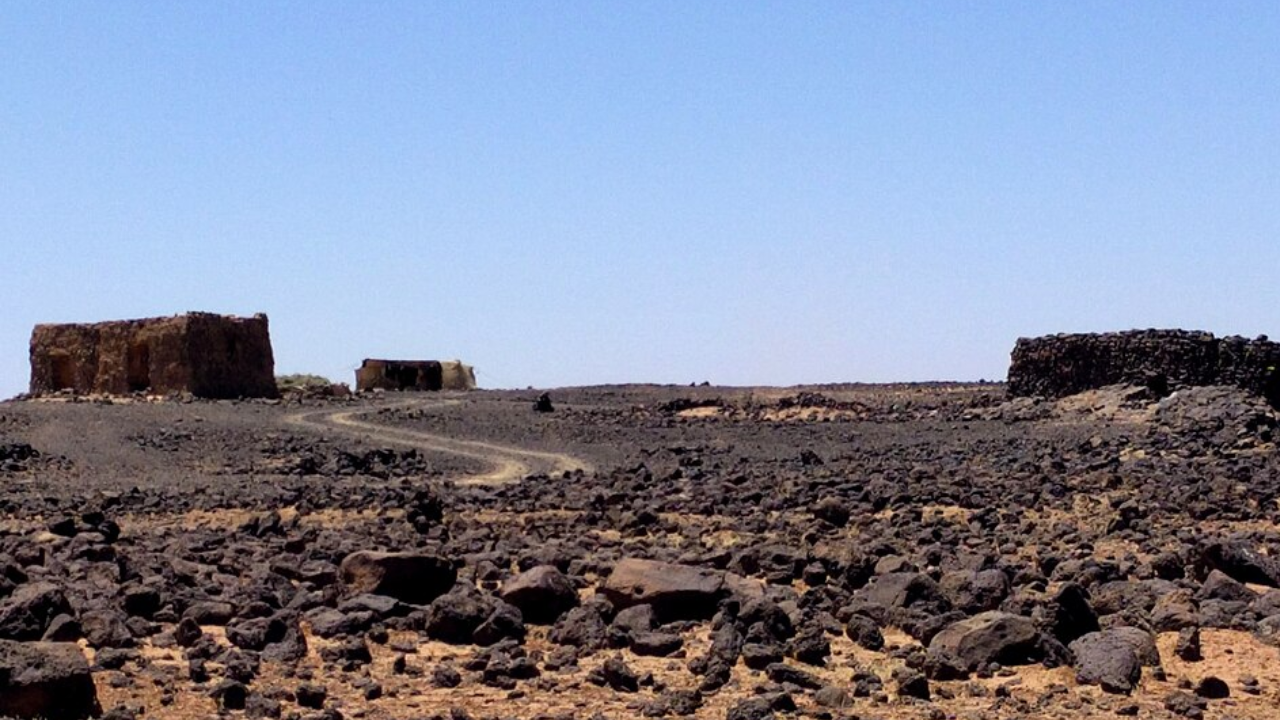
Old houses in the Black Desert, eastern Jordan. Image Credit: Wikimedia Commons
Impact of the discovery on scienceIt is not enough to say that this discovery made headlines in the media. The impact was long-term, and now scientists continue to use the results of their studies about Shubayqa 1.The paper entitled “A Global Overview of Early Agriculture and Crop Domestication History”, which is published in the Cambridge University Press Repository, uses the Jordan flatbread discovery as one of the crucial pieces of evidence. This shows that the discovery became an important reference point in archaeology.For researchers studying ancient plant-human interactions, the charred bread from Jordan is an important reference point.Changing our view of the daily loafIn the end, it seems from the remains found in Shubayqa 1 that the course of human evolution is far more complex than many of us imagine. Farming was not the reason for the creation of the kitchen; rather, it seems that our fascination with bread and complicated food could have been one of the driving forces behind becoming farmers in the first place.When you enjoy flatbread today, you are eating a food with roots that go back at least 14,400 years.









 English (US) ·