

 3 days ago
5
3 days ago
5
ARTICLE AD BOX
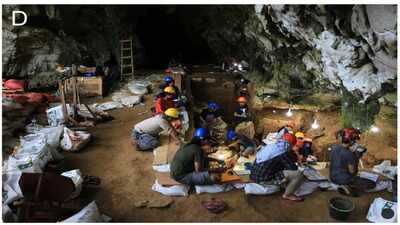
Image of Leang Bulu Bettue, an archaeological site in the Maros-Pangkep karst area of South Sulawesi.Image Credits: Wikimedia Commons
For much of the last century, prehistoric art was often framed as beginning in Europe. The cave paintings of France and Spain were widely regarded as the birthplace of human creativity.
These masterpieces shaped the belief that the first figurative artists emerged in Europe during the Ice Age before spreading similar traditions elsewhere.Then came an unexpected discovery from the Indonesian island of Sulawesi.In 2014, researchers used uranium-series dating to determine the age of mineral deposits that had formed over cave paintings in the Maros karst region. The results were astonishing.
Hand stencils and animal figures were found to be at least as old as Europe's earliest cave art. Four years later, further discoveries across island Southeast Asia reinforced the finding, making it increasingly difficult to argue that artistic expression had developed in only one part of the world.The discoveries widened the history of art. They suggested that early modern humans across different regions were capable of creating symbolic and figurative images at roughly the same time, challenging a narrative that had long placed Europe at the centre of Ice Age creativity.
A cave wall that changed the mapThe key Sulawesi result came from dating the mineral layers that formed on top of the art, not the paintings themselves. In the Maros karsts, scientists used uranium-series methods to date deposits over hand stencils and animal figures. A research paper on Pleistocene cave art from Sulawesi, Indonesia, states that the art was at least as old as the oldest known European cave art. Among the images was a babirusa painting, which the paper placed among the earliest dated figurative depictions known anywhere.
That was a major break from the long-held view that Europe led the story of early image-making.Not only was a new prehistoric cave added to the record, but the perspective on Ice Age art was also transformed. With figurative art in Sulawesi dating to roughly the same age as examples in Europe, it showed that the ability to create recognisable images of animals was not confined to one place. The finding also showed that hand stencils were already part of the visual record in Wallacea at very early dates.
The cave art story, therefore, extends beyond one continent and one tradition.
Sulawesi became a test case for a deeper, more global history of early human expression.Why 2018 mattered so muchClaims concerning the dates from Sulawesi were no longer a one-off case. The article mentioned above notes that Borneo cave art belongs to a broader Southeast Asian pattern, with figurative images at least 35,000 years old and hand stencils at least 40,000 years old.
The significance of the dating was broader than simply proving that old paintings existed. It was the emergence of a similar level of image creation on other islands of Wallacea.From animals to storytellingThe Sulawesi record did not stop at simple outlines or hand marks. A research paper published in Nature re-dated a narrative scene at Leang Karampuang and placed it at least 51,200 years old. The scene was described as the earliest known example of representational art and storytelling.
That pushed the Sulawesi discussion beyond the question of age alone. It suggested that early image-making in the region included complex scenes, not just isolated figures. The art was doing more than marking a wall. It was telling something.The paper also explains that the dating used laser-induced imaging of radioactive elements and challenged older dating approaches. Each new technique sharpened the timeline, and each sharper date widened the cultural picture.
Sulawesi art was not a minor footnote to Europe’s cave art record. It became part of the core evidence that early humans were creating images, symbols, and stories across a much broader world than once assumed.
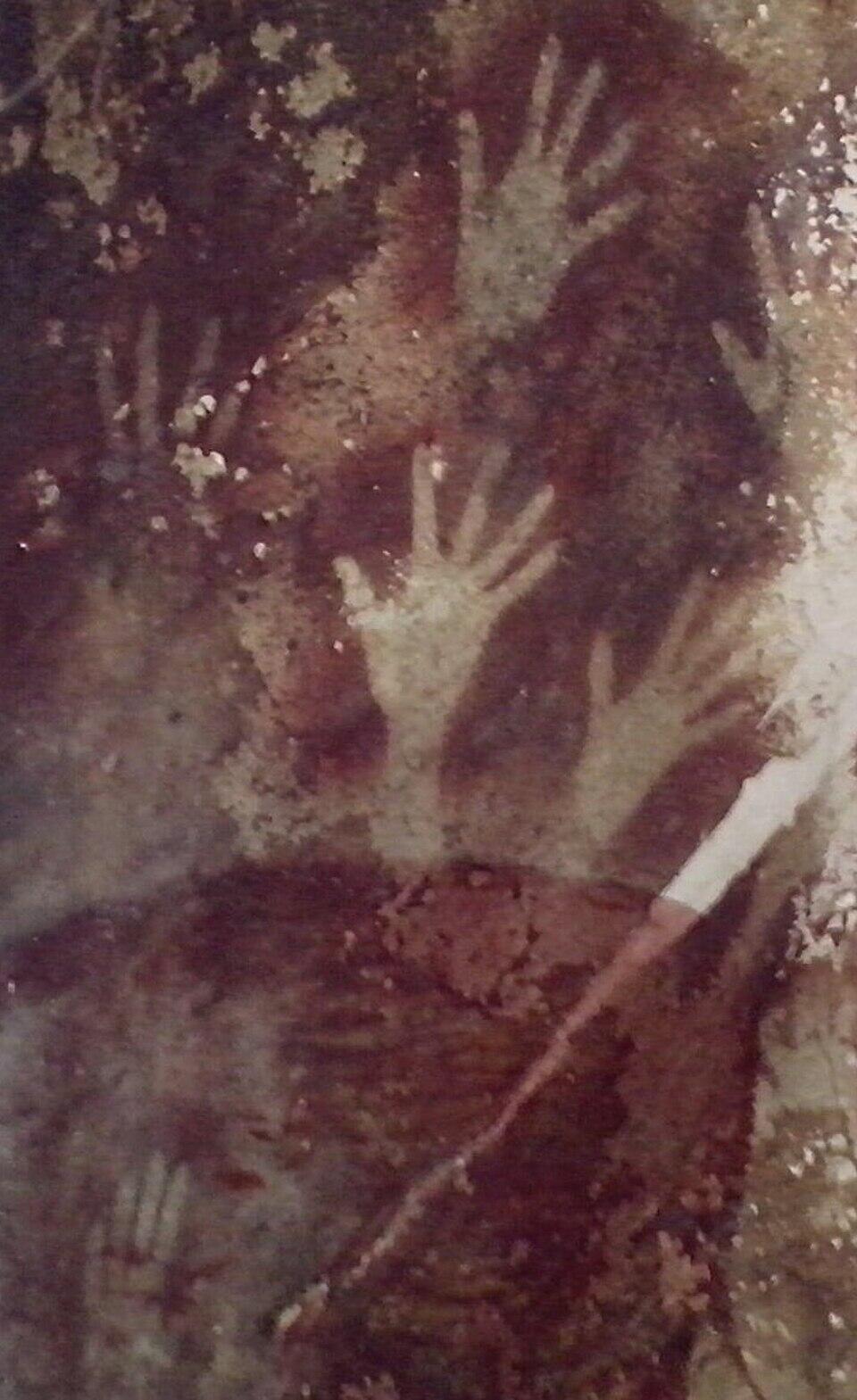
Ancient hand stencils preserved on the walls of a Sulawesi cave.Image Credits: Wikimedia Commons
How the discovery changed archaeologists' perspectivesSulawesi rock art was not just a new addition to the archaeological record; it helped shift academic understanding of when figurative art emerged and how ancient modern humans used images for marking, representation, and possibly storytelling. The dates of 2014 demonstrated that the Maros karst area had art as old as anything found in Europe. The Borneo analysis from 2018 expanded this regional oddity to become part of a broader regional pattern.
Taken together, the evidence points to a wider Ice Age world of creativity, one that was not centred in Europe alone but spread across Wallacea and beyond.









 English (US) ·