

 5 days ago
8
5 days ago
8
ARTICLE AD BOX
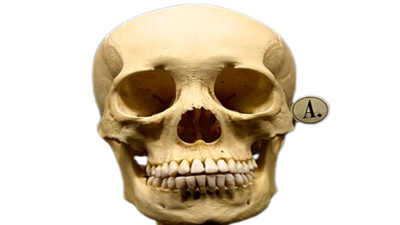
Ancient human teeth serve as natural time capsules for pathogen DNA. Image Credit: Wikipedia
A small but powerful archive has transformed our understanding of ancient history. In 2018, a team of researchers turned to Bronze Age teeth to unlock the secrets of one of humanity's deadliest diseases.
From these dental remains, researchers successfully recovered the DNA of Yersinia pestis, the bacterium responsible for the plague, and reconstructed genomes from the Bronze Age that are roughly 3,800 years old.The teeth were excavated from ancient burials in the Samara region of Russia. This study allowed scientists to trace how a lethal disease moved alongside human populations across the vast Eurasian landmass.
It also showed that human movement, burial remains, and ancient diseases can be studied together.Why teeth are perfect for tracking diseaseResearchers screened DNA extracted from nine teeth belonging to nine Bronze Age individuals. They managed to recover Yersinia pestis directly from the ancient tooth pulp. As detailed in the open-access methods of the study, the team had to work with highly degraded, tiny fragments of ancient DNA.
Dental tissue is uniquely suited for this task because it acts as a sealed time capsule, trapping genetic material and protecting it from environmental decay for thousands of years. This choice of source material was vital since ancient plague DNA is usually incredibly scarce and broken into minute pieces. The teeth preserved traces of the infection that had once spread through these individuals.This approach was built on earlier pathogen research. For instance, a landmark 2014 study indexed in PubMed sequenced Yersinia pestis from teeth linked to the 6th-century Plague of Justinian.
That earlier work showed that ancient dental samples could yield authentic pathogen genomes. Subsequent methodological tests showed that these genetic signals were reliable and could be reproduced across multiple teeth from the same individual, making the 2018 Bronze Age discoveries more robust and useful to the wider scientific community.Mapping the ancient lines of infectionThe genomes recovered from the Samara burials date back nearly four millennia, placing them in the Bronze Age. Writing in the journal Nature Communications, the authors identified these samples as some of the earliest directly recovered plague genomes known to science.The study did not merely find a bacterium. It successfully mapped an early branch of its evolutionary family tree, dating to a time when human communities were actively expanding across Europe and Asia. This expanded on previous genetic work, which had established that the oldest detectable plague lineages were near the root of the Yersinia pestis species tree. It suggested that the plague may have circulated among human societies deep in prehistory.
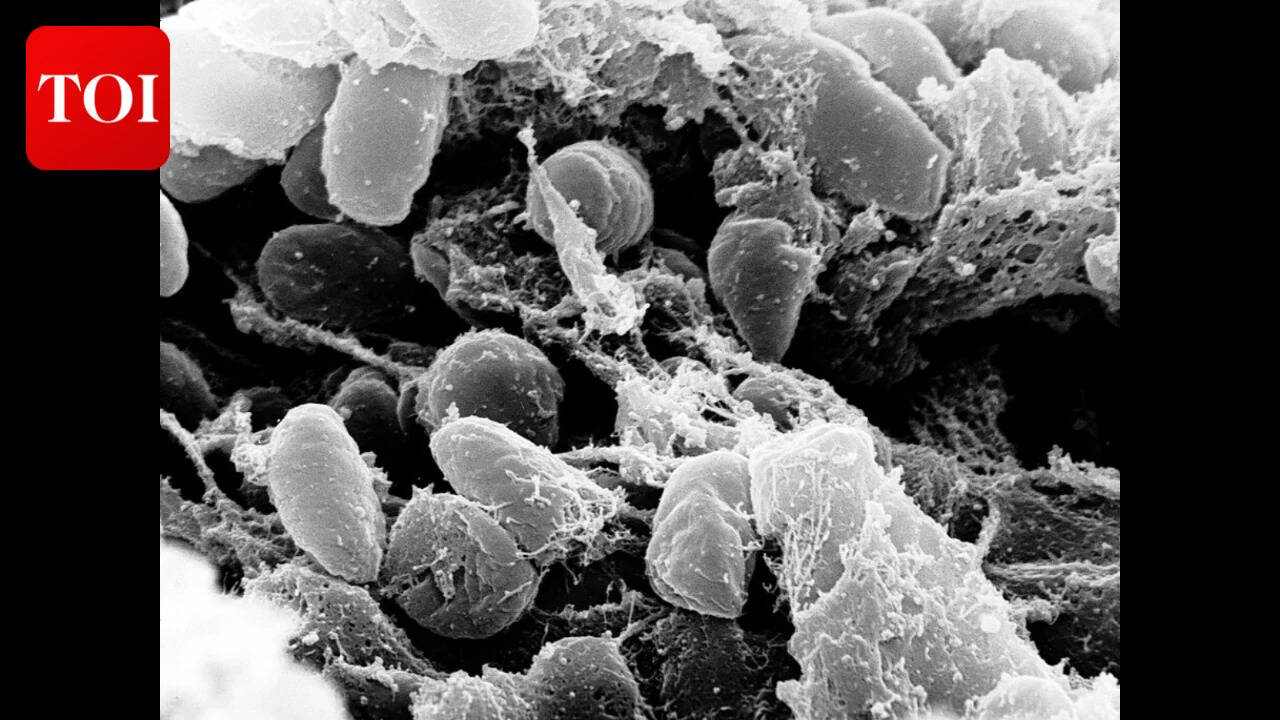
Scanning electron microphotograph depicting a mass of Yersinia pestis bacteria (the cause of bubbonic plague) in the foregutte of the flea vector. image credit: Wikimedia Commons
Moving with migratory populationsThe broader conclusion of the 2018 research relates to human mobility. The authors linked the presence of these plague genomes to population shifts across the Eurasian steppe during the Bronze Age. They highlighted a central geographic corridor that likely carried both migrating human groups and their accompanying diseases. This perspective frames the plague not as a sudden, isolated local catastrophe, but as part of human travel and trade.This is consistent with the wider genetic history of the region. Previous large-scale population studies have shown that the Bronze Age was defined by vast migrations that permanently altered the genetic makeup of Europe and Asia. Because these ancient societies were highly mobile and deeply interconnected, infectious agents naturally traveled along the same paths. The plague genomes found in the Samara teeth fit a broader pattern of human contact and exchange.Turning dental remains into historical mapsThe 2018 genomes also helped scientists understand how the bacterium adapted as it spread. Later evolutionary reviews confirmed that these Bronze Age strains marked a critical evolutionary step, including the eventual appearance of the flea-adapted version of the plague in places as far away as Iberia. This suggests that the bacterium was changing and adapting to different environments while circulating through interconnected human populations.Ultimately, the study of these Bronze Age teeth added a new line of evidence to archaeology. It proved that a single human tooth can hold enough genetic data to reconstruct a prehistoric pathogen genome without relying on written records. By reading human bones, burial customs, and pathogen DNA together, researchers can view Bronze Age Eurasia as a connected world where disease traveled with people, animals, and goods.









 English (US) ·