

 1 week ago
12
1 week ago
12
ARTICLE AD BOX
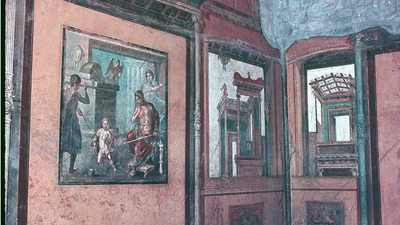
These Pictures were taken in Pompeii in 1960 and 1963 on two occasions. The slides were mixed up afterwards, so no date can be guaranteed. Image Credits: Wikimedia Commons
When Mount Vesuvius erupted in AD 79, it buried Pompeii beneath metres of volcanic ash, preserving a Roman city with extraordinary detail. For centuries, visitors have marvelled at its colourful frescoes, luxurious villas and haunting plaster casts of its final victims.
Yet one of the city's most significant discoveries was not made inside a lavish dining hall or an elegant courtyard. Instead, it came from a cramped service room where the comforts of Rome's wealthy households were quietly sustained.Archaeologists digging near the suburban villa of Civita Giuliana discovered a small room equipped with three wooden beds, storage shelves, ropes, agricultural tools, and pottery jugs.
The lack of decoration, privacy or luxury led researchers to conclude that the room was likely used as slave quarters. The room offers rare evidence about the lives of the enslaved people who supported elite Roman households.A room built for work, not comfortThe remains of Pompeii's victims, preserved by volcanic ash after the eruption of Mount Vesuvius in AD 79, continue to offer rare insights into life and death in the ancient Roman cityAccording to ABC News, the chamber was extremely small, covering only a few square metres.
Two of the three beds were noticeably shorter than the third, suggesting that children may also have lived in the room. Everyday items were stored wherever space was available, highlighting the room's purely functional nature and the cramped conditions in which its occupants lived.This discovery is important because physical evidence of the lives of slaves is rare. Slavery is mentioned often in ancient Rome but always from the perspective of the privileged class.
This find offers another perspective on the lives of common people.Its plainness is what makes it historically valuable. Instead of displaying wealth, it exposes the social hierarchy built into the architecture itself. Behind every grand reception hall stood kitchens, workshops and service rooms where enslaved workers spent much of their lives.
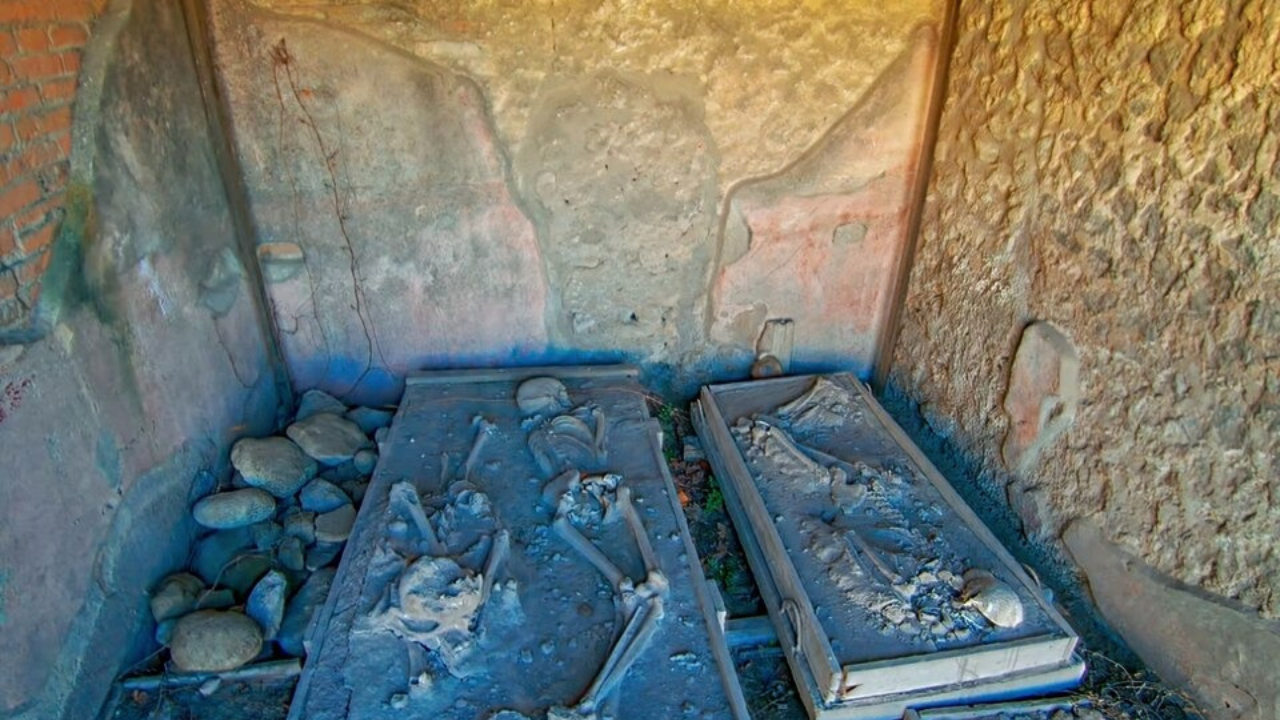
The remains of Pompeii's victims, preserved by volcanic ash after the eruption of Mount Vesuvius in AD 79, continue to offer rare insights into life and death in the ancient Roman city. Image Credits: Wikimedia Commons
How volcanic ash preserved everyday lifePompeii's greatest gift to archaeology is not simply that it survived, but how it survived.The eruption rapidly buried buildings beneath volcanic ash, protecting structures from centuries of weathering and redevelopment. Although wooden furniture and organic materials eventually decayed, they often left hollow impressions within the hardened ash. Archaeologists can fill these voids with plaster or analyse them using modern imaging techniques, allowing them to reconstruct objects that disappeared long ago.According to a research paper on The casts of Pompeii: Post-depositional methodological insights, Pompeii's preservation casts and impressions continue to reveal details of buildings, furniture and human activity that would normally be lost at ancient sites. In the Civita Giuliana room, this remarkable preservation enabled researchers to identify the shapes of wooden beds, storage furniture and the arrangement of the living space itself, transforming what might have been an empty room into a vivid record of everyday life.The discovery shows that archaeology is not only about recovering major artefacts. Sometimes the absence of luxury tells the richer story. A narrow room containing work tools can reveal more about Roman society than a hall covered in expensive paintings because it preserves evidence of the people who made elite lifestyles possible.Rewriting the story of Roman societyFor many years, Pompeii has captivated visitors with its glimpse into the ancient past.
However, discoveries like the one at Civita Giuliana have gradually shifted the focus of archaeological work. Archaeologists are no longer focused only on emperors and other elites, as well as works of art and buildings, but rather want to learn more about how regular people lived in deeply stratified societies.The room provides a clue to this aspect of ancient Rome. It makes one understand that Roman villas were not just places where wealthy owners spent their days, but workplaces organised according to the social hierarchy of this period, in which slaves had to do all kinds of labour that made life comfortable for their masters.Archaeologists are careful about making assumptions about who the people in this room were and what roles they played in society. Some facts about human experience cannot be determined through material evidence.This is one reason the discovery is likely to be remembered beyond Pompeii. In contrast to all the beautiful works of art which have been the main source of fascination for Pompeii visitors so far, this one directs the viewer's eye onto the people who had lived here and whose story was not known to us before.









 English (US) ·