

 55 minutes ago
6
55 minutes ago
6
ARTICLE AD BOX
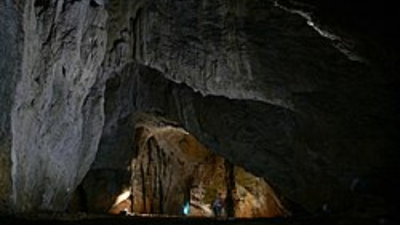
The Bacho Kiro Cave is situated 5 km (3.1 mi) west of the town Dryanovo, Bulgaria, only 300 m (980 ft) away from the Dryanovo Monastery. Image Credit: Wikipedia
However, for quite some time, the history of how humans settled in Europe was clear-cut. Scientists thought that our ancestors migrated in waves slowly and smoothly, replacing Neanderthals who populated the continent before us.
Recently, an unexpected discovery made in a small and dark Bulgarian cave turned everything we knew about the origin of humanity upside down. Scientists published the sequenced genomes of the 45,000-year-old Bacho Kiro Cave remains in 2021, completing an analysis that began with the DNA's initial identification the previous year. The result surprised some specialists. The discovery suggests humans reached Europe earlier than previously thought and may have overlapped with Neanderthals for longer than expected. Redefining the human timeline There were several reasons why the Bacho Kiro cave became such a significant place for archaeologists. In the cave, scientists discovered the bones of ancient people buried in proximity to the specialized stone and bone tools that belonged to the Initial Upper Paleolithic period. The proximity of the artifacts enabled specialists to use radiocarbon dating on the human remains. As recent groundbreaking research revealed in the scientific journal Nature, the genomes belonged to three different individuals living 45,930 to 42,580 years ago.
Thus, the discovery was considered strong evidence of the presence of Homo sapiens in southeast Europe much earlier than was previously known. Rather than focusing on the shape of fragmented skulls, the team relied on genomic data proving that these individuals were definitely modern humans, thus giving us a solid and undeniable time marker of our early presence on the continent. Unexpected family tree What makes Bacho Kiro so interesting is the information hidden within the genomes of the ancient individuals.
According to the Nature study, the earliest modern humans were moving through a landscape shaped by interbreeding with other species. Subsequent genetic analysis offered a new understanding of human relationships. By measuring Neanderthal DNA segments, researchers found that the ancestors of these modern humans had a Neanderthal ancestor several generations earlier. This evidence challenges the previously established theory of modern humans arriving and replacing Neanderthals.
In fact, it is clear proof of active reproduction and hybridization. Early Europeans lived in a complex genetic landscape and experienced periods of proximity and cultural interaction.
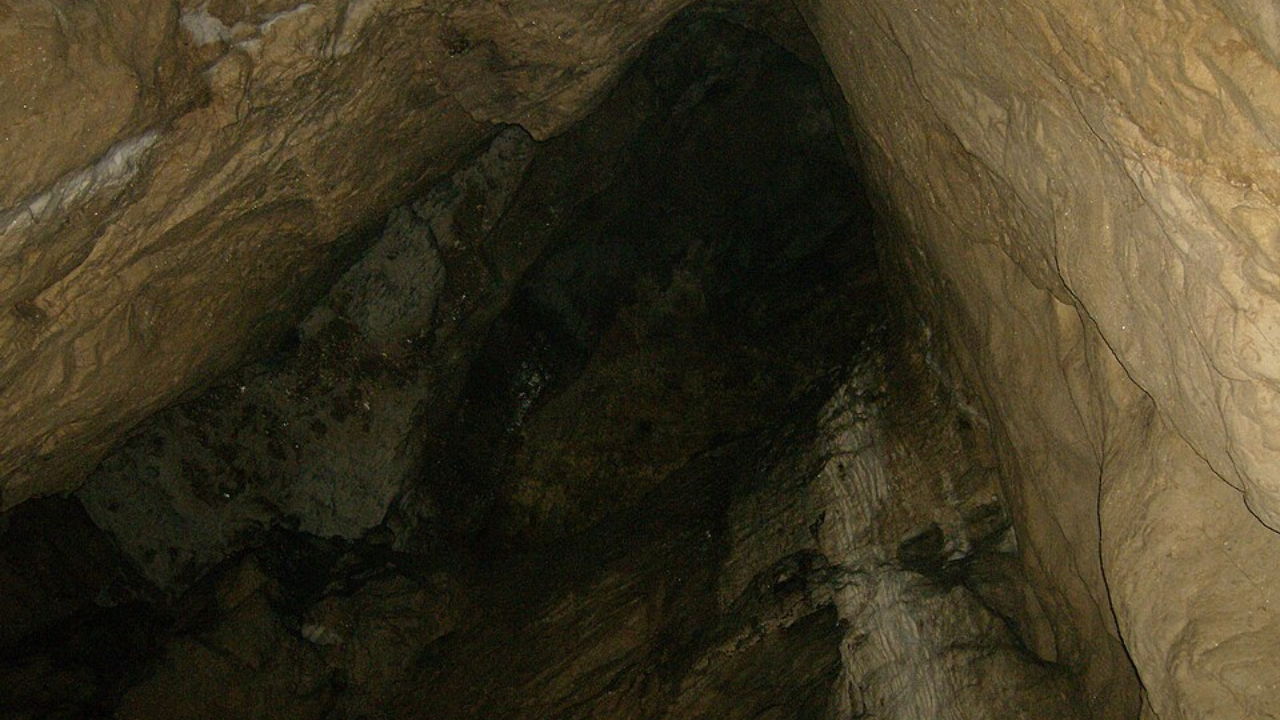
The Bacho Kiro Cave is situated 5 km (3.1 mi) west of the town Dryanovo, Bulgaria, only 300 m (980 ft) away from the Dryanovo Monastery. Image Credit: Wikimedia Commons
Survival in cold Survival in Europe was difficult at the time. The Bacho Kiro cave was not a hospitable place. To understand the climate at the time, scientists examined oxygen isotopes in animal bones from the cave. The data suggest that the climate at the time was colder than it is today.
These ancient humans survived in Ice Age conditions. This suggests that migration to Europe required adaptation to cold and difficult conditions. Migration waves of humans Data from Bacho Kiro is important for creating a family tree of all human populations in the world. According to later genetic studies, these ancient people belonged to an early wave of modern humans that was not ancestral to most present-day Europeans. Surprisingly, their DNA is more similar to ancient populations from East Asia and the Americas than to ancient Europeans. It means that the formation of the population of Europe was a multi-level process, which includes different waves of migrations, lost branches of evolution, and many other factors.









 English (US) ·