

 1 week ago
4
1 week ago
4
ARTICLE AD BOX
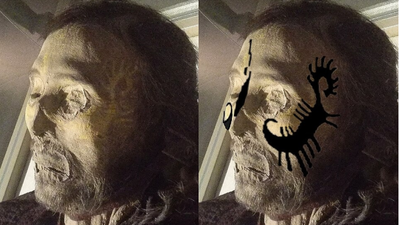
Researchers digitally reconstructed the faded facial tattoos on a Peruvian mummy, revealing intricate designs that had become nearly invisible over time. Image Credits: Wikimedia Commons
For centuries, the tattoos lay hidden beneath ageing skin, too faint to be clearly seen. Archaeologists had studied the mummy before, identifying it as belonging to Peru's pre-Inca Chancay culture, but the faded markings offered few clues about the person who once wore them.
Then, in 2021, a beam of laser light changed everything.Using a technique called laser-stimulated fluorescence (LSF), researchers illuminated the preserved skin and watched forgotten artwork emerge with astonishing clarity. What had appeared as blurred patches under ordinary light became sharply defined patterns, revealing delicate lines and intricate motifs that had survived for more than a thousand years. The findings, published in the PNAS journal, showed that the tattoos had been created with remarkable precision, opening a rare window into a civilisation that flourished centuries before the Inca Empire.The point was not simply to confirm that tattoos existed, since archaeologists already knew they did. The laser mattered because tattoo ink can spread over time, making the designs hard to decipher. The laser made the tattoo marks stand out clearly against the surrounding tissue.A language written on the bodyThe mummy belonged to the Chancay culture, which lived along Peru's central coast between roughly AD 1000 and 1470. Although the civilisation is well known for its finely woven textiles and distinctive ceramics, the newly revealed tattoos suggest that body art may also have been an important part of Chancay society.
As noted in Nature, the tattoos included several different designs, including scale-like patterns on the forearm, vine motifs across the hand, markings on individual fingers and an animal-like figure on the chest. Rather than repeating a single symbol, the tattoos showed variety and careful craftsmanship, suggesting they were created with purpose rather than as casual decoration.What those symbols represented may never be known for sure.
The symbols might refer to family, religious beliefs, social status, or accomplishments. Whatever their purpose, the symbols likely conveyed meanings that members of the society could understand. Unlike jewellery and clothing, tattoos were permanent and could not be removed.The discovery also shows how societies without written records often communicated through symbolism. The human body itself became a canvas for messages that outlasted the people who created them.
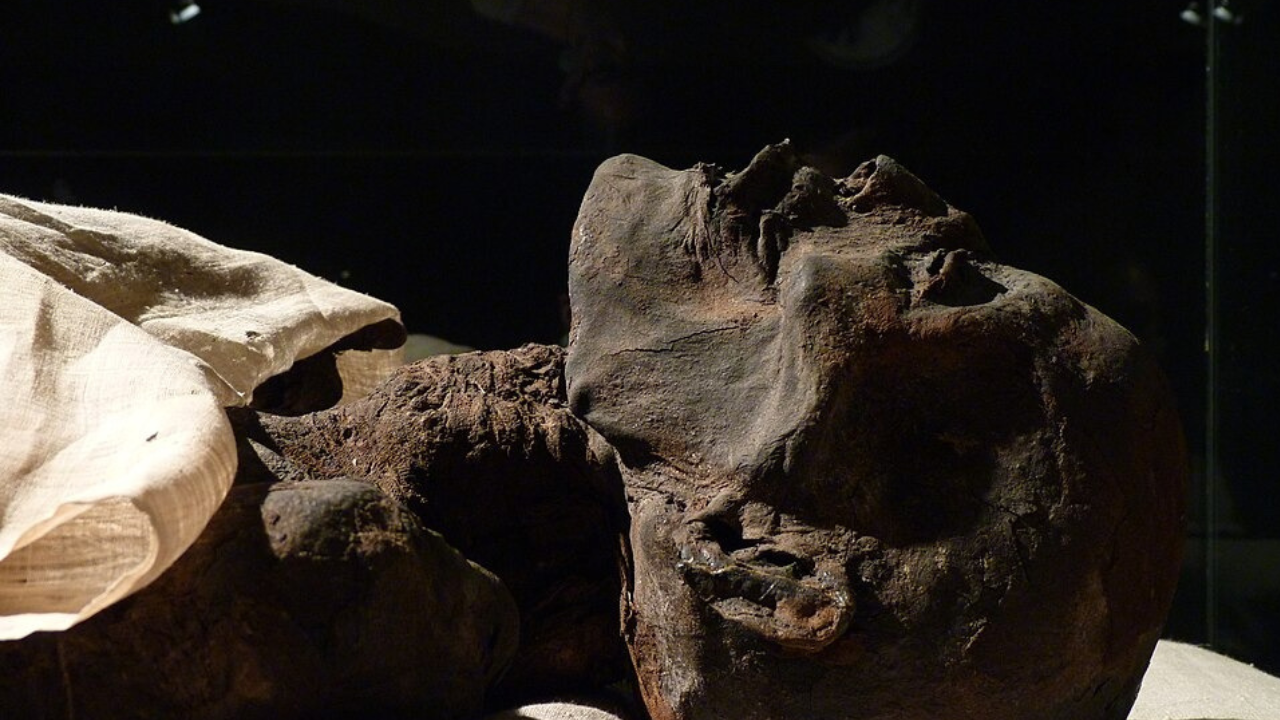
The preserved remains of a Peruvian mummy. Image Credits: Wikimedia Commons
More than an ancient tattooOver the past few decades, archaeologists have studied thousands of mummies around the world using traditional techniques. Many still retain skin and decorative details that are not visible under ordinary lighting. Laser-stimulated fluorescence is helping scientists revisit these specimens and see details previous generations missed. Unlike traditional archaeology, which focuses on discovering new sites, scientists can now learn new things from specimens that have sat in museum collections for years.The tattoos not only exist, but they may also have been used to denote status. Archaeologists usually rely on grave goods, burial treatment, or other materials to understand an individual's social status. In this case, the body itself provides the evidence. The tattoos were visible, intentional, and likely meaningful to those who saw them. A more recent forensic study found that tattoos can reveal details about a person's origin, religion, and affiliationsThe Chancay mummy shows how archaeology now relies on technology to reveal details that were once hidden. In this case, the laser did not add new information; it simply made hidden details visible.









 English (US) ·