

 1 week ago
5
1 week ago
5
ARTICLE AD BOX
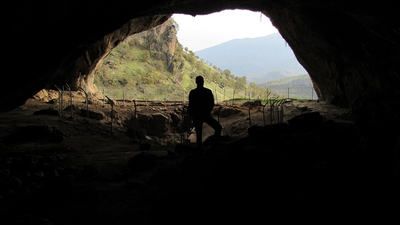
The entrance to Shanidar Cave, one of the world's most significant Neanderthal sites. Image Credits- Wikimedia Commons
For much of recent history, Neanderthals were depicted as lacking the intellectual and emotional capacities associated with Homo sapiens. That misconception, however, has been challenged by archaeological finds suggesting that Neanderthals were skilled, emotional, and resilient to their environment.
Now, a new find at Shanidar Cave in Iraqi Kurdistan adds another layer to the debate.In 2024, archaeologists uncovered what appears to be the burial of a Neanderthal child, a discovery that has reignited one of archaeology's oldest debates: Did Neanderthals deliberately bury their dead?Why Shanidar still divides scholarsFor decades, Shanidar Cave has been associated with one of archaeology's best-known controversies: the 'flower burial’.
Pollen found near one of the Neanderthal skeletons in the cave was interpreted as evidence of purposeful flower placement alongside the corpse, hinting at symbolic behaviour or ritual.A study published in Nature, notes that the famous "flower burial" interpretation has since been challenged, with some researchers arguing that rodents or natural processes may have carried the pollen into the burial area. The debate has made Shanidar a reminder that archaeological discoveries must be supported by careful evidence rather than persuasive narratives.
That history shapes how researchers approach the newly found child burial site. The researchers are carefully analysing the sediments around the skeleton, as well as the cave's history, before concluding whether this child was intentionally buried. Modern developments in archaeology enable researchers to reconstruct burial practices with much greater precision than in previous digs.Why a child's burial mattersNeanderthal child burials are specifically significant because they are rare and complicated to analyse. Research on the Pluridisciplinary evidence for burial for the La Ferrassie 8 Neandertal child illustrates why immature burials have become central to this debate.
The research did not rely solely on earlier findings. Instead, they made use of stratigraphy, taphonomy, dating, and associated artefacts to help determine whether this child was buried deliberately.
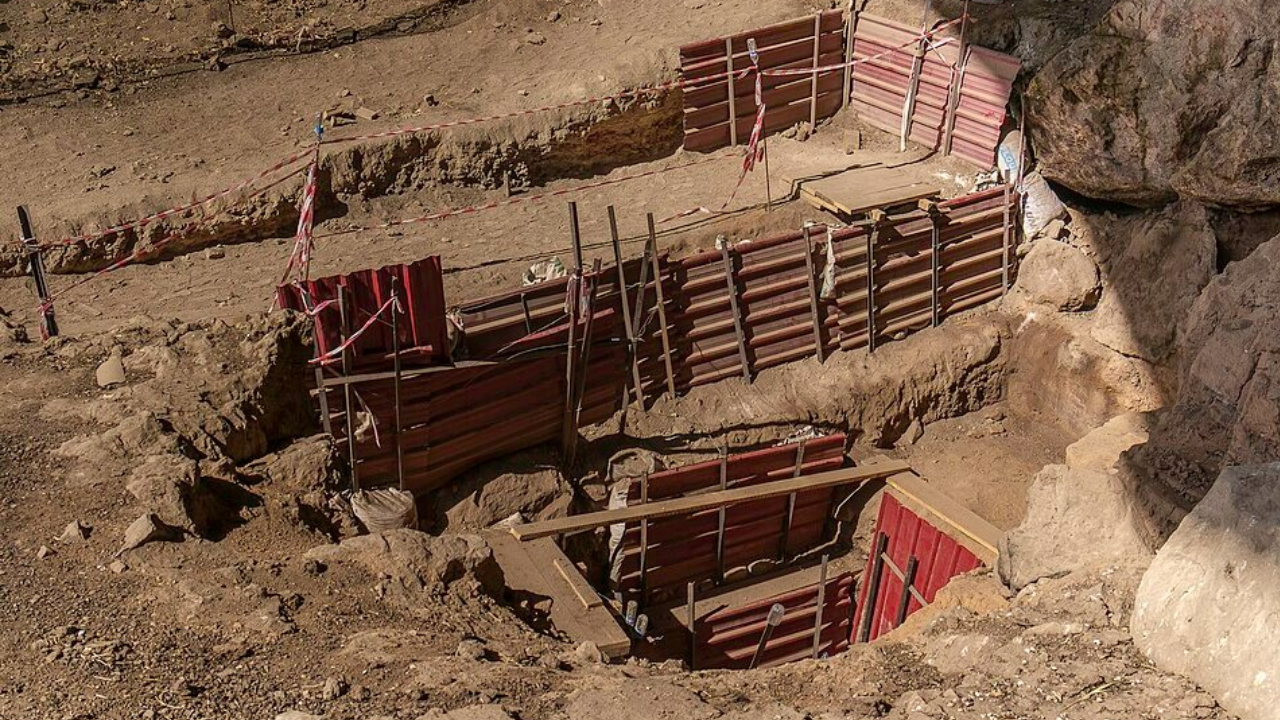
Archaeologists excavate inside Shanidar Cave in Iraqi Kurdistan, where a Neanderthal child burial was discovered. Image Credits Wikimedia Commons
Care, ritual, or something in between?
The Shanidar child’s burial has also provoked larger questions concerning Neanderthal society. If this is an intentional placement of the body, it might suggest that Neanderthals were aware of death as an event and did not simply leave their dead behind.
It might suggest that children held an important place within their community, and that the community invested significant effort in caring for them.Archaeologists believe that even a convincing burial does not automatically prove ritual practices. It may show care, grief, or a practised way of handling the dead, but it does not necessarily indicate religious ritual. Still, Shanidar remains central to archaeology because it raises the question of whether the burial reflects human choice or natural processes.
The answer has to come from the sediment as much as from the skeleton.A rare window into Neanderthal lifeThe child’s burial at Shanidar Cave in 2024 doesn’t mark the end of the controversy surrounding care, ritual, or mourning among Neanderthals, but rather illustrates how the debate has remained in place. Shanidar is a compelling site but a challenging one too, where past archaeological excavation, subsequent disturbance, and high expectations could all affect interpretation.However, that conclusion depends on context, not emotion. Ultimately, what makes Shanidar important is that it poses a difficult question for archaeology: at what point do bones inside a cave prove human intent?









 English (US) ·