

 1 hour ago
4
1 hour ago
4
ARTICLE AD BOX
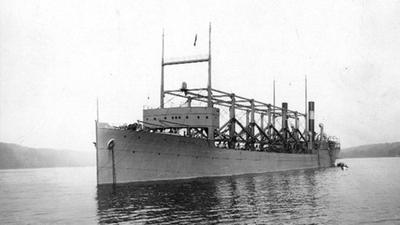
USS Cyclops on the Hudson River in 1911 | c
On March 4, 1918, the USS Cyclops, then the largest fuel ship in the U.S. Navy, departed Barbados on what should have been the final leg of its voyage to Baltimore. Loaded with approximately 11,000 tons of manganese ore and carrying 306 officers, sailors, and passengers, the massive vessel had less than 2,000 nautical miles left to travel.
It never arrived. No distress signal was transmitted, no wreckage was recovered, and no confirmed trace of the ship has ever been found. More than a century later, the disappearance of the USS Cyclops remains the single greatest non-combat loss of life in U.S. Naval history and one of the service’s most enduring mysteries.
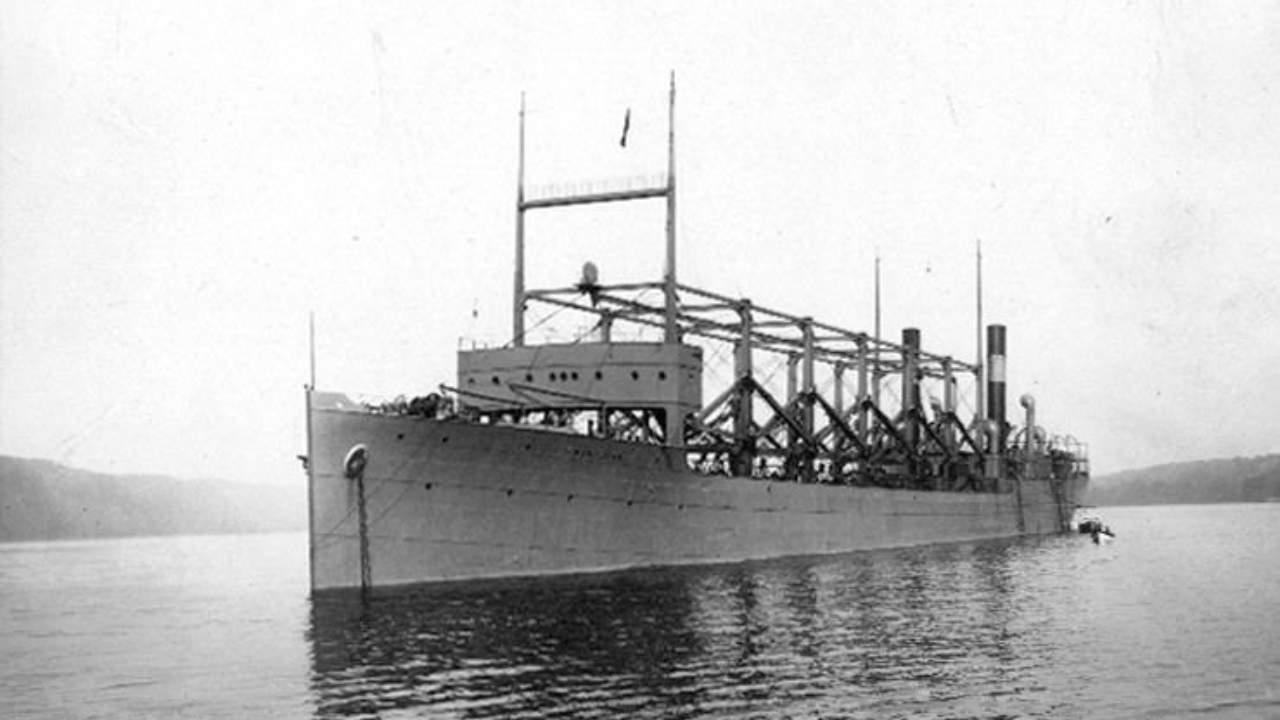
USS Cyclops on the Hudson River in 1911 | c
A routine voyage ended without warningBuilt in Philadelphia, the 540-foot Proteus-class collier was designed to transport coal for the Navy’s fleet but had been reassigned during World War I to carry strategic cargo, according to the U.S. Naval Institute. Its final mission began in January 1918, when it sailed from Norfolk, Virginia, to Rio de Janeiro with coal before taking on a return cargo of manganese ore, an important material used in steel production.
After loading in Brazil, the Cyclops made scheduled stops at Bahia and then an unscheduled stop in Barbados on March 3. The vessel departed the following day bound for Baltimore and was expected to arrive on March 13.
It was never heard from again.Over the years, investigators have proposed numerous explanations. Former executive officer Conrad A. Nervig later argued that the ship may have suffered catastrophic structural failure after its extremely dense manganese cargo was improperly distributed, placing excessive stress on the hull.
Other theories have included mechanical problems, severe weather, and overloading, although none has been conclusively proven.No evidence has ever confirmed the popular theoriesThe Cyclops’ disappearance has frequently been linked to the so-called Bermuda Triangle, largely because the ship vanished after leaving Barbados. Popular books and documentaries have attributed the loss to everything from rogue waves and sea monsters to paranormal forces.
Historians, however, note that none of these claims is supported by evidence.Another persistent theory suggested the vessel had been sunk by a German U-boat during World War I. Postwar German naval records, however, found no submarines operating in the area at the time of the disappearance. Likewise, despite numerous searches over the decades, no verified wreckage has ever been located on the seafloor. The lack of physical evidence has left investigators relying largely on historical documents, engineering analyses and witness accounts recorded before the ship’s final departure.
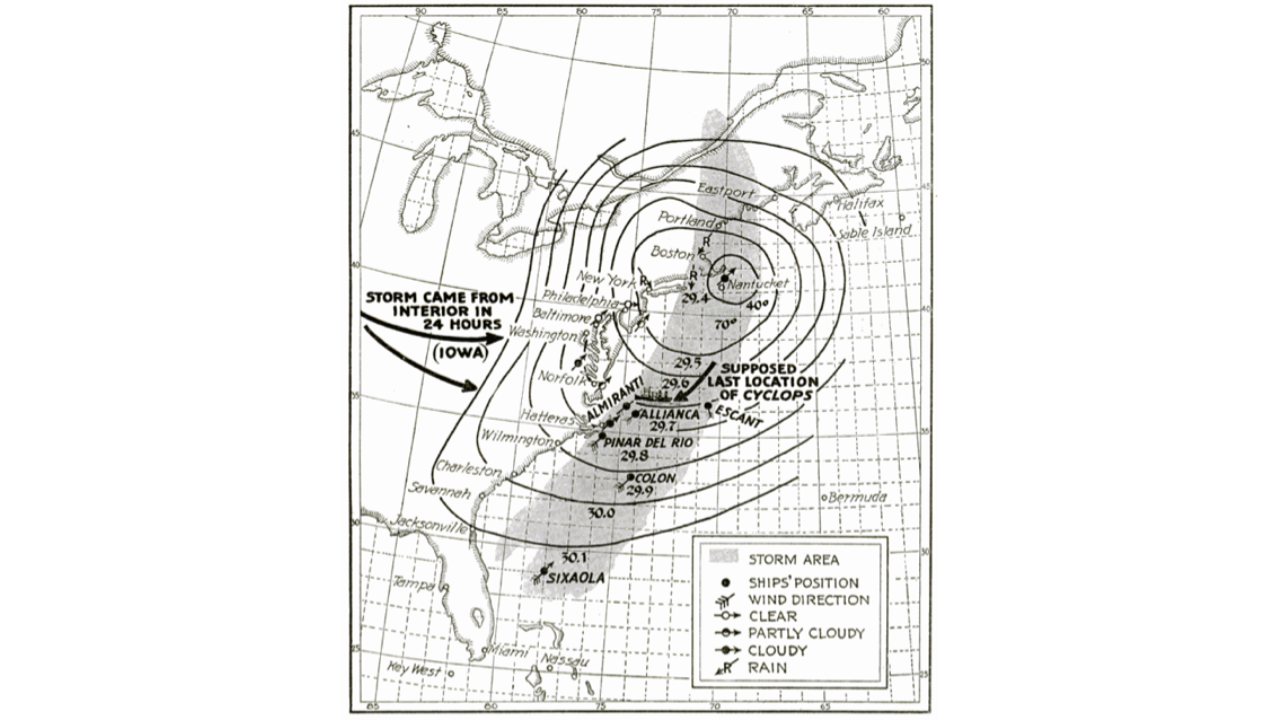
A map prepared by the U.S. Weather Bureau and published in the June 1929 issue of Popular Science Monthly, showing weather conditions at the time the Cyclops was lost | Wikimedia Commons
A mystery that still fascinates historians todayWhile the exact cause may never be known, many maritime historians believe a combination of factors offers the most plausible explanation. The Cyclops had reportedly experienced engine problems during the voyage, may have been operating on only one engine for part of the trip, and was carrying one of the densest cargoes a collier could transport. Combined with possible structural weaknesses and rough Atlantic conditions, the ship may have suffered a rapid catastrophic failure that left no opportunity to send a distress signal.More than 100 years later, the disappearance continues to attract researchers because it highlights how even one of the largest vessels of its era could vanish without leaving a confirmed trace. Despite advances in ocean mapping and underwater exploration, the USS Cyclops remains one of the greatest unsolved mysteries in American naval history.








 English (US) ·