

 2 days ago
7
2 days ago
7
ARTICLE AD BOX
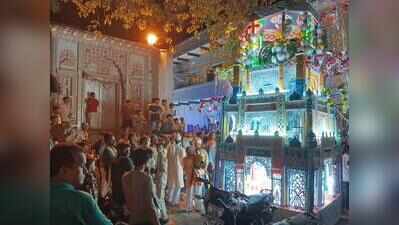
Bhopal: Carrying forward a centuries-old tradition or custom symbolising communal harmony, tazias at Muharram processions in Bhander town of Madhya Pradesh’s Datia district, on Friday evening, halted before the Chaturbhuj Krishna temple to offer a ceremonial ‘salami’ to Lord Krishna before the ceremonial march to Karbala.The tradition, believed to be over 200 years old, is closely linked to the Chaturbhuj temple, which was constructed by a Muslim family. Residents said the ritual has been observed for generations and continues to draw participation and respect from members of both communities.As dozens of tazias wound their way through the town, they paused at the temple at around 9.15 pm on Friday, where priests welcomed the procession before it moved ahead.
The gesture, repeated year after year, has become one of the most enduring symbols of the shared cultural heritage of the region.Temple priest Ramashankar Panda told TOI that the shrine was built centuries ago by a local Muslim family, adding that his ancestors served there for generations. He said the tradition of tazias stopping before Chaturbhuj Maharaj and offering ‘salami’ continued for hundreds of years.Panda added that the priests consider themselves representatives of the deity and welcome the tazias when they arrive at the temple.
According to members of the Bhander Karbala Committee, about 37 tazias, including five large ones, participated in the procession this year. Committee chairperson Jabbar Khan said the tazias first visited the Chaturbhuj temple, offered ‘salami’ and then proceeded towards Karbala.He said the temple priest also garlanded the tazias as part of the longstanding custom. Khan added that such had been the ambience of brotherhood and communal amity in the town over the years that residents never felt the need for extraordinary security arrangements during Muharram.The temple’s history is woven with stories that have become part of local folklore. Residents say the idol of Chaturbhuj Maharaj was discovered centuries ago in the town’s Sontalai pond by the Hazari family, a Muslim family that later established the temple and donated land for its upkeep. Among the stories passed down through generations is one that the idol wasn’t moved out during ceremonial processions unless a member of the Hazari family was present.Elders recalled that around the time of Independence, when an elderly bedridden woman was all the family was left with, she was brought to the temple and asked to bless the procession.Since then, locals said, the idol began to be moved without requiring the presence of any family member.Such stories or legends have been passed down through generations in Bhander, continuing to represent and carry forward the town’s shared heritage.







 English (US) ·