

 1 hour ago
4
1 hour ago
4
ARTICLE AD BOX
Last Updated:April 24, 2026, 16:25 IST
India Heatwave Tracker: While much of India remains under a “watch” category, some pockets in east, northeast and southern peninsula are expected to slip into “alert” zones.


India Heatwave Tracker: The five-day outlook suggests shifting hotspots rather than one single nationwide extreme event.
India Heatwave Tracker: Large parts of India are heading into a warm and increasingly uncomfortable spell between April 24 and April 28, with several regions likely to face heatwave-like conditions, elevated daytime temperatures and growing health risks. While much of the country remains under a “watch" category- indicating moderate concern for vulnerable groups- some pockets in the east, northeast and southern peninsula are expected to slip into “alert" zones where the likelihood of heat-related illness rises sharply.
The five-day outlook suggests shifting hotspots rather than one single nationwide extreme event. Conditions may ease in some areas even as new regions heat up. Northern plains, eastern India, parts of the northeast and sections of the south should remain especially alert as temperatures fluctuate through the week.
April 24: Northeast And Southern Tip Under Higher Stress
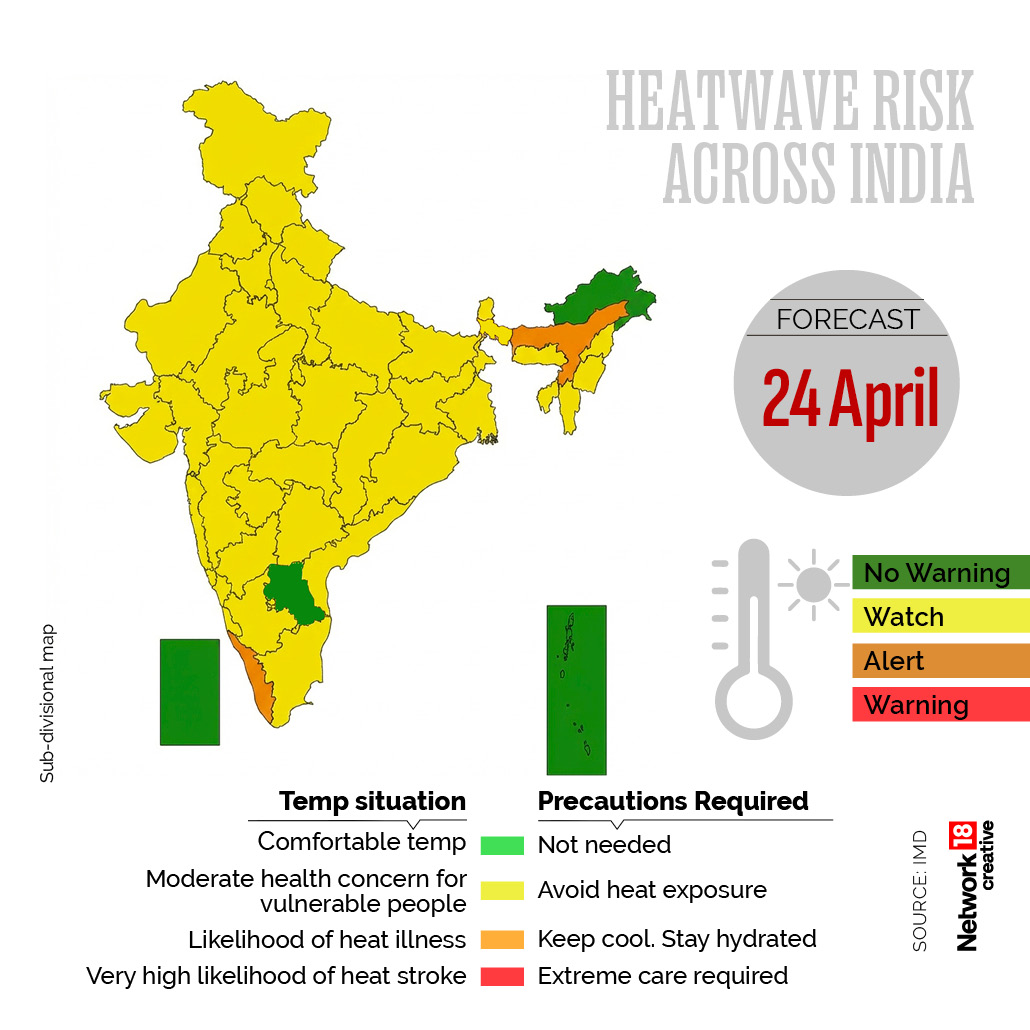
On April 24, most of India remains under a broad watch zone, meaning warm conditions and moderate health concern, especially for children, the elderly and those with existing illnesses. However, heat risk intensifies in parts of the Northeast, especially around Assam and adjoining areas, where alert conditions are indicated. Southern Tamil Nadu also appears under elevated heat stress. Karnataka stands out as comparatively comfortable, with lower heat risk than surrounding regions. This means the day begins with localised but notable hotspots, while much of the rest of the country experiences steadily rising heat.
April 25: Brief Relief In Many Areas, Isolated Eastern Hotspot
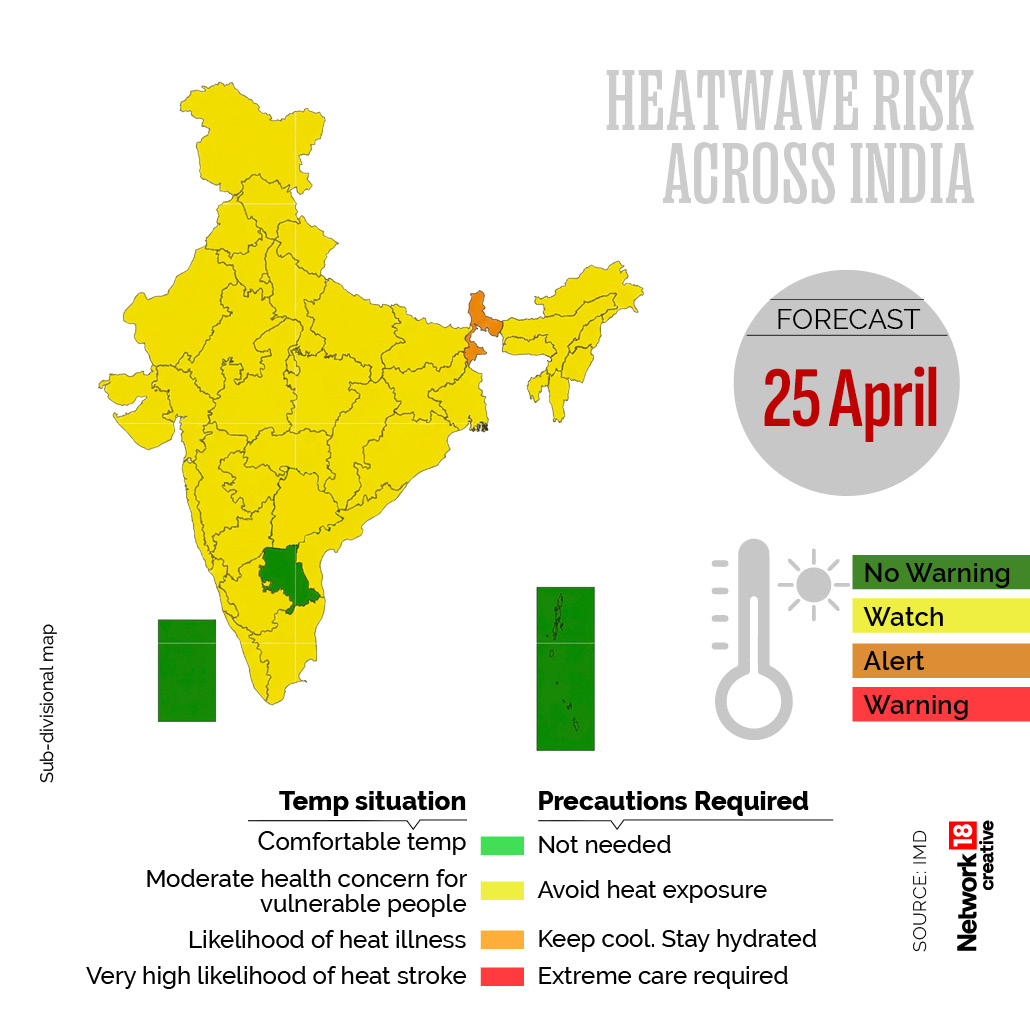
The map for April 25 suggests a slight easing across much of the country, though warm conditions continue widely. A pocket in eastern or northeastern India remains under alert, indicating persistent heat stress there. Southern interior India, particularly Karnataka, continues to see more manageable conditions compared with neighbouring states.
For many cities, this could be a transition day- still warm, but not the most severe of the week.
April 26: Heat Expands Across East India
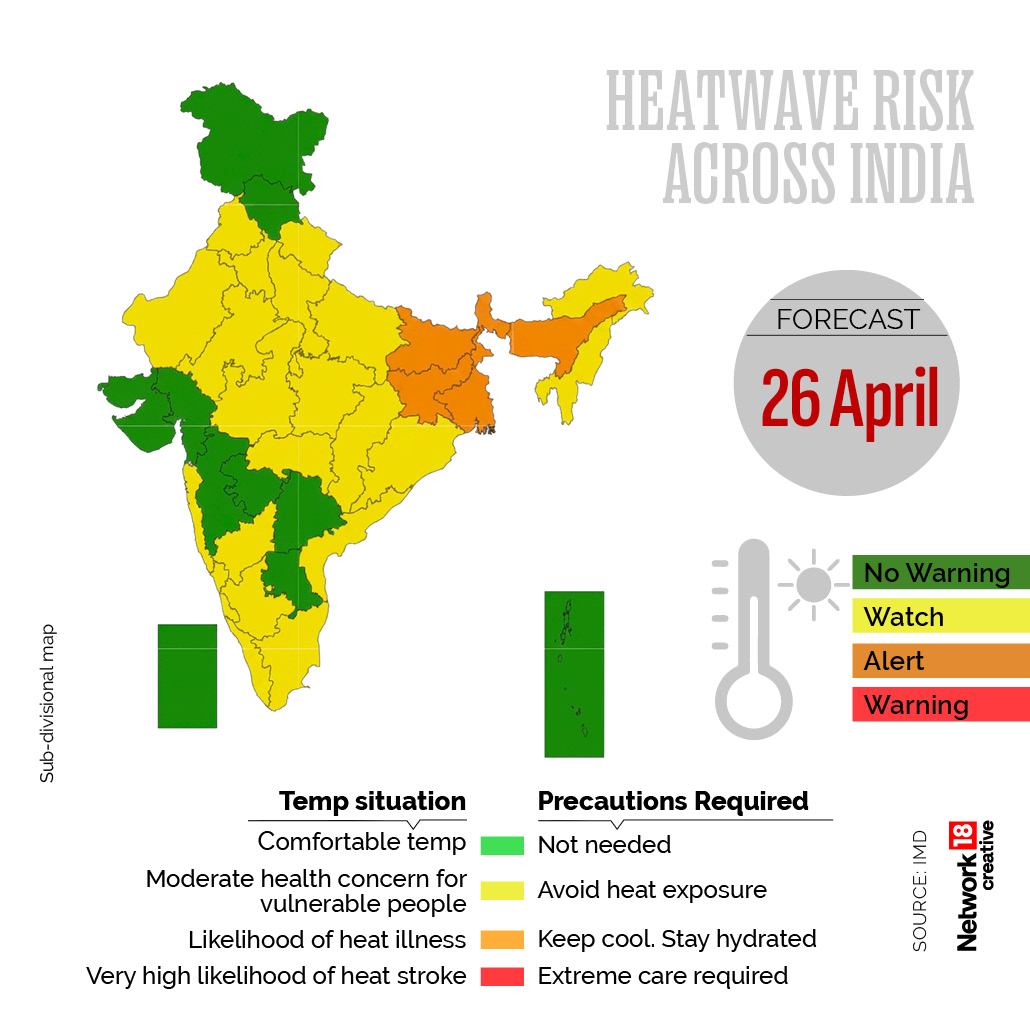
By April 26, the heat pattern becomes more widespread and more concerning. Several eastern states, stretching across parts of Bihar, Jharkhand, West Bengal and into the Northeast, shift into alert conditions. This signals an increased likelihood of heat illness and difficult daytime exposure. At the same time, western and some southern states- including Gujarat, Maharashtra and Karnataka- show relatively lower risk. This may become one of the more geographically expansive heat-risk days of the period.
April 27: East Remains Hot, Central-North Mixed
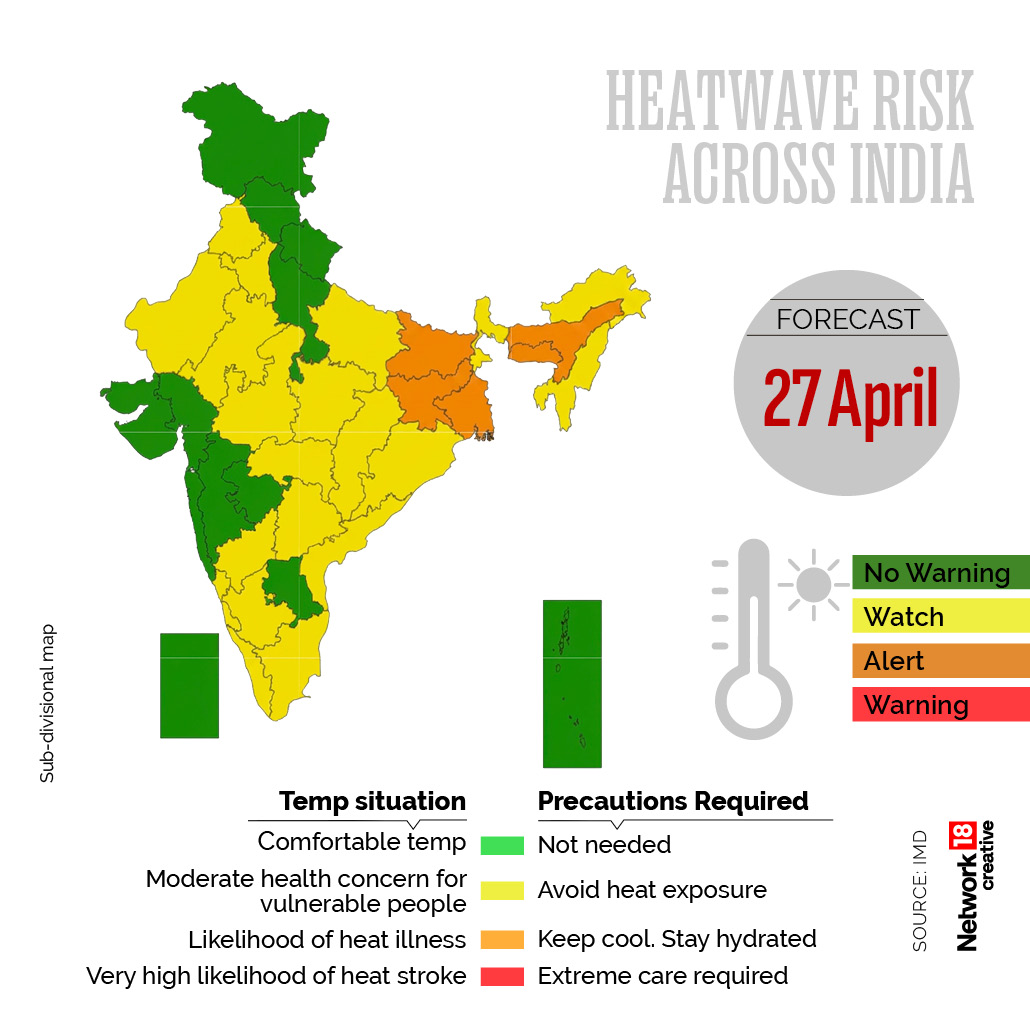
The April 27 outlook shows continued alert-level heat across eastern India and parts of the Northeast. Much of north and central India stays in the watch category- hot enough to warrant caution, though not necessarily peak heatwave levels everywhere. Some western states continue to fare better comparatively. This indicates prolonged stress in the east, where consecutive hot days can worsen health impacts even without record-breaking temperatures.
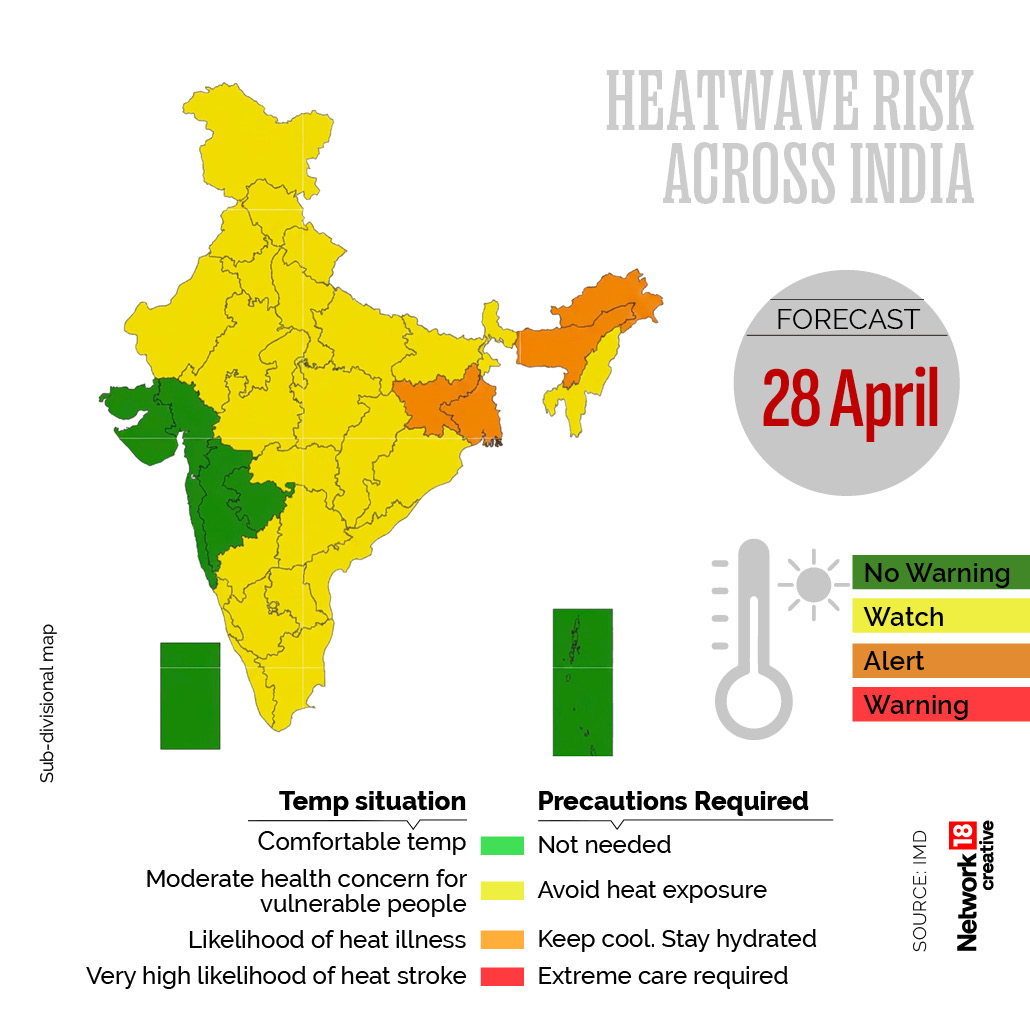
April 28: Heat Refocuses On East And Northeast
By April 28, the strongest heat risk remains concentrated over eastern India and the Northeast. Large parts of the rest of India stay warm under watch conditions, suggesting no dramatic nationwide cooldown. Western coastal and some southwestern areas appear relatively less affected. Even where alert conditions are absent, sustained warmth over multiple days can increase dehydration risk and nighttime discomfort.
What This Means For India
This five-day outlook points to a rolling heat episode rather than a single sharp blast. Regions facing repeated warm days may see cumulative stress, especially urban centres where concrete surfaces trap heat and nights stay warmer. Even “watch" conditions matter because prolonged exposure can still trigger fatigue, dehydration and worsening medical issues.
Heat Safety Guide: How To Cope With Rising Temperatures
As temperatures climb, staying safe in increasingly warm weather requires simple but consistent precautions. Keep yourself hydrated through the day, even if you do not feel thirsty and try to avoid direct sun exposure between late morning and late afternoon when heat is usually strongest. Wear light, loose cotton clothing and use hats, umbrellas or scarves while stepping outdoors. Keep homes well ventilated and use fans or cooling devices wherever available. Avoid strenuous outdoor work or exercise during peak heat hours. Check regularly on elderly family members, children and those living alone, as they are more vulnerable to heat stress. Never leave children or pets inside parked vehicles, even briefly. Eat light meals and include fruits with high water content in your diet. If you experience dizziness, confusion, nausea or any signs of heat stroke, seek medical help immediately.
Handpicked stories, in your inbox
A newsletter with the best of our journalism
Location :
Delhi, India, India
First Published:
April 24, 2026, 16:25 IST
News india India Braces For 5-Day Heatwave Swing: Where The Hottest Days Will Hit First
Disclaimer: Comments reflect users’ views, not News18’s. Please keep discussions respectful and constructive. Abusive, defamatory, or illegal comments will be removed. News18 may disable any comment at its discretion. By posting, you agree to our Terms of Use and Privacy Policy.
Read More






 English (US) ·