

 1 hour ago
4
1 hour ago
4
ARTICLE AD BOX
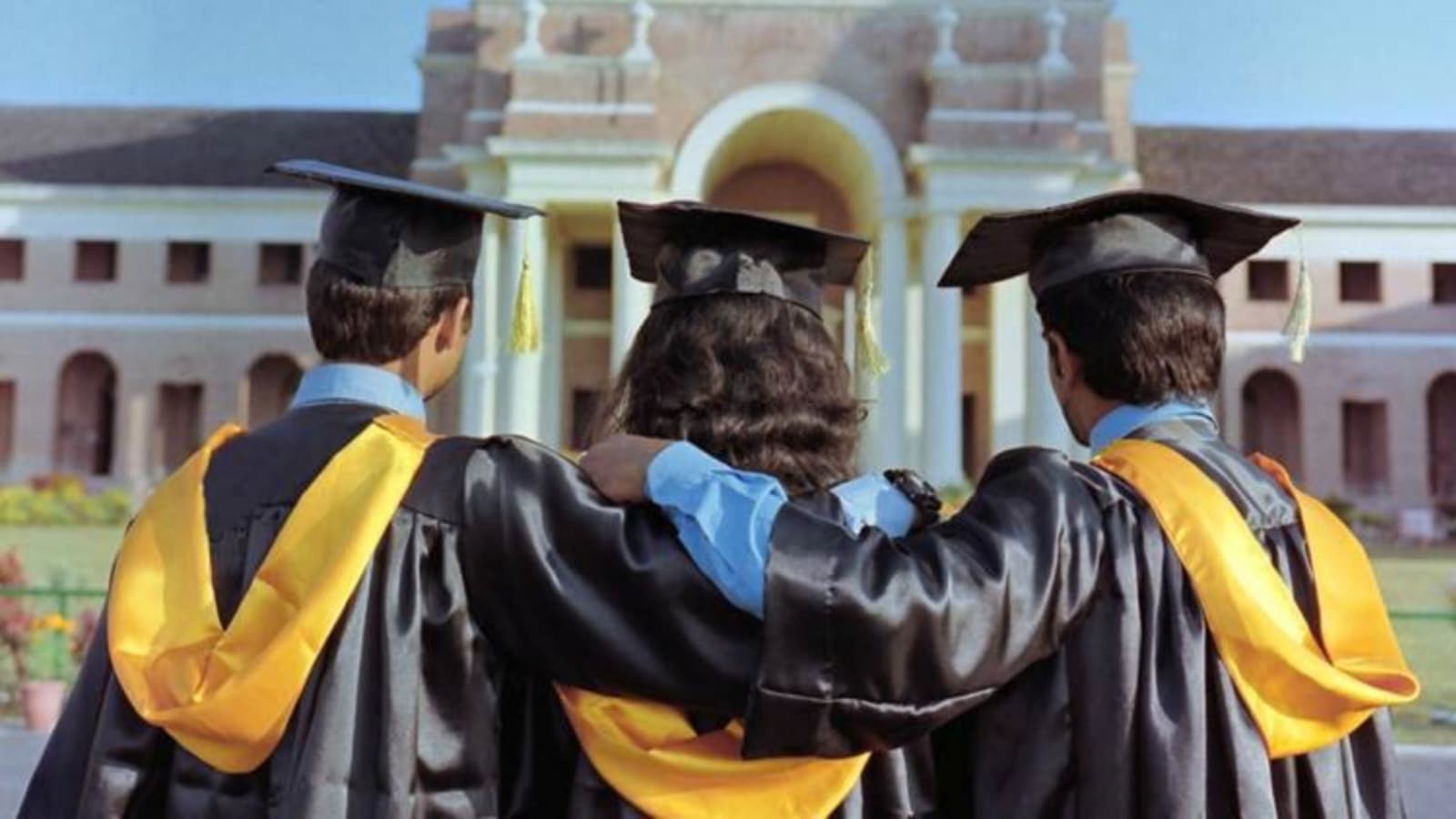 Besides students and workers, the pact also opens the door for Indian researchers, being seen as a gateway for Indian talent to contribute to emerging technological fields, including artificial intelligence.
In a new framework to facilitate movement of people, India and the European Union have signed a mobility pact aimed at easing the movement of Indian students, workers and professionals across 27 EU member countries.
This comes at a time when the US is making H1-B and other visa routes for Indian citizens more expensive, stricter.
Under the new framework for mobility, the EU has committed to “an uncapped mobility for Indian students”, according to officials, allowing Indians greater ease to travel, study and work across EU states. There are already around 1.20 lakh Indian students across the EU, with Germany clocking in around 50,000, making Indian students the largest group of international students in the country.
Prime Minister Narendra Modi said, “More than 800,000 Indians are living and actively contributing to the countries of the European Union.”
The joint statement said that the leaders highlighted that education and people‑to‑people ties have emerged as vital enablers of the India‑EU Strategic Partnership. They welcomed the conclusion of the India‑EU Comprehensive Framework of Cooperation on Mobility, in line with the national competences of EU Member States and India and domestic legislation of both parties.
They commended the launch of the first pilot European Legal Gateway Office, as a one‑stop hub to provide information and support the movement of workers, starting with the ICT sector.
“They reaffirmed their commitment to enhancing collaboration on safe, regular and orderly migration, including through circular pathways, for highly skilled workers, students, researchers, and seasonal workers in shortage occupations, whilst also strengthening cooperation on countering irregular migration, in accordance with national competences and the law of both parties,” it said.
Story continues below this ad
The Comprehensive Framework on Cooperation on Mobility, was signed by Maros Sefcovic, European Commissioner for Trade and Economic Security, and External Affairs Minister S Jaishankar, in the presence of Prime Minister Modi, European Commission President Ursula von der Leyen and European Council President Antonio da Costa, at the 16th India-EU Summit in New Delhi Tuesday.
Besides students and workers, the pact also opens the door for Indian researchers, being seen as a gateway for Indian talent to contribute to emerging technological fields, including artificial intelligence.
“Artificial intelligence is one of the best examples. So today, I am glad to announce that we are working on India’s association with Horizon Europe. Horizon is the world’s largest public research programme, and I can’t wait for our best talents to get to work, to advance health, clean energy, frontier technologies. This will help researchers and start-ups, next generation technology,” von der Leyen said.
“Signing an agreement on mobility, we will facilitate the movement of students, researchers. It will be a one-stop hub to support Indian talent, moving to Europe in full alignment with your Member States’ needs and policies.”
Story continues below this ad
The pact, she said, will “reduce strategic dependencies”, “bringing together Indian skills, services and scale, with European technology, capital and innovation”. It will create levels of growth that neither side can achieve alone, she said.
Europe has a problem of a shrinking workforce, with projections saying that the working-age population will fall by six million between 2025 and 2030. The new pact will make pathways portable for Indian engineers, care workers and nurses, and hospitality staff and drivers.

Divya A reports on travel, tourism, culture and social issues - not necessarily in that order - for The Indian Express. She's been a journalist for over a decade now, working with Khaleej Times and The Times of India, before settling down at Express. Besides writing/ editing news reports, she indulges her pen to write short stories. As Sanskriti Prabha Dutt Fellow for Excellence in Journalism, she is researching on the lives of the children of sex workers in India. ... Read More

Shubhajit Roy, Diplomatic Editor at The Indian Express, has been a journalist for more than 25 years now. Roy joined The Indian Express in October 2003 and has been reporting on foreign affairs for more than 17 years now. Based in Delhi, he has also led the National government and political bureau at The Indian Express in Delhi — a team of reporters who cover the national government and politics for the newspaper. He has got the Ramnath Goenka Journalism award for Excellence in Journalism ‘2016. He got this award for his coverage of the Holey Bakery attack in Dhaka and its aftermath. He also got the IIMCAA Award for the Journalist of the Year, 2022, (Jury’s special mention) for his coverage of the fall of Kabul in August 2021 — he was one of the few Indian journalists in Kabul and the only mainstream newspaper to have covered the Taliban’s capture of power in mid-August, 2021. ... Read More
Stay updated with the latest - Click here to follow us on Instagram
© The Indian Express Pvt Ltd



 English (US) ·