

 1 week ago
7
1 week ago
7
ARTICLE AD BOX
On returning from Hangzhou after winning the BWF World Tour Finals in December – astonishingly, her 11th title of 2025 – An Se-young told something fascinating to the Korean media about achieving her peak.
“The way I see it, I will only reach my prime when I play flawless matches. And I even think it may never come.”
At the India Open on Sunday, as she continued her incredible winning streak, it appeared to be a scary proposition for the rest of the women’s singles field. She just breezed past world No. 2 Wang Zhiyi like it was a walk in the park, dismantling her closest challenger 21-13, 21-11 in 43 mind-boggling minutes.
Aparna Popat, Olympian and nine-time national champion, was left in awe. “Did you see the scoreline? She was playing the second-best player in the world,” she tells The Indian Express.
After 2025 when she became the first-ever badminton player to take home more than $1 million as prize money in one year and won 94.8 percent of her matches, An has started 2026 with two titles in as many weeks. And in India, she made it look ridiculously easy, with five straight-game wins – the most points she conceded in a game was 17 in the first round against Nozomi Okuhara.
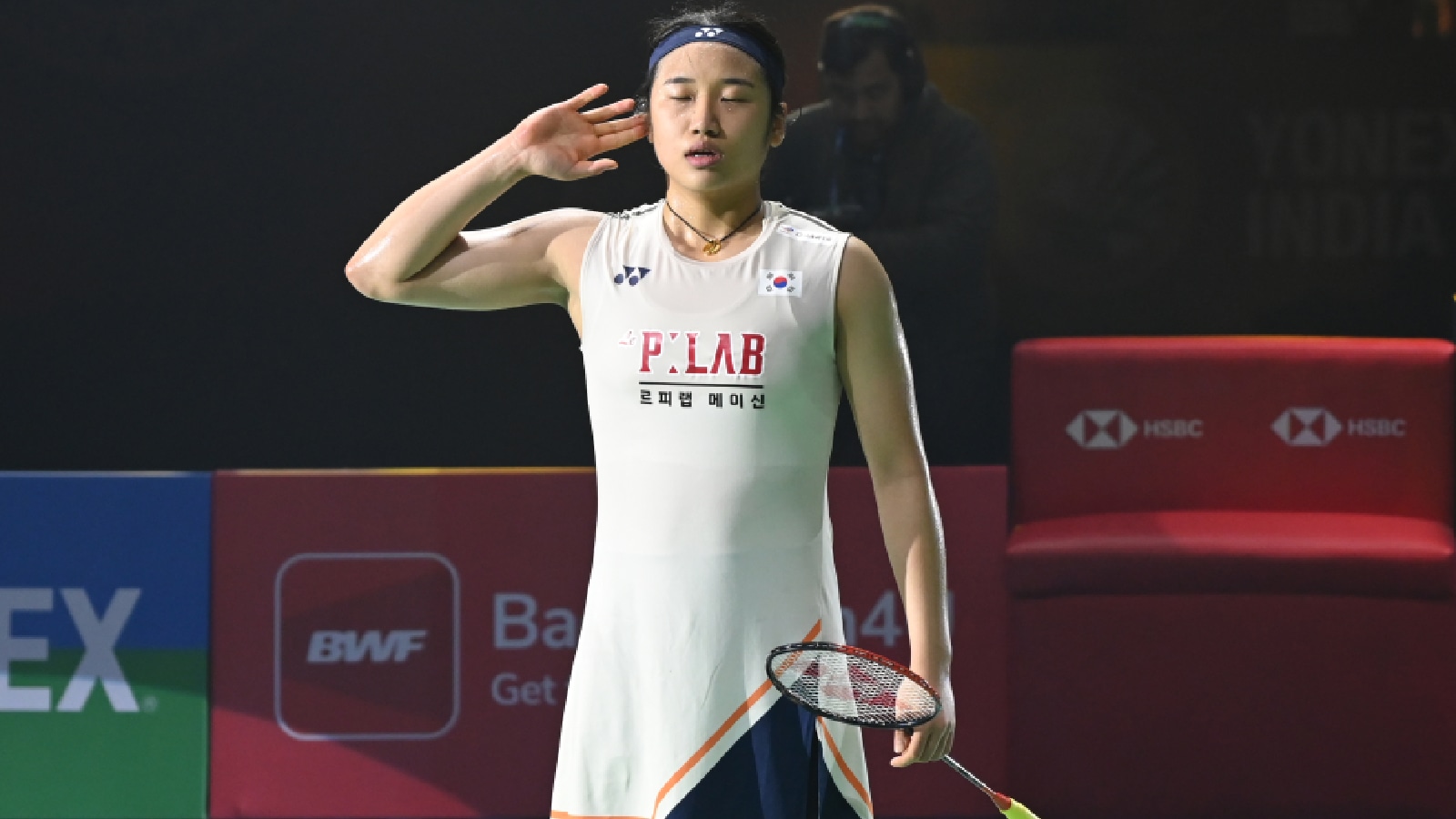 Korea’s An Se Young celebrates her women’s singles title victory at the India Open 2026. (BAI)
At this point, no one in the world – player or coach – can crack the An Se-young puzzle. “We’ve always known her footwork is excellent. Her temperament is something for me that has stood out right from the very beginning. But now, when I watch her play, the standout thing is just her level of discipline on the court,” Popat explains.
“It’s one thing to be disciplined when you have a limited amount of strokes or skill, because you know that if you don’t stick to that, you’re going to lose. But it takes even more discipline for someone who can do anything she wants on the court, but still stays the course in such a tight way.”
Story continues below this ad
The problem that her opponents have faced is that she can beat them in so many different ways. Her attacking options are aplenty, even though she doesn’t always showcase them. And her court coverage is extraordinary.
“She can shift gears. She can drop the pace. She can do whatever she wants on the court. But the fact that she chooses to go to the most fundamentally correct choice… that is really hard to do match after match,” Popat says.
Almost perfect
It reminds one of chess engines, which tell viewers during a match what the right move in a scenario would be and alert when blunders happen.
Popat uses a similar analogy: “If someone builds an Artificial Intelligence bot and runs scenarios for a badminton match to analyse what the correct shot in any given moment is, I’m pretty sure like 80 percent of the time, the shot that she (An) plays in a rally is the one that the model chooses. She just has that gift of picking the right choice all the time. And in the rare chance that she’s made a mistake, her footwork and fitness mean she can still get the shuttle back.”
Story continues below this ad
Respect from peers
It’s not lost on her opponents that An is continuously evolving too. In the past month or so, it has become evident that she has put on additional muscle mass, with her biceps and calves visibly strengthened. It’s added even more explosivity to her already well-rounded movement on court – as Popat says, she is almost always at the right spot to meet the shuttle.
Asked at the India Open this week if that is something she has been working on, An admits that improving her physicality is one of her major targets now.
“I work out three times a week. I’ve been weightlifting so that I am not left behind because of my power. That is my goal for this year. It has helped in developing my strength and making me more confident and powerful,” she says.
Canada’s Michelle Li, who almost achieved the impossible last week in Malaysia by taking a game off An and getting to 18-21 in the decider, has noticed the increased power.
Story continues below this ad
“Her style is very physical. If you don’t have that baseline physicality, you’re not going to beat her. That’s where she’s kept the standard. I think she’s working on more variety in her game. So I think she’s added the power aspect along with the cardio,” Li says.
Another women’s singles veteran, Scotland’s Kirsty Gilmour, wants An to be the subject of case studies.
“She’s a once-in-a-generation player. It’s been interesting to see her evolve over the years, playing against her. Sometimes you are worried…. where can I win just one point? She is just a machine. She’s a robot. I think she should be studied for generations to come.”
Former world champion Ratchanok Intanon, who was soundly beaten in the semifinals, summed it up perfectly a day before their match.
Story continues below this ad
“Weakness?” she laughs. “I don’t know what her weakness is right now.”


 English (US) ·