

 1 hour ago
3
1 hour ago
3
ARTICLE AD BOX
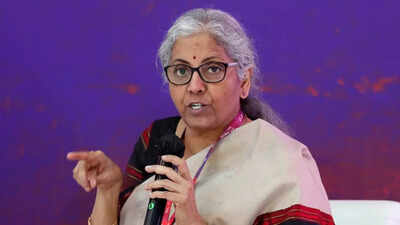
File photo: Union finance minister Nirmala Sitharaman
India has sharply increased its spending on climate action over the past six years, with allocations rising from around 3.7 per cent of GDP to nearly 5.6 per cent, Union finance minister Nirmala Sitharaman said on Saturday.Speaking at the ‘Degrees of Instability: Climate Security in a Warming World’ townhall during the Munich Security Conference in Germany, she said the country was taking strong domestic steps to meet its environmental commitments rather than depending solely on international support.
Spending more, not waiting for aid
Highlighting the jump in allocations, Sitharaman said, “India has increased its commitment to climate action. We were at something like 3.7 per cent of our GDP six years ago...
but today, we are somewhere close to 5.6 per cent. So more than doubled in a matter of six years”.She underlined that India had already put money on the table. “We have invested the funds. We are not waiting for financing and technology to come from elsewhere but they must come,” she said, as quoted by news agency PTI.While acknowledging that global technology transfers and financial flows remain important, she stressed that India has moved ahead with its own resources to achieve its nationally determined commitments (NDCs).
She also pointed out that many African nations may find it difficult to match such levels of spending due to economic constraints.
Focus on adaptation and fairness
The finance minister argued that climate policy must go beyond emission cuts. Equal weight, she said, should be given to resilience and adaptation to avoid severe consequences for people and livestock.“As much attention we give for the emission control, we need to look at resilience and adaptation.
Otherwise, you're going to sacrifice a lot,” she said. She added that “technologies will have to talk to each other” and cautioned that no country can claim to have found a perfect solution to climate change.Sitharaman also pressed for what she described as differentiated treatment in sharing the financial burden of climate action. According to news agency ANI, she said the global community must follow a “polluter pays” principle.“It cannot be that countries which have less contributed to emission are made to pay equally,” she said, adding that countries with lower historical emissions should contribute less towards climate costs.
Renewable push and carbon capture funding
Detailing India’s domestic progress, Sitharaman said the country has already achieved two-thirds of its renewable energy commitments under its NDCs and that too four years ahead of schedule.She added that the Union Budget 2026-27 has earmarked funds and incentives for carbon capture strategies. These technologies are being encouraged across the mainland and in remote regions to help businesses cut their carbon footprint and support India’s transition to a greener economy, reported ANI.Reiterating India’s position, the minister said the country would continue to invest steadily in renewable energy while pushing for fair and practical global cooperation on climate finance and technology.







 English (US) ·