

 1 hour ago
4
1 hour ago
4
ARTICLE AD BOX
During PM Modi's recent visit, India and Indonesia agreed to jointly develop Sabang Port near the Strait of Malacca. The deal gives India a strategic foothold near a vital trade route amid China's expanding Indian Ocean presence.
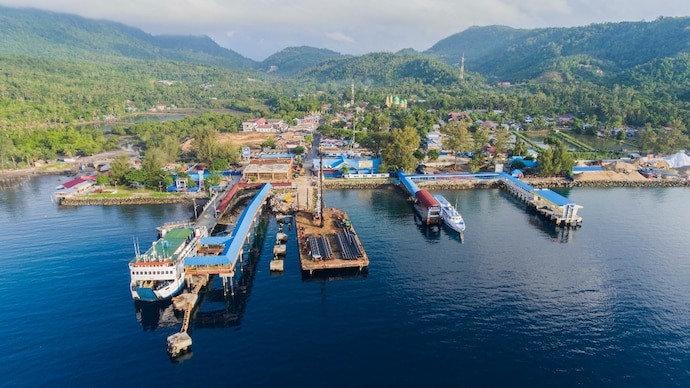
An aerial view of the Sabang Port in Indonesia

New Delhi,UPDATED: Jul 8, 2026 18:12 IST
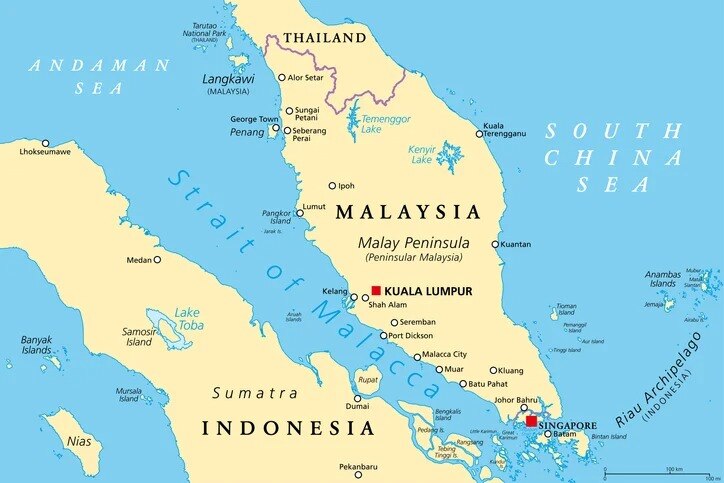
A small Indonesian island could soon become India's biggest maritime bet in countering China's rising influence in the Indo-Pacific. During Prime Minister Narendra Modi's recent visit to Indonesia, the countries agreed to jointly develop the Sabang Port located on Weh Island. Now, Sabang is not just any other port. Its location, at the northern tip of Sumatra Island overlooking the Strait of Malacca, a chokepoint through which 40% of global trade passes, is the biggest prize.
For China, the Strait of Malacca is nothing short of a lifeline - a dependence Beijing calls the "Malacca dilemma". Around 80% of China's oil imports and a significant share of its trade flow through these waters. In short, the Malacca Strait is an Achilles' heel for China.
Thus, with the Sabang Port deal, India will get to establish a permanent footprint near the key strait that moves everything, from oil to cars to semiconductors.
Moreover, the deep-water port is located roughly 100 miles from India's upcoming Great Nicobar transhipment port. Together, these facilities will allow India to keep an eye on one of the world's busiest maritime chokepoints, enhance its surveillance capabilities, and reinforce its strategic position in the Indo-Pacific. 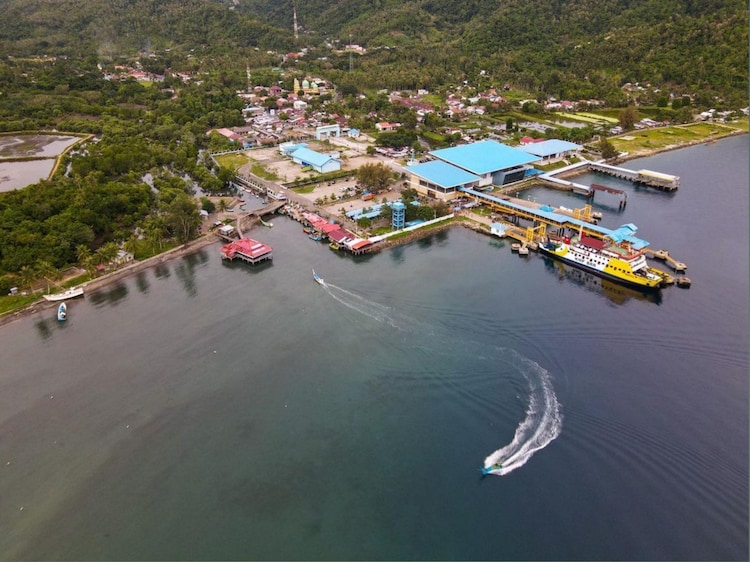
THE IMPORTANCE OF SABANG PORT
But why does this matter so much? Firstly, the US-Iran war has shown how a chokepoint crisis can hold the world economy hostage. Iran's strategic location enables it to have an iron grip on the Strait of Hormuz, through which 20% of the global energy flows.
Similarly, the Sabang Port will enhance India's strategic position in the region as well as near the Malacca Strait. Now, the mouth of the strait opens perilously close to the southern tip of the Andaman and Nicobar Islands. Thus, combined with the upcoming Great Nicobar port, India will be able to further fortify its Indo-Pacific presence.
Now, while Sabang may be a relatively small port capable of handling vessels of around 50,000 tonnes, it can host all classes of naval vessels, including submarines.
Author Minhaz Merchant called Nicobar and Sabang (Port) on either side of Malacca a "Chinese nightmare".
COUNTER TO CHINA'S STRING OF PEARLS?
Secondly, to understand its importance, we need to look at China's steadily expanding footprint across the Indian Ocean.
Over decades, China has gradually developed or invested in a network of commercial and military ports across the Indian Ocean.
Commonly referred to as the "String of Pearls", these ports, around 17, stretch from Myanmar and Sri Lanka to Pakistan and East Africa. These include investments in deep-water ports like Gwadar in Pakistan and Lamu in Kenya, to the construction of smaller terminals at Port Sudan.
So, do these countries readily give their ports to China? Not at all. It is the classic Chinese debt trap game at play here.
According to a research paper, most of the countries where China is constructing ports have significant Chinese debt. These include countries like Kenya, Myanmar, Sri Lanka and Djibouti.
This debt gives China leverage, enabling it to lease the ports and operate them. The Hambantota port in Sri Lanka is a perfect example, where China has acquired an 85% stake and leased it for 99 years.
These ports, most of which are strategically located, help safeguard China's energy imports while, at the same time, allowing it to expand and strengthen its influence in the Indian Ocean.
Thus, China's expansionist maritime role in India's backyard is a major cause for concern. It is against this backdrop that the Sabang Port deal holds immense value for India.
- Ends
Published By:
Abhishek De
Published On:
Jul 8, 2026 18:09 IST







 English (US) ·