

 1 hour ago
7
1 hour ago
7
ARTICLE AD BOX
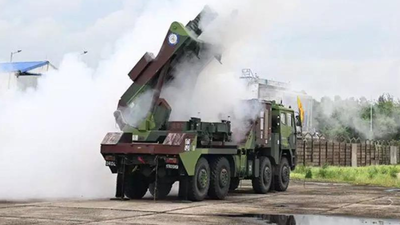
By any measure, warfare is undergoing a profound transformation. From the battlefields of Ukraine to the recent exchanges involving Israel, Iran and the United States, one lesson stands out clearly: long-range precision firepower is increasingly shaping military outcomes.
Artillery, missiles, rockets and drones are no longer merely supporting arms—they are often the decisive instruments that set the conditions for victory.For India, this changing character of warfare demands a reassessment of not only force structures and equipment but also leadership patterns within the Army. It is in this context that an important question arises: Is the Regiment of Artillery receiving its due place in the higher military leadership of the Indian Army?
The growing relevance of artillery
Military history has repeatedly demonstrated that firepower remains central to modern combat.
Recent conflicts have reinforced this reality. Precision strikes against command centres, logistics hubs, missile sites and critical infrastructure have become the opening moves of contemporary warfare.India's security environment is likely to be characterised by contested borders, fortified positions and the possibility of prolonged conflicts where attrition rather than rapid territorial gains determines outcomes.
Under such conditions, artillery and long-range strike capabilities assume even greater significance.Operation Sindoor and earlier surgical strikes highlighted the increasing importance of precision engagement and stand-off capabilities. Future wars are likely to place even greater emphasis on integrated fires, surveillance systems, drones and missile forces.Against this backdrop, it is appropriate to examine whether the Army's leadership structure adequately reflects the growing importance of firepower-centric warfare.
A distinguished legacy
The Regiment of Artillery occupies a unique position within the Indian Army. As the second-largest combat arm after Infantry, it has historically produced some of the Army's finest commanders.Artillery officers have played pivotal roles in India's military campaigns. Among them was General J.F.R. Jacob, whose operational brilliance during the 1971 Bangladesh Liberation War remains a subject of study in military institutions worldwide.The Regiment has also produced five Chiefs of Army Staff, demonstrating that its officers have historically been considered capable of leading at the highest levels.Yet a review of recent trends suggests that this representation has declined significantly over the past decade and a half.
The leadership imbalance
No military organisation is entirely free from branch-based competition. In most armies, larger combat arms naturally produce a greater share of senior leaders.
However, healthy institutions strive to ensure that merit, professional competence and operational experience remain the primary determinants of advancement.The United States Army provides an instructive example. While Infantry traditionally produces the largest number of senior generals because of its size, Armour and Field Artillery continue to enjoy substantial representation at senior levels. Over the past quarter century, the distribution of top leadership positions has broadly reflected the relative importance of these combat arms.The Indian Army appears to be moving in a different direction.Available data indicate that since 2012, the representation of Artillery officers among Corps Commanders and Army Commanders has declined sharply. Prior to 2012, Artillery officers constituted approximately 12.6 per cent of Corps Commanders and over 22.8 per cent of Army Commanders and equivalent appointments. Since then, those figures have reportedly fallen to around 3.5 per cent and 2.8 per cent respectively.
(Source: Wikipedia).3-Star vacancy in staff speak the same language of a maximum of 6 in 2010 and an average of 4 have now lowered to just 2!Yet another glaring observation is that, while, Artillery, the second largest combat arm constitutes 28% of the cadre of Arms officers, with Infantry constituting 40%, when it comes to Lt Gens, Infantry has 57 as on today with Artillery relegated to meagre 4.Immediate past 4 years results in the competitive Staff College examination reveal that Artillery has outperformed most or all other arms and services.
With an equitable merit-based intake to all arms and services, it is sad to find the reflections disappearing in number of 3-star ranks by design or default.While statistics alone cannot explain every promotion decision, such a sustained decline warrants examination.
Beyond numbers
The issue extends beyond questions of representation. With equitable merit patterns of intake, skewedness should not arise in promotions at higher ranks of 3-star.
Modern warfare increasingly demands commanders who understand the integration of manoeuvre, fires, intelligence, cyber capabilities and unmanned systems.Artillery officers possess specialised expertise in areas that are becoming central to future battlefields:• Precision targeting and long-range engagement.• Sensor-to-shooter integration.• Battlefield surveillance systems.• Joint fires planning.• Missile and rocket operations.• Network-centric warfare.The concern is not that Infantry officers are overrepresented. Infantry remains the Army's largest arm and will naturally produce a substantial share of senior commanders. Rather, the concern is whether other combat arms are being adequately represented in a military environment that increasingly rewards technological sophistication and joint operational thinking.
Impact on morale and cohesion
Promotion patterns have consequences beyond individual careers.The Indian Army has traditionally drawn its strength from a sense of fairness, institutional credibility and mutual respect among its various arms and services. Any perception that opportunities for advancement are becoming concentrated within a narrow segment of the officer corps can generate dissatisfaction and weaken confidence in the system.The Regiment of Artillery contributes significantly across a wide spectrum of operational commitments. Its officers and soldiers serve not only in conventional artillery roles but also in counter-insurgency operations, Rashtriya Rifles units, staff appointments and specialised formations.Many artillery units have repeatedly demonstrated their versatility and professionalism in demanding operational environments.If officers from such a large and capable combat arm increasingly perceive that senior leadership opportunities are diminishing, the long-term effects on morale deserve serious consideration.
The need for institutional introspection
The issue is not one of entitlement or quotas. Military leadership must always be based on merit, competence and performance.However, when a combat arm of such size and significance experiences a prolonged decline in senior representation, institutional introspection becomes necessary.Several questions merit examination:• Are current promotion systems producing balanced outcomes?• Do selection processes adequately account for the changing character of warfare?• Is the Army fully leveraging the expertise available across all combat arms?• Are there structural biases that unintentionally favour particular career paths?In house issues such as monopolising policy making branches in Army HQ by one arm, cap on %age of General Cadre intake, not inducting the best available into General Cadre, bringing in policy changes to skew towards one arm over past decade and half by sheer majority, appears to be an area of growing concern.
It may be worth examining that whether the optees to Artillery at commissioning are on the decrease and qualified Artillery officers resorting to premature retirements.
These questions should be addressed through objective analysis rather than emotional debate.
A possible way forward
Former Army Commander Lieutenant General Raj Shukla has argued that appointments at the three-star level and above should increasingly reflect a joint and integrated perspective, with greater involvement of the Chief of Defence Staff in the selection process.Such proposals deserve careful consideration.As India moves towards integrated theatre commands and greater jointness among the services, senior leadership selection must increasingly reward strategic thinking, operational competence and joint warfare expertise rather than branch affiliation alone.The future battlefield will not be won by Infantry, Armour or Artillery acting in isolation. Victory will belong to forces that successfully integrate all elements of combat power.
Conclusion
The debate over Artillery's representation is ultimately about more than one arm of service. It concerns the broader question of how the Indian Army prepares itself for the wars of tomorrow.As firepower, precision weapons, drones and networked warfare become increasingly central to military operations, the expertise resident within the Regiment of Artillery will only grow in importance.The Army's greatest strength has always been its ability to adapt, self-correct and evolve.
A transparent review of leadership trends, free from institutional defensiveness, would not weaken the Army—it would strengthen it.The objective should not be to favour one arm over another. It should be to ensure that the best leaders, from every arm and service, have a fair opportunity to contribute at the highest levels of command.In an era where firepower is once again becoming the decisive factor on the battlefield, the question deserves to be asked: can the Indian Army afford to overlook the potential of its second-largest combat arm? It may be a National Loss.Lieutenant General K R Rao (retired) is an alumnus of Sainik School Korukonda, National Defence Academy, Defence Services Staff College, College of Defence Management and National Defence College New Delhi. He is a double M Phil in defence studies, International Affairs and Masters In Management Studies from Osmania University. He has served in high altitude areas of Siachen, Nathula, deserts of Rajasthan, Plains of Punjab and jungles of Assam.
He commanded an Artillery Regiment in the J&K, an Armoured Artillery Brigade in Deserts and an Artillery Division in Plains of Punjab. He has commanded the School of Artillery and finally retired as the Director General of Artillery. He had taken part in 1971 War at Kargil and Operation Pawan in Sri Lanka in 1987.



 English (US) ·