

 3 days ago
6
3 days ago
6
ARTICLE AD BOX

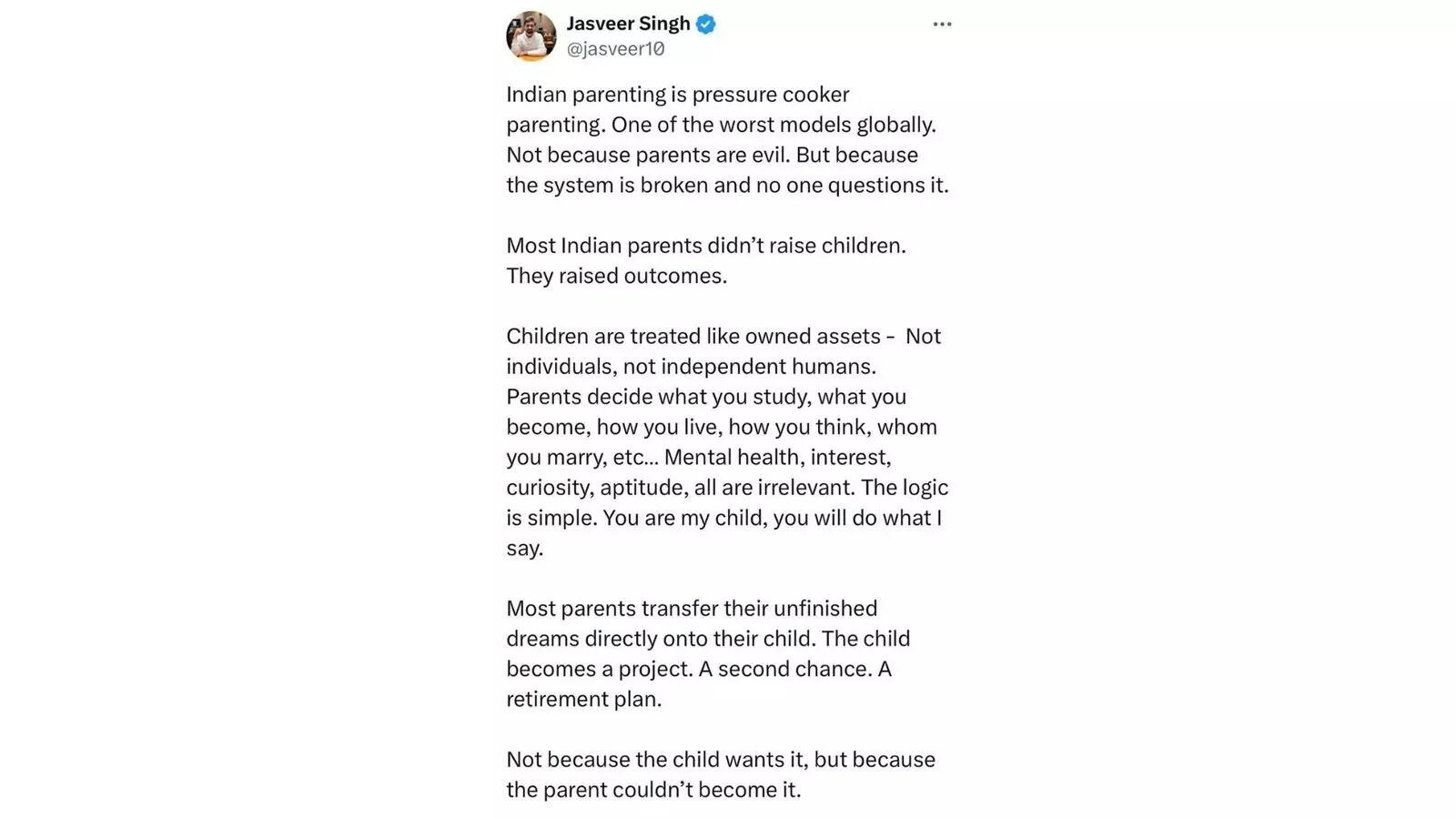
In many Indian households, certain lessons are learned early, without ever being spoken aloud. Children learn when to pause, when to agree, and when to stop asking questions. These are not formal rules, but they are absorbed quickly, often without resistance.For years, this way of growing up was just seen as normal discipline or care. Many only start looking back and seeing it differently much later in adulthood.Over the past few days, that reflection has been visible across social media. Adults have been sharing memories about childhood, family expectations, and the kind of pressure that shaped their early years. The tone has not been angry or confrontational; it has been recognizable.One post that prompted wider discussion came from entrepreneur Jasveer Singh, who described Indian parenting as “pressure cooker parenting.” His argument was not centered on parental intent but on a system that leaves limited space for emotional expression.The reaction suggests many people felt seen by the description.
A childhood with expectations built in
Among the most common responses was the sense that childhood often came with a pre-written script.
Academic performance mattered. Safe career choices mattered. Deviating from what was considered sensible did not.Singh wrote, “Most Indian parents didn’t raise children. They raised outcomes.”For many readers, that line captured a familiar experience. Success was measured visibly and consistently. Marks, ranks, and achievements were tracked closely. Conversations about interest, confusion, or emotional well-being were less common.
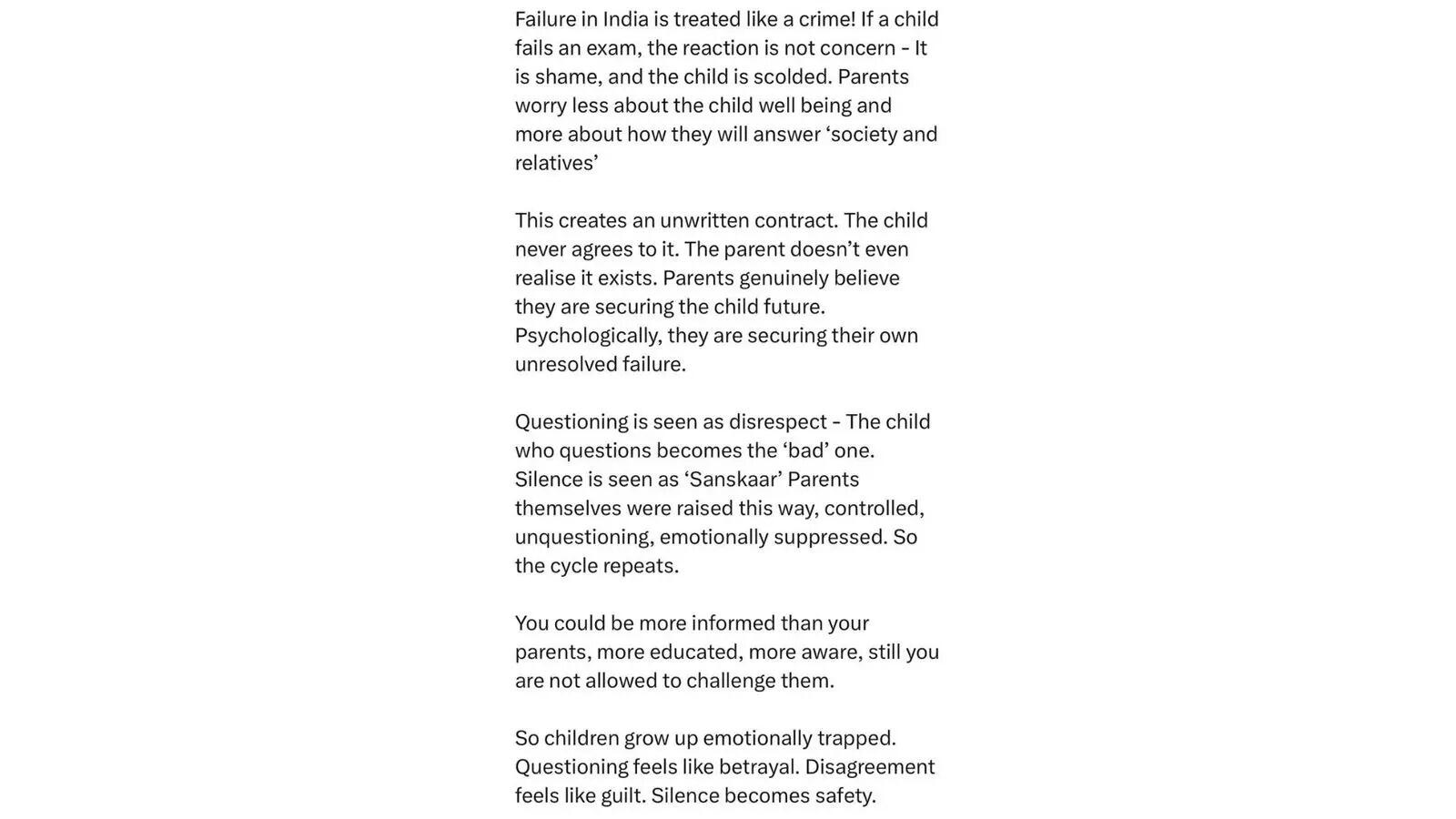
Several people responding to the post said approval often felt conditional. Achievement brought reassurance; anything else brought anxiety.
Failure as something to be managed quietly
Another theme that surfaced repeatedly was the way failure was handled at home.Singh noted that failure in India is often treated as something shameful. Many who responded shared similar memories, describing how mistakes or poor results were rarely treated as learning moments.Instead, failure became a family concern. There were comparisons, explanations, and reminders of what others were doing better. The worry was often less about the child’s struggle and more about how the family would be perceived.Over time, several people said they learned to hide difficulties rather than speak openly about them.
Learning when not to question
The idea of questioning authority also featured prominently in responses.
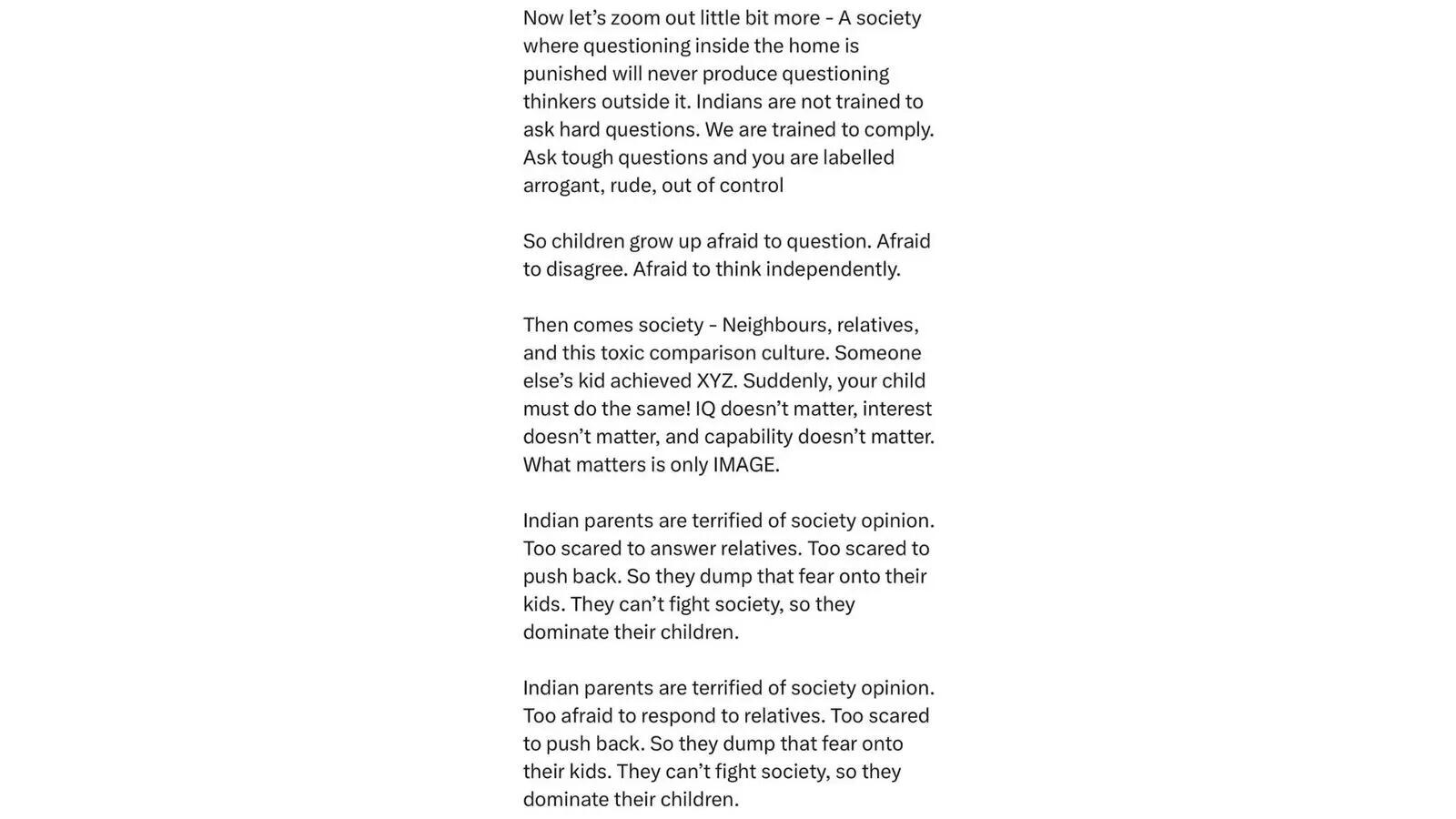
Singh wrote that questioning is frequently seen as disrespect within Indian homes.
Many people said they learned early which questions were acceptable and which ones would lead to discomfort or disapproval.As a result, silence became a strategy. Agreeing felt easier than explaining. Not pushing back felt safer than being misunderstood.Some adults said that this early way of being raised later made it hard for them to speak up or say no.
The weight of comparison
Comparison emerged as another recurring thread.Singh pointed out that children are often measured against peers, relatives, or neighbours, regardless of individual differences.
Several people responding recalled growing up with constant references to someone else’s achievements.For many, this created a lasting association between self-worth and external validation. Progress was rarely internal. It had to be visible and comparable.Some said this way of thinking stayed with them into adulthood, affecting how they see success and failure even today.
Parents following familiar patterns
Despite the criticism of the system, many responses avoided placing direct blame on parents.
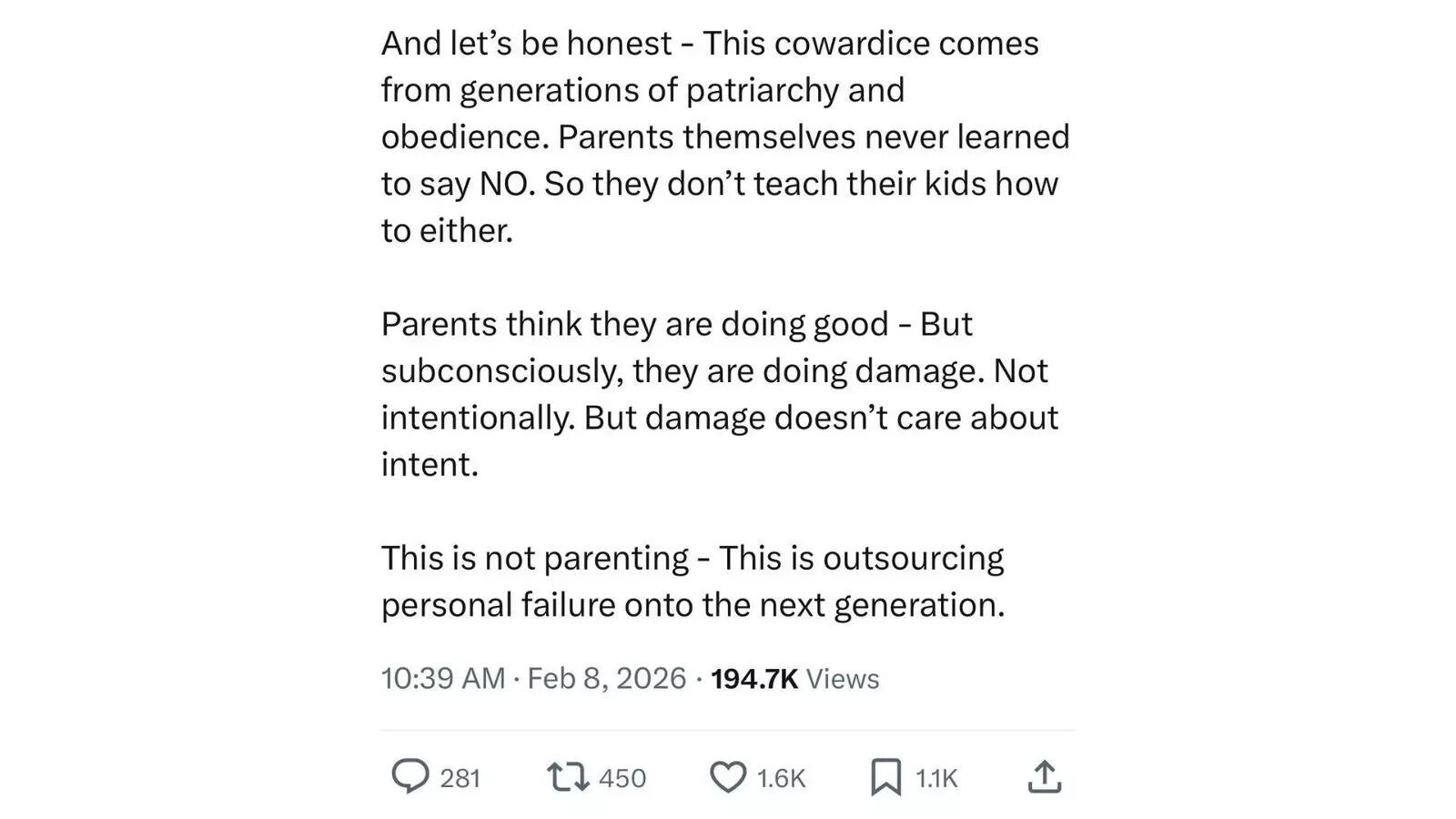
Singh acknowledged this in his post, writing that parents often believe they are acting in their children’s best interest. Harm, he suggested, does not always come from harmful intent.Several people responding said they now recognize their parents as products of the same expectations and pressures. Control, in many cases, was rooted in fear rather than cruelty.
How these experiences show up later
As the conversation went on, people started talking about how these childhood patterns appear in adult life.Some said they struggle to make decisions without someone else’s approval. Others felt guilty when putting themselves first. A few said they seemed settled at work but still felt unsure emotionally.Singh summed it up by saying that kids raised this way often grow up feeling stuck emotionally, even if everything looks fine on the outside.
A wider cultural moment
While sparked by a single post, the discussion reflects a broader shift.As conversations around mental health become more mainstream, many adults are revisiting childhood experiences that were once accepted without question.
Language has changed. Awareness has increased.Singh ended his post with a line that many people quoted in response: “This is not parenting. This is outsourcing personal failure onto the next generation.”Not everyone agreed with the phrasing, but many acknowledged the discomfort it triggered.What the conversation reveals is not a single conclusion but a growing willingness to reflect. People are sharing stories, recognizing patterns, and questioning long-held assumptions.For many, that process itself feels overdue.Thumb image: Canva AI (for representative purposes only)









 English (US) ·