

 1 hour ago
6
1 hour ago
6
ARTICLE AD BOX
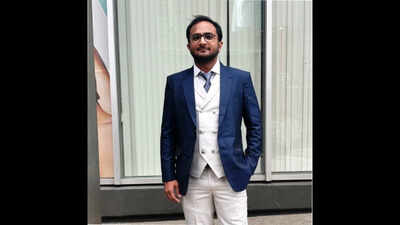
Indian student who works for Tesla says he was denied a student visa twice, but he did not give up.
Indian student Mayank Vadaliya who works at Tesla said F1 visa rejection is not a big deal and his student visa was rejected twice but he did not give up. While several cases of F1 rejections have surfaced this year owing to a tight scrutiny of the Donald Trump administration on who gets to enter the country, Vadaliya's first US visa rejection was in 2015 when he was 18.Speaking to American Bazaar, the Tesla engineer said at that time he was fresh out of school and wanted to pursue higher studies in the US. At his first visa interview, he was just asked three questions: his name, age, and the sponsor. His visa was immediately rejected.“My first attempt to secure admission in an American University was back in 2015. I was all of 18 years of age, fresh out of school, and all I wanted was to study in the U.S.
I applied for an F-1 visa to do my bachelor’s, and I believed in it so much that I just applied to one university – Montana State University. My visa was promptly rejected after asking just three questions – my name, age and who would pay my fee," he said. He reapplied to the same school the next year and his visa was rejected the second time.At that time, he shifted his focus. Rather than pursuing the university which he hoped would build him, he started building his own profile.
He got admitted to Gujarat Technological University. After his graduation, when he applied for a master's program in the US, it was his third time facing a visa officer. He was much more confident this time, he said and he got third-time lucky.“After my two refusals I stopped trying to win over the officer in the moment and started building a profile that speaks for itself. I finished my degree, got clarity on what I wanted to study and clearly stated my intent in the application," he said."By my third interview, I already had an offer from Australia in hand, so I walked in calm instead of desperate. I genuinely wasn’t afraid of another ‘no’ and it showed," he said explaining how his outlook changed in 4-5 years.“I landed in the U.S. in 2020 for my masters in computer science at Cleveland State University. From there I moved into working as an application support engineer at a tech company. This gave me a front-row seat on how technology works in the real world.”Vadaliya is still on an F-1 visa with work authorization until 2028 through Curricular Practical Training. He is also doing his PhD in Information Technology. “If I am eligible, then my company would sponsor me for a new visa like H-1B or O-1,” he said, speaking about future plans. Again, he is focused on building himself.



 English (US) ·