

 1 hour ago
6
1 hour ago
6
ARTICLE AD BOX
Last Updated:June 11, 2026, 19:36 IST
Donald Trump says the US will hit Iran very hard, aims to seize Kharg Island oil hub. Here's an in-depth analysis on Iranian Oil and production rates at Kharg Island


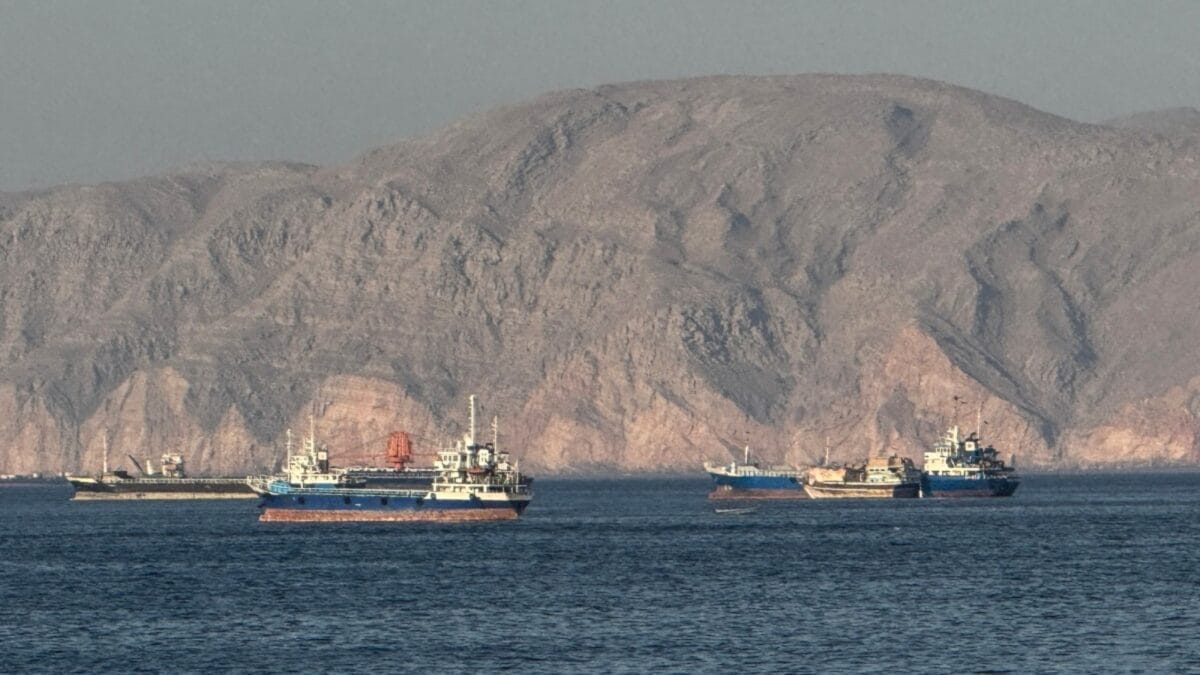
Since the 1960s, Kharg has become the backbone of Iran’s energy exports and a key link between Iranian oil fields and global markets. (X)
United States President Donald Trump said on Thursday that the US will be hitting Iran ‘very hard tonight,’ and that Washington intends to take control of Kharg Island and other Iranian oil infrastructure ‘in the not too distant future.’
Trump drew a direct parallel to Venezuela, where the US removed President Nicolas Maduro from power on January 3, 2026, and subsequently authorised American companies to lift, sell, and market Venezuelan oil under OFAC General Licence 46, issued on January 29. ‘Much like we have with Venezuela, which is working out brilliantly,’ he said.
How Much Oil Does Iran Produce?
Iran is OPEC’s third-largest crude oil producer, behind Saudi Arabia and Iraq. Its output ran between 3.2 and 3.3 million barrels per day through 2025 and into 2026, according to the Columbia University Centre on Global Energy Policy.
That figure dropped to approximately 3.06 million barrels per day in March 2026 as the US-Israel war on Iran disrupted operations. On top of crude, Iran produces around 1.3 million barrels per day of condensate and natural gas liquids from its gas fields, primarily South Pars, which Iran shares with Qatar and which holds roughly a third of the world’s largest natural gas reservoir.
Domestic refinery capacity runs to about 2.4 million barrels per day, with throughput averaging around 2.1 million barrels per day before the war. Domestic consumption absorbs approximately 2 million barrels per day, leaving the surplus available for export.
Where Kharg Island Fits
Kharg Island sits in the Persian Gulf roughly 32 kilometres off Iran’s southwestern coast. It is Iran’s primary crude export terminal and has been since the 1960s, when it was developed to anchor Iran’s oil trade.
Between 90 and 96 per cent of Iran’s crude exports flow through the island’s jetties, according to data from Kpler and Iran Open Data.
The island’s storage capacity is approximately 31 million barrels, per Kpler. Its deep-water access allows very large crude carriers to berth directly, a facility most of Iran’s coastline cannot offer.
By the mid-2020s, the terminal had capacity to load 10 supertankers simultaneously, according to Encyclopaedia Britannica. In February 2026, in the days before the US-Israel war broke out, Iran was loading more than 2 million barrels per day from Kharg, a near-record pace, as Tehran accelerated exports ahead of the conflict.
The island also hosts three major energy infrastructure facilities: the Falat Iran Oil Company, which produces 500,000 barrels of crude per day; the Kharg Petrochemical Company; and the National Iranian Oil Company’s main export terminal. Subsea pipelines connect it to Iran’s largest oil fields in the southwestern Khuzestan province.
What The US Blockade Has Already Done To Kharg
Since the US imposed a naval blockade on Iranian ports on April 13, 2026, Kharg has been effectively cut off from its export markets. US Treasury Secretary Scott Bessent stated on April 30 that the island was nearing storage capacity and that the blockade was costing Iran approximately 170 million dollars per day in lost revenue.
CENTCOM Commander Admiral Brad Cooper said on April 29 that US forces had redirected 42 vessels attempting to violate the blockade, preventing Iran from selling 69 million barrels of oil, worth over 6 billion dollars.
By May, US Energy Secretary Chris Wright confirmed Iran had cut production by 400,000 barrels per day as onshore storage filled, and said further reductions were likely.
Hamidreza Hajibabaei, Deputy Speaker of the Iranian Parliament, warned in May 2026, that if capacity at Kharg was exhausted, oil wells might have to be shut in entirely, requiring substantial investment to restart.
What A US Takeover Would Mean
Trump’s stated model is Venezuela. On January 3, 2026, US forces captured Maduro. Three weeks later, OFAC issued GL 46, authorising established American companies to purchase, export, sell, and market Venezuelan-origin oil.
Venezuela agreed to provide between 30 and 50 million barrels of oil to the United States for sale at market prices, with proceeds deposited into US-controlled accounts."),
Iran’s scale is a different order of magnitude. Venezuela’s output had collapsed to approximately 800,000 to 1 million barrels per day by 2026 after years of mismanagement and sanctions. Iran, even under blockade, was producing three times that before the war.
Rebuilding Venezuelan output to historical levels was estimated to require 100 billion dollars over a decade, according to Rice University’s Baker Institute. Iran’s infrastructure, which has deteriorated under sanctions but remained more intact, would present its own set of challenges under any occupation or control arrangement.
Kharg Island itself was last targeted by sustained heavy bombing during the Iran-Iraq War of 1980 to 1988, when Iraqi forces repeatedly struck the terminal. Iran managed partial continuity by shifting loading to smaller facilities at Lavan Island and Sirri Island, though at significantly reduced volumes.
On March 14, 2026, US and Israeli forces struck military installations on Kharg, destroying mine storage and weapons used in the IRGC’s Hormuz blockade. Those strikes, per CENTCOM, deliberately avoided the island’s oil infrastructure. Trump’s Thursday post signals that restraint may not hold.
Handpicked stories, in your inbox
A newsletter with the best of our journalism
About the Author

Anoshito Banerjee is a digital journalist at CNN-News18, specialising in Indian foreign policy, global diplomacy, South and West Asian geopolitics, and strategic affairs. His reporting spans hard news...Read More
Location :
Washington D.C., United States of America (USA)
News world Iran's Oil: How Much It Produces, Where Kharg Island Fits, And What A US Takeover Means
Disclaimer: Comments reflect users’ views, not News18’s. Please keep discussions respectful and constructive. Abusive, defamatory, or illegal comments will be removed. News18 may disable any comment at its discretion. By posting, you agree to our Terms of Use and Privacy Policy.
Read More






 English (US) ·