

 1 day ago
6
1 day ago
6
ARTICLE AD BOX
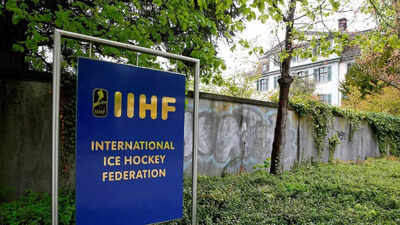
Is the IIHF gambling with the World Cup’s credibility by forcing Russia back amid boycott warnings? (Reuters)
Russia’s 2028 World Cup hopes are now colliding with a growing boycott threat, and the timing could not be worse for the sport’s global ambitions. A report from Czech hockey journalist Robert Rampa has sharpened the stakes, suggesting that several European nations are prepared to walk away if Russia is included.
What once felt like a distant policy question has quickly turned into a defining test of unity.The pressure is no longer abstract. According to Rampa, Czechia, Finland, and Sweden have already drawn a line. Their stance lands at a delicate moment, with the International Ice Hockey Federation maintaining its ban on Russia since the 2022 war with Ukraine, while leaving the door slightly open for a future review. That review, expected in May, now carries far more weight than anyone anticipated.
Russia’s 2028 World Cup push raises boycott stakes and forces IIHF into a credibility test
The issue is simple on the surface but layered underneath. Russia wants back into top-level competition. IIHF president Luc Tardif has made that clear, saying earlier this year he hopes to reintegrate Russia and Belarus as soon as conditions allow. But the federations opposing that move are not bluffing, at least not publicly.
The IIHF’s own position remains cautious. In a statement last year, it said it “believes it is not yet safe to reintegrate” Russia and Belarus, adding, “As the current security conditions do not allow the necessary requirements for the organization of tournaments guaranteeing the safety of all, the IIHF must maintain the current status quo until further notice.”
That careful wording now sits under a brighter spotlight.There is also a second layer of influence. The National Hockey League has tied its approach to the broader international consensus. Commissioner Gary Bettman has made it clear the league will follow that lead for the 2028 World Cup. In effect, the NHL is not driving this decision, but it will feel the consequences.
And those consequences could reshape the tournament itself.
The 2028 event is already set as an eight-nation competition, with games planned in Calgary, Edmonton, and Prague. Remove one major nation and the balance shifts. Lose three and the entire concept starts to wobble.From a pure hockey standpoint, the tension is obvious. Russia would bring elite talent, the kind that can tilt games and attract global attention. Yet Sweden, Finland, and Czechia offer something just as vital: structure, depth, and credibility. Their absence would not just weaken the field. It would change how the tournament is viewed.That is why this moment feels different. It is not only about who gets to play. It is about whether the event can hold its shape under pressure, or if the politics around it begin to define it before the puck ever drops.





 English (US) ·