

 2 hours ago
4
2 hours ago
4
ARTICLE AD BOX

Health experts are championing the flexitarian diet, a versatile eating plan that centers on plant-derived foods but still permits limited animal products. This diet notably enhances gut health by nourishing beneficial gut bacteria with ample fiber, leading to better digestion, lower inflammation, and improved overall vitality. Its adaptable nature makes it a practical option for long-term dietary habits.
Food trends appear almost every year, but only a few stand the test of science and time. One eating pattern that continues to draw attention from doctors is the flexitarian diet. It is not strictly vegetarian, nor is it fully meat-based.
Instead, it blends the two in a balanced way.Many gastroenterologists now say this flexible approach may be one of the most gut-friendly ways to eat. The reason lies in how the diet supports the trillions of bacteria that live inside the digestive system.The gut microbiome does far more than digest food. It shapes immunity, inflammation, metabolism, and even mood. When the diet supports this microbial ecosystem, digestion often becomes smoother and the body functions better overall.
But does the flexitarian diet truly help the gut, and how should it be followed correctly? Gastroenterologists say the answers lie in the balance between plants, fibre, and occasional animal protein.
What exactly is a flexitarian diet?
The word flexitarian simply combines “flexible” and “vegetarian.” It means eating mostly plant-based foods while still allowing moderate amounts of animal products.Vegetables, fruits, whole grains, legumes, nuts, and seeds form the foundation of the diet.
Meat, poultry, eggs, and fish are eaten occasionally rather than daily.Dr Kiran Shinde, Consultant Gastroenterologist at Sahyadri Super Speciality Hospital in Pune, explains that the approach closely mirrors what digestive specialists often recommend, “The flexitarian diet is not a fad in the traditional sense, and in fact, from a gastroenterologist’s perspective, it is very similar to what we would recommend for optimal gut health in the first place,” he says.
“The flexitarian diet is primarily a diet that focuses on plant-based foods, such as vegetables, fruits, legumes, grains, nuts, and seeds, and allows for moderate levels of animal proteins.
”This flexibility makes it easier for people to maintain compared with strict diets that remove entire food groups.
Why the gut microbiome loves plant-rich diets
The human gut contains nearly 100 trillion microorganisms. These bacteria rely heavily on dietary fibre to survive and thrive.Plant foods supply prebiotic fibre, which acts as fuel for beneficial gut microbes. When these microbes digest fibre, they produce compounds called short-chain fatty acids (SCFAs). These compounds help protect the intestinal lining and reduce inflammation.Dr Shinde explains the mechanism clearly, “Our gut microbiome is fuelled by a diet that is high in fibre, particularly a type of fibre known as prebiotics, found in plant-based foods,” he says.
“A high-fibre-rich diet has been seen to produce short-chain fatty acids, which can reduce inflammation, tighten the gut, and regulate bowel movements.”Scientific evidence supports this. A large government-supported study by the National Institutes of Health (NIH) found that high-fibre diets increase beneficial gut bacteria and improve metabolic health.Another review published in the Nutrients highlights that fibre fermentation in the gut helps maintain intestinal barrier health and immune balance.In simple terms, plant foods help gut bacteria produce the compounds that keep digestion smooth and inflammation low.
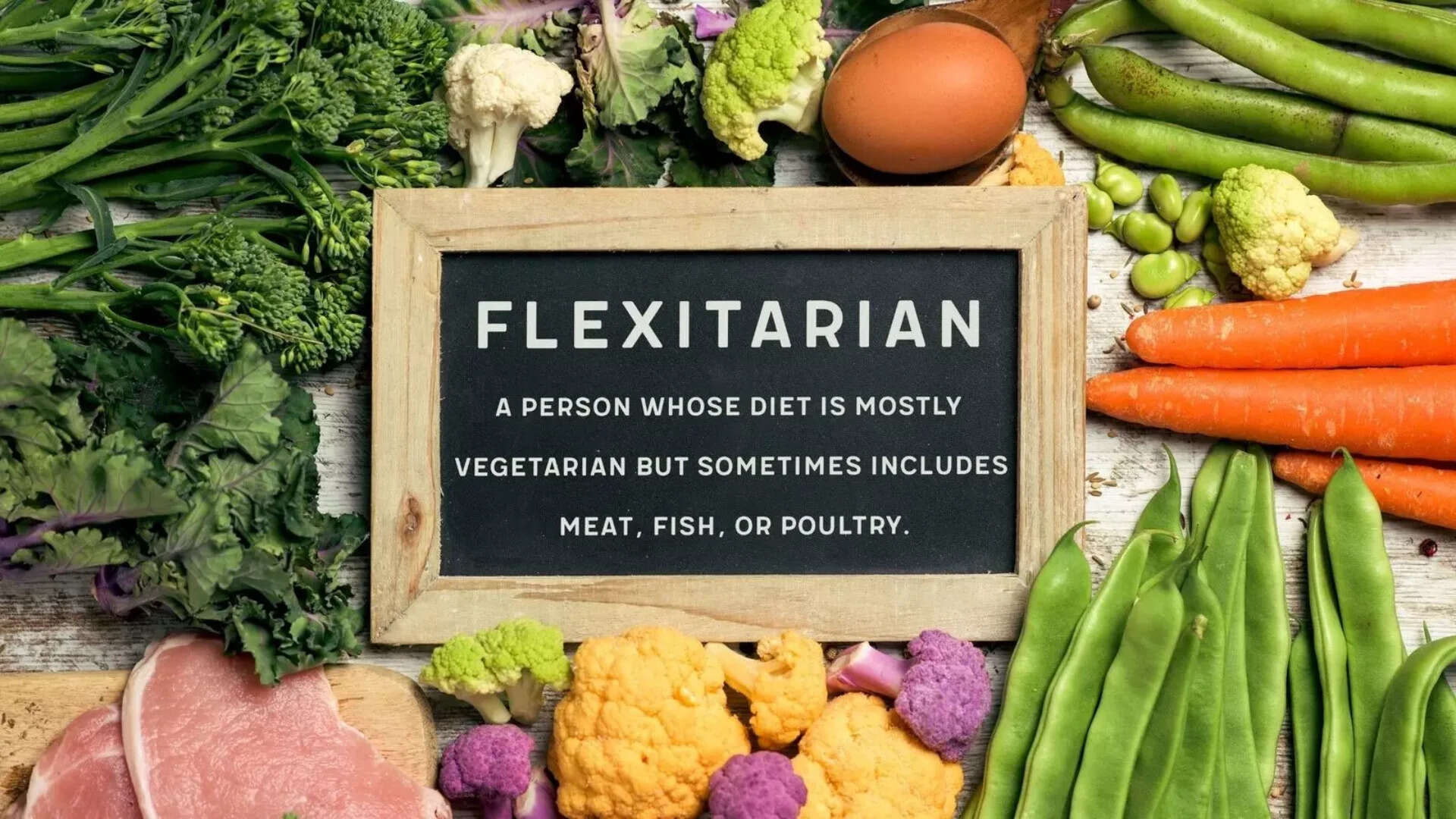
Gastroenterologists say it supports gut health because fibre from plant foods feeds beneficial gut bacteria. This process produces short-chain fatty acids that reduce inflammation and strengthen the intestinal lining.
The digestive benefits doctors often see in patients
Doctors who treat digestive disorders often notice a pattern. When patients increase plant-based foods and reduce processed meat, symptoms improve.Dr Manoj Bharucha, Gastroenterologist and Bariatric Surgeon, says the science behind this pattern is well established.“In my clinical practice, I encounter patients who have tried every trending diet imaginable.
The flexitarian diet is one that I do not dismiss; it is predominantly a plant-based approach that permits occasional meat consumption,” he says.“The science is compelling. A diet rich in diverse plant fibres feeds the trillions of microorganisms that constitute your gut microbiome. These microbes ferment fibre into short-chain fatty acid compounds that reduce intestinal inflammation, strengthen the gut lining, and even modulate immune response.”Many patients report improvements in digestion after adopting a plant-forward eating pattern.“Patients who shift meaningfully toward plant-forward eating consistently report improvements in bloating, bowel regularity, and energy levels,” he adds. “This is not a coincidence; it is biology.”
Fermented foods and gut-friendly drinks that help digestion
Flexitarian diets often include traditional fermented foods, which are naturally rich in probiotics.Curd, buttermilk, and fermented dairy drinks support beneficial gut bacteria.
When combined with fibre-rich fruits, seeds, and whole grains, they can strengthen the digestive ecosystem.Dr Shinde highlights their role in maintaining gut balance, “Fermented and gut-friendly beverages such as curd, buttermilk, and smoothies prepared with fibre-rich fruits and seeds can act as healthy pre-biotic and pro-biotic drinks that further support a balanced microbiome and improve digestion,” he explains.India already has many traditional gut-friendly foods. Dahi, kanji, fermented rice dishes, and buttermilk have been part of local diets for centuries. These foods naturally align with the flexitarian approach.
Why flexibility makes the diet easier to follow
One major reason many diets fail is strict restriction. Completely removing food groups can make eating stressful and socially difficult.The flexitarian approach avoids this problem. People can still enjoy occasional meat dishes at social gatherings, family dinners, or while travelling.Dr Bharucha points out that flexibility itself may improve long-term health outcomes, “What makes the flexitarian lifestyle different from a fad is that it is based on long-term sustainability,” he says.“My patients often go on business trips and have dinners out or at home with friends, where strict diets do not work. Being flexible doesn't mean giving up; it is actually a powerful tool in the hands of clinicians.”This balance helps people maintain healthier habits over years rather than weeks.
The right way to follow a flexitarian diet
Experts warn that flexibility should not be confused with poor food choices. The quality of plant foods matters just as much as the quantity.Dr Bharucha stresses that ultra-processed foods can harm the gut even if they are technically vegetarian, “A flexitarian diet is not a licence to eat indiscriminately. The quality of plant foods matters enormously,” he explains.“What I advise my patients is this: prioritise whole, minimally processed plant foods, ensure adequate protein from legumes and quality animal sources when consumed, and treat the gut as the sophisticated organ that rewards consistency and variety far more than restriction.”
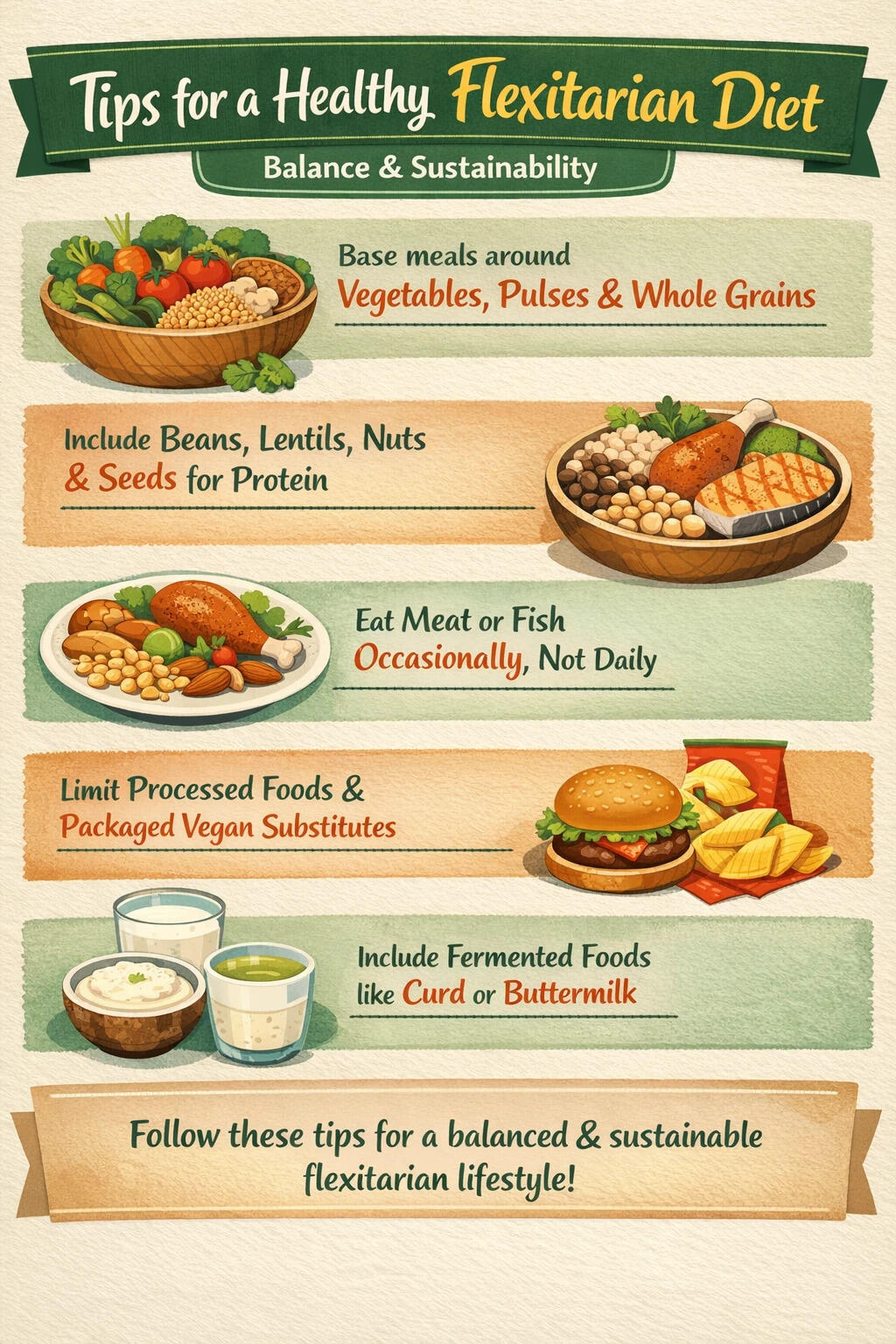
Doctors also note improvements in digestion, energy levels, and bowel regularity among patients who adopt plant-rich diets. However, experts stress that the diet should focus on whole foods rather than processed vegetarian alternatives.
In practical terms, this means:
- Base meals around vegetables, pulses, and whole grains
- Include beans, lentils, nuts, and seeds for protein
- Eat meat or fish occasionally, not daily
- Limit processed foods and packaged vegan substitutes
- Include fermented foods such as curd or buttermilk
When these principles are followed, the diet becomes balanced and sustainable.
Not a passing trend, but a science-based lifestyle
The flexitarian diet has gained popularity because it sits comfortably between two extremes.
It respects the benefits of plant-based eating while still allowing occasional animal foods.Dr Shinde sums up the medical perspective clearly, “Summing up, it can be said that if practiced properly, the flexitarian diet can be a beneficial lifestyle for the digestive system, heart, and metabolism, rather than a mere food trend. It is a well-balanced and scientifically grounded approach that many of us in gastroenterology advocate for.”In a world filled with extreme diets and conflicting advice, the flexitarian approach may offer something simpler. It focuses on balance, variety, and consistency, three principles that digestive health has always relied on.Medical experts consulted This article includes expert inputs shared with TOI Health by: Dr Kiran Shinde, Consultant Gastroenterologist at Sahyadri Super Speciality Hospital in Pune.Dr Manoj Bharucha, Gastroenterologist and Bariatric Surgeon.Inputs were used to explain whether the flexitarian diet can support gut health, with gastroenterologists outlining its benefits and the right way to follow this plant-forward eating pattern for better digestion and overall well-being.







 English (US) ·